
• Skip to main content
  • Skip to secondary menu
  • Skip to primary sidebar
  • Skip to footer
Geographical

Geographical

Official magazine of the Royal Geographical Society (with IBG)

  • Geographical Home
  • News
  • Features
  • Opinion
    • Climatewatch
    • Front Lines
  • Podcast
  • Travel
    • Discovering Britain
    • Passport
  • Culture
    • Book reviews
  • Quizzes
    • Crosswords
  • Choose Geography
    • University directory
    • Masters courses
    • Course guides
      • Climate change
      • Environmental science
      • Human geography
      • Physical geography
    • University pages
      • Aberystwyth University
      • Brunel University
      • Cardiff University
      • University of Chester
      • Edge Hill University
      • The University of Edinburgh
      • Newcastle University
      • Nottingham Trent University
      • Oxford Brookes University
      • The University of Plymouth
      • Queen Mary University of London
    • Geography careers
      • Charity/non-profit
      • Education & research
      • Environment
      • Finance & consulting
      • Government and Local Government
    • Applications and advice
  • Magazine
    • Issue previews
    • Subscribe
    • Manage My Subscription
    • Special Editions
    • Geographical Archive
    • Advertise with us
  • Subscribe
    • Direct Debit Changes

Where to watch next year’s ‘Eclipse of the Century’

14 August 2026
2 minutes

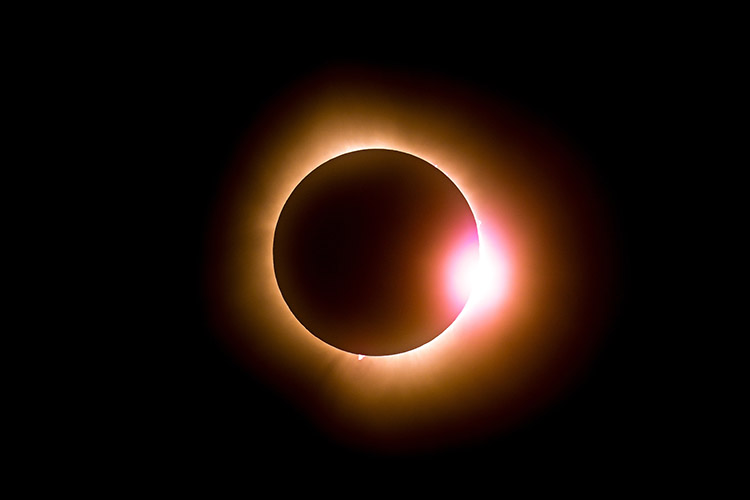
A solar eclipse featuring a diamond ring effect and baileys beads

Next August, Southern Europe, North Africa, and the Middle East will experience an unusually long solar eclipse. Here are the best locations to watch it – don’t forget your eclipse glasses


If you missed this summer’s solar eclipse, don’t worry – there’s an even bigger one lined up for next summer.

On August 2, 2027, a total solar eclipse will cross the Eastern Hemisphere, tracing a narrow path of totality across 10 countries spanning Southern Europe, North Africa and the Arabian Peninsula.

Within this corridor, which stretches roughly 258 kilometres wide, the peak duration of totality (the brief window when the Moon completely blocks the face of the Sun) will last an exceptionally long six minutes and 23 seconds near Luxor, Egypt, making it one of the longest land-based solar eclipses of the century.


Enjoying this article? Check out our related reads…
  • How do solar eclipses affect the weather?
  • Where is the best place to stargaze in Europe?
  • The growing threat from space junk
  • Millions of satellites poised to enter space pose ‘grave threat’ to night skies

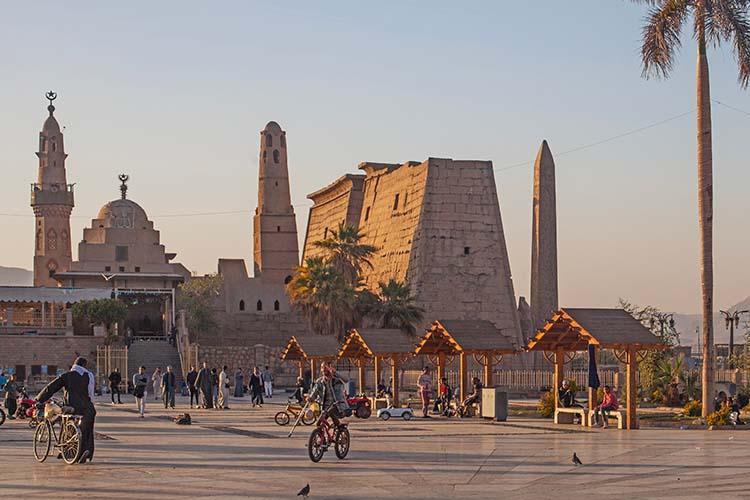
A sunset evening in Luxor Temple Square. Image: Alexandra Lande

Unfortunately, the eclipse won’t be visible from the UK. But if you are planning to head abroad to catch it, here are some of the best locations along the path of totality:

Tarifa, Spain

While Spanish cities Málaga and Cádiz are also an option, Tarifa sits further south and right on the Strait of Gibraltar, giving you a significantly longer duration of totality (around four minutes and 39 seconds, compared to Málaga – under two minutes).

Gibraltar

The entire British Overseas Territory lies in the path of the eclipse, but heading up to Upper Rock Nature Reserve reserve offers an elevated, panoramic vantage point over the strait (just watch out for the local cloud microclimate).

Tangier, Morocco

As the shadow makes landfall in North Africa, Tangier coastal views and four minutes and 50 seconds of totality.

Oran, Algeria

This major coastal city high-altitude vantage points nearby, and over five minutes of totality.

The Kerkennah Islands, Tunisia

Just off the coast of Sfax on Tunisia’s eastern coast, these flat, low-lying islands offer unobstructed horizon views across the Mediterranean and five minutes and 44 seconds of totality.

Luxor, Egypt

This is widely considered the overall best spot on earth for this eclipse. It sits right near the point of maximum duration (over six minutes and 19 seconds of totality), offers a near-zero chance of clouds in August, and lets you view the phenomenon directly over ancient temples such as Karnak and the Valley of the Kings.
Themes News Space

Protected by Copyscape

Primary Sidebar

SUMMER SALE

GEOGRAPHICAL WEEKLY LOGO FREE - Sign up to get context, clarity and perspective in a noisy world, every Friday

Popular Now

Review: The Savage Landscape by Cal Flyn

Review: The Savage Landscape by Cal Flyn

QUIZ: Flags of the World – South America

QUIZ: Flags of the World – South America

QUIZ: True or False – Continents

QUIZ: True or False – Continents

Glowing Bright — a fluorescing spiny squat lobster photographed by James Lynott during a night dive in Loch Fyne, Scotland

The winning images of the 2026 British Wildlife Photography Awards

A Manggala Agni firefighter works to extinguish a land fire in Ogan Ilir Regency, South Sumatra, Indonesia, on August 15, 2026. The onset of a drier dry season amplified by El Nino, combined with illegal land-clearing activities, has driven a significant spike in forest and land fire hotspots across parts of Sumatra and Kalimantan

Indonesia experiencing world’s highest wildfire emissions

Footer

  • Facebook
  • Instagram
  • LinkedIn
  • Reddit
  • TikTok
  • Twitter
  • YouTube

Geographical print magazine cover

Published in the UK since 1935, Geographical is the official magazine of the Royal Geographical Society (with IBG).

Informative, authoritative and educational, this site’s content covers a wide range of subject areas, including geography, culture, wildlife and exploration, illustrated with superb photography.

Click Here for SUBSCRIPTION details

Want to access Geographical on your tablet or smartphone? Press the Apple, Android or PC/Mac image below to download the app for your device

Footer Apple Footer Android Footer Mac-PC

More from Geographical

  • Subscriptions
  • Get our Newsletter
  • About Us
  • Contact Us
  • Advertise with us
  • Privacy policy
  • Terms & Conditions

Copyright © 2026 · Site by Syon Media