Across North Yorkshire, ancient rocks, forest, coast and wildlife reveal how landscapes shape the stories we tell – and the lives we build around them
By Rebecca Miles Henson
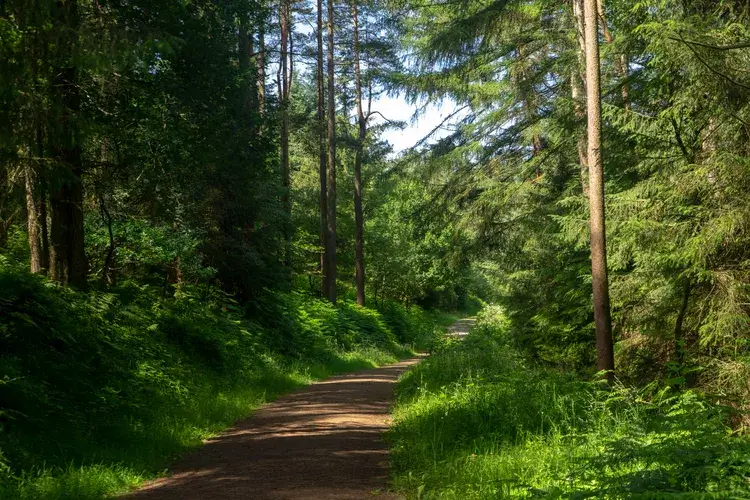
A squirrel runs across the road, easily dodging us as we drive the snaking route through Dalby Forest, past clearings and picnic benches, with houses secreted behind hills rolling away into pasture. Tall pines rise on either side, fringing patches of green. We drive deeper into the forest. Around every corner is another simple wooden signpost, with little indication of what will come next. It feels as though we’re driving into a secret.
We’ve arrived in the early evening of one of the hottest days of the year. The fire has begun to leave the sun and the forest offers further relief from the heat. We park our ancient camper van in the gravel enclave. A path leads us through high bracken, sunlight illuminating the purple flowers of tall stinging nettles.
The path climbs through deeply shadowed woodland. The birds have quietened, but there’s rustling in the ferns, our footsteps softened by fallen pine needles. It isn’t a steep or arduous climb, but by the time we reach the top I’m breathless. I tell myself it’s the heat rather than a reflection of my fitness.
Pushing open a gate, we walk gratefully over level ground as the forest falls away behind us and the land opens out. Through the branches of an oak, something comes into view.
‘What’s that?’ asks my travelling companion. I smile. It’s a bridestone.
The stones emerge along the winding track: weathered grey monoliths, their surfaces waved and pockmarked. They stand like sentinels over the bucolic North Yorkshire countryside stretching below us. And there’s no denying the feeling that comes from knowing that what we’re seeing is older than I can imagine, formed in a world that would now be unrecognisable. It raises a question: why do some landscapes become more to us than simply scenery?
I’m surprised to find sand beneath my feet — as much as if I were approaching the dunes at Sandscale Haws, on the opposite side of the country. It’s a reminder that this entire area was once underwater. Before leaving for North Yorkshire, I spoke to Dr Oliver Wakefield of the British Geological Survey, who explained that during the Middle Jurassic Period, this region was covered by a warm, shallow sea. Over millions of years, sediment was compacted into rock, then lifted and sculpted into the strange, statuesque shapes that appear to watch over the Yorkshire countryside today. They’ve been weathered, eroded and continually changing ever since. ‘It’s a temptation,’ he says, ‘to think that rocks are static — but they’re actually quite dynamic.’
These rocks also act as an archive of the geological history of the land, their layers shaped by different events in the Earth’s immense history: oceans forming and retreating, tectonic plates shifting, ice melting and climates changing. ‘It’s a legacy of landscape,’ Wakefield says. ‘It’s weird to think that our culture is naturally linked to events that occurred millions of years ago.’
The shape of the land influences almost every aspect of our lives, from where settlements grow to whether a journey takes us uphill or down. ‘Humans tend to think on a scale of their own lifetime — about 100 years.’ But this landscape existed long before any of us. We simply live upon it, adapting it — and ourselves — for our own purposes.
Enjoying this article? Check out our related reads…
Beyond science, humans have also felt a need to explain places on a more spiritual or romantic level, as evidenced here by the many folkloric tales surrounding the stones. Some attribute the name ‘bridestones’ to Brigid, the ancient pagan goddess of youth, fire, spring and rebirth. The path leading to the stones has also been known as the Old Wife’s Way, the ‘old wife’ being the ancient Celtic winter crone and creator goddess. Many individual stones have names and, as my companion noted, it’s possible to pick out faces and features on their surfaces: the Salt Cellar, the Villain, the Cheesecake. Science explains how a site came into existence, but we give it history, stories and names. We imbue geology with a meaning to which we can connect.
The following day, I return to Dalby Forest, the wider home of the bridestones, to meet Brian Walker, a retired long-serving Forestry England ranger and expert on the forest and its wildlife. Dalby Forest was originally planted after the First World War, when timber supplies were critically low. Today it balances recreation, conservation and timber production. ‘There are two kinds of forester,’ Walker tells me, ‘the kind who likes to plant the same tree in a straight, even-spaced line and the kind who lets nature have a bit more freedom.’
Although there are still tall Sitka spruces in neat rows, much of the forest offers a more biodiverse landscape. Walker explains that timber is harvested in ways designed to protect and encourage wildlife. The forest contains four sites of special scientific interest, including Seive Dale Fen, which provides the last remaining UK refuge for the green barred colonel soldierfly.
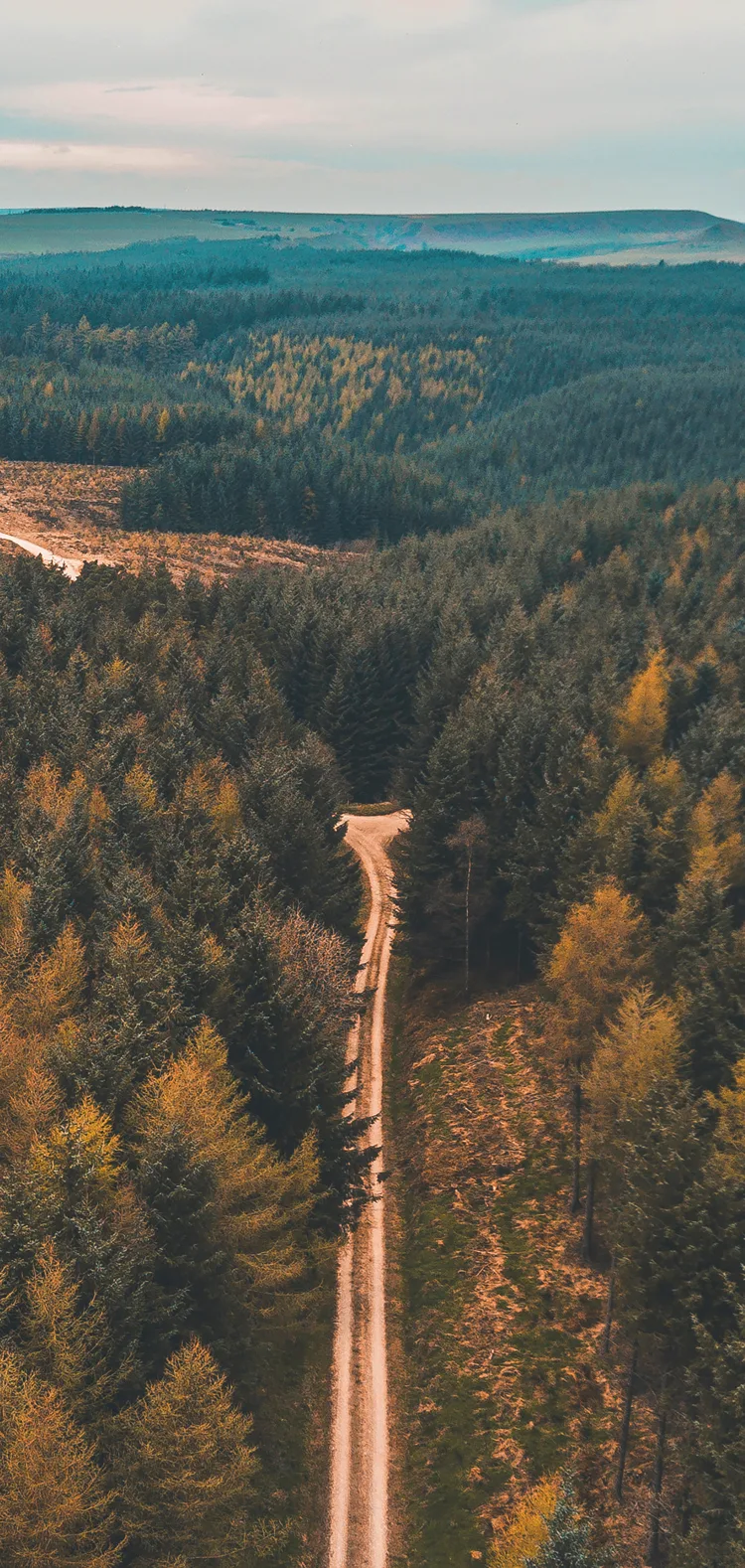
‘Above the road is for harvesting,’ he says as we make our way to Deepdale, described as ‘Dalby Forest in miniature’. ‘Below the road is for nature.’
Throughout the forest are signs of how previous generations used the land. We stop at an old lime kiln. ‘The people discovered that they could get lime from the stones here, which they used to sweeten the soil and improve the crops,’ says Walker. Nature has reclaimed the site, though its shape still reveals its former use.
‘The forest is like a block of rock from the quarry,’ he says. ‘A sculptor chips away at it, changing how it looks, making a shape. Here, the forest is continually changing. We harvest an area, leave it to grow, allow nature to take the space. The open areas become increasingly diverse.’
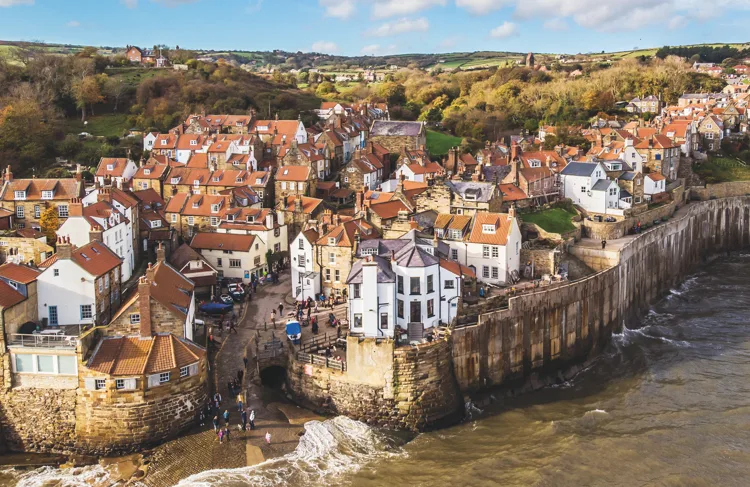
The following day we travel north to the coast, to Robin Hood’s Bay — although the link between the legendary outlaw and the village is tenuous at best. An error of judgement means I haven’t checked the tide times, essential for anyone hoping to beachcomb for fossils or jet, and the water is encroaching upon the street by the time we reach the bottom of the steep, cobbled hill.
In lieu of rockpooling, we follow a path to a raised area above the beach. From here, North Yorkshire’s cliffs stretch southwards while the village reaches down towards the North Sea.
The community here has had a connection with the sea for centuries. Originally a medieval fishing village, Robin Hood’s Bay became notorious for smuggling during the 18th century. Annabel Longfield-Reeve, senior heritage & conservation officer at the North York Moors National Park Authority, tells me: ‘The whole town was in on it. Records show that at its height, 45 per cent [of the town’s residents] played a part in smuggling.’
Underground tunnels led into cellars for transporting and concealing contraband, while churchyards provided discreet meeting places. Later came the British Merchant Navy, and in the early 20th century, the village thrived. ‘There’s so much respect around the sea and maritime culture,’ says Longfield-Reeve. When you find the North Sea making its way up the street twice a day, it’s easy to understand why.
Later, I meet Geoff Estill, a retired local fisherman and passionate volunteer at the Robin Hood’s Bay Museum. ‘It’s different now,’ he says. ‘The community has gone. Tourists just come here, get to the bottom of the hill, have a look at the water, and leave again. They don’t really see the town as what it is.’
He points out herringbone brickwork, a hallmark of the village’s listed cottages, and shows me some of his collection of Whitby jet, beachcombed over a lifetime on these shores.
Whitby jet is formed from the fossilised wood of prehistoric trees and is famously associated with this stretch of the North Yorkshire coastline. To hold something around 180 million years old is difficult to comprehend. ‘It’s mesmeric,’ says Estill. When he gives me a piece to keep, tiny shapes of ancient sea creatures marked on its surface, I feel tears in my eyes.
Estill is right that tourism has changed the village. Many lifelong residents — including Estill himself — have moved away, while properties stand empty for parts of the year awaiting holiday guests. But Longfield-Reeve says another shift may be under way. ‘Families are moving back, youngsters returning. People want to live in interesting places.’ Pubs that had been closed for years are reopening and a music scene is emerging.
This is a place where the landscape has always shaped the lives of its inhabitants. As its economy and community change, that relationship with the sea remains.
On my final morning, I visit Bempton Cliffs, an RSPB reserve that offers summertime puffins and England’s largest mainland gannet colony. I was first drawn here several months earlier by the story of a black-browed albatross that had flown far off course and made a temporary home here over several summers. Although ‘Albie’ hasn’t been spotted at Bempton since 2022, the story was enough to spark my interest.
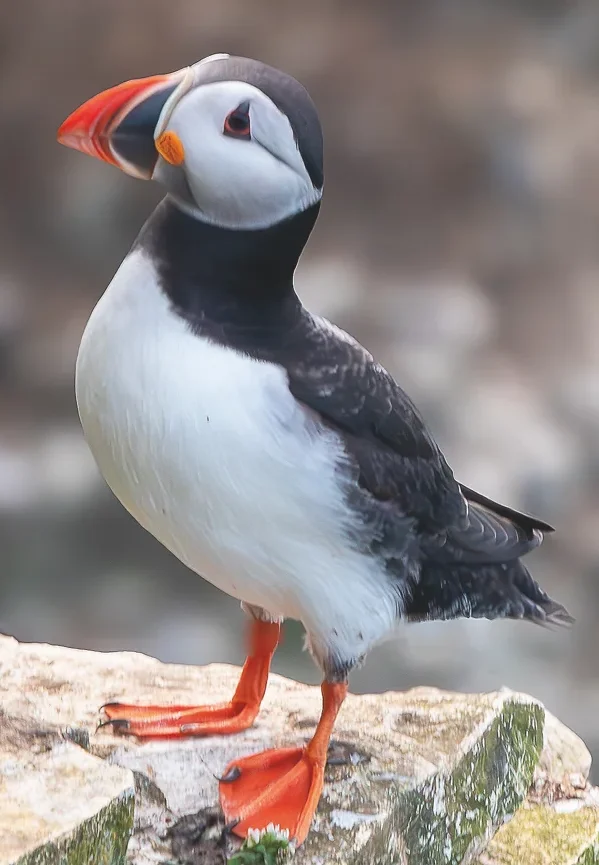
My first visit had been short: Easter weather threw needles of rain into my face and the wind threatened to send me over the cliff edge. Now the day is glorious, the sun bright and a breeze keeps things pleasantly cool.
Scott Davison-Smith, commercial operations manager at Bempton Cliffs, tells me that one of the biggest concerns for those managing the reserve is climate change — here and across the migratory routes used by its birds. ‘We work with BirdLife International, which protects birds across the world. If a swallow, for instance, spends half its life here, and half in Africa, we have to make sure its habitat over there is protected.’
He continues: ‘The RSPB has come under some criticism of late, from those who don’t agree with us protecting species other than just birds. But if you make a safe space for one species, you end up protecting many others.’
Research undertaken here has contributed to restrictions on North Sea sand eel fishing, intended to improve food availability for seabirds. ‘It will be really interesting to see, at the next count, what effect this temporary closure has had, and hopefully will allow us to present the governing bodies with the facts that will lead to a more permanent closure.’
Walking through the reserve, with tall grasses and purple wildflowers inland and bird-covered cliffs above the sea, Davison-Smith points out a puffin sunning itself at the entrance to its burrow and directs us to the call of the kittiwake — ‘kitti-WAKE, kitti-WAKE’. We come close enough to gannets and herring gulls to see what they’re feeding their young for lunch — not a sight for the sensitive.
I’m introduced to volunteer Richard Ball, one of the many knowledgeable members of the team. He seems able to identify any bird within view and direct us to its precise location on what, to the uneducated eye, might seem a featureless cliff.
I ask Davison-Smith about the challenges facing Bempton. ‘At the moment,’ he says, ‘we’re concerned with the proposal of a wind farm in the North Sea. We love renewable energy, but we don’t want farms built atop sites of major import. We hope to be able to use the data we are continually gathering to encourage these farms to be built away from these areas.’
There’s a sense of connection here with something far bigger than oneself — the high cliffs, the wide ocean and the wildlife that depends upon them. There’s nostalgia too: even as a child of an inland town, I remember seaside walks and picnics, owls swooping across open fields and secret, magical woodlands.
The same feeling is present at the Bridestones, in Dalby Forest and at Robin Hood’s Bay: a desire to connect with something older and larger than ourselves. It’s reflected in the volunteers I’ve met at every site — people who return time and again to preserve places they care passionately about.
So what makes a landscape matter? Perhaps it’s partly our desire for places that put our own lives into perspective. But it’s also the people who devote themselves to caring for them. Their enthusiasm is infectious; it’s difficult not to care alongside them for the nature, history and future of the landscapes they protect.
I’m reminded of something that Geoff Estill told me: ‘We can’t progress into the future if we don’t respect what’s gone before.’