From warming ocean depths and gold-rich volcanoes to youthful populations and pollution-producing trees, we round up some of the latest geographical research
By
In our latest Research Roundup, discover the scientific advancements made around the world…
Deep heat
Title: Observed Multi-Decadal Acceleration of Globally Averaged Abyssal Ocean Warming
Authors: Gregory C. Johnson
Published in: Geophysical Research Letters, July 2026
Click here for the research
Far below the ocean’s twilight zone, deeper still than the midnight zone, lies the abyss. Starting 4,000 metres below the surface and extending for another 2,000 metres, it’s home to a highly specialised community of animals adapted to the ink-black darkness, crushing pressure and near-freezing temperatures. But those waters are warming, and scientists say they’re now warming much faster than before.
To date, the Earth’s oceans have absorbed around 90 per cent of the excess heat from human-caused global warming. New research from US science agency NOAA reveals that the rate at which thermal energy is being absorbed by the abyssal zone has nearly quadrupled, increasing from 5.4 terawatts in 1988 to 20.2 terawatts in 2018 — roughly equal to the continuous output of more than 20,000 large nuclear power plants.
The discovery comes from a large-scale analysis of ocean temperatures collected by ship surveys dating back to 1970, combined with data from autonomous robotic floats called Deep Argo that have been roaming the depths since 2016. Surprisingly, despite the changes in the abyss, researchers found no statistically significant shift in heat uptake in the zone between 2,000 and 4,000 metres, prompting calls for more deep-ocean floats.
Understanding just how heat is distributed throughout the oceans’ 1.335 billion cubic kilometres of water will help scientists monitor changes in ocean circulation, sea-level rise and carbon uptake resulting from climate warming, as well as impacts on marine ecosystems.
Youth of today
Title: Preliminary Results of Population and Agriculture Census Conducted in the Republic of Uzbekistan in 2026
Published by: National Statistics Committee of the Republic of Uzbekistan, June 2026
Click here for the data

Uzbekistan has released its first census since the country declared independence from the Soviet Union 35 years ago. The results, which show that the population has almost doubled since independence to 39 million people, highlight the intense pressures facing one of only two doubly landlocked nations in the world (the other is Liechtenstein).
While the median age across much of Europe is above 40, Uzbekistan’s is only 27. Its single largest demographic is children under five, numbering 4.6 million, and although fertility has fallen from more than four children per woman in 1991 to 3.4 in 2026, population growth is expected to continue for some time.
Check out our related reads…
This growth will add further pressure on the country’s shrinking water supplies, roughly 80 per cent of which originate outside Uzbekistan’s borders.
Volcanic alchemy
Title: Hydrous Multi-Stage Mantle Melting Controls Gold Enrichment in Mafic Kermadec Arc Magmas
Authors: Christian Timm, et al
Published in: Communications Earth & Environment, March 2026
Click here for the research
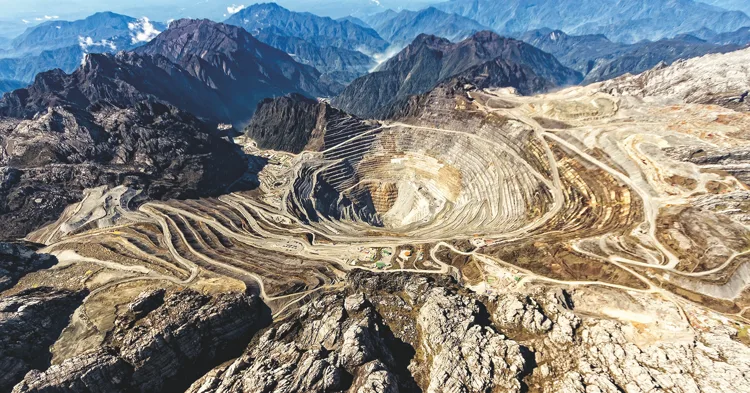
Many island arcs, such as Indonesia’s Sunda and Banda island chains and the Japanese archipelago, aren’t just hotbeds of volcanic activity — they’re also unusually rich in gold. Now, scientists think they might know why.
In a study led by the Helmholtz Centre for Ocean Research in Kiel, Germany, researchers studied volcanic glass retrieved from the Kermadec island arc north of New Zealand.
Volcanic glass forms when underwater lava cools extremely quickly. This rapid cooling locks in much of the magma’s original chemical composition, giving scientists a valuable record of conditions deep below the seafloor.
They found that water-rich conditions help mantle rock melt more extensively, causing sulphur-rich minerals that normally retain gold to give off more of the metal into the rising magma. Repeated episodes of melting can concentrate it further.
‘In these settings,’ says Christian Timm, a marine geologist at the centre, ‘the mantle behaves like a multi-stage melting system that progressively concentrates gold. We are effectively looking at the first step in [gold’s] life cycle.’
Clear the air
Title: Tree Selection in Urban Greening Shapes Air Quality for Global Cities
Authors: Xianjun He, et al
Published in: Science Advances, August 2026
Click here for the research
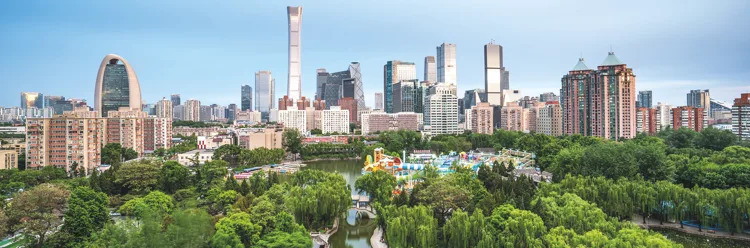
During the 1960s and ’70s, as Beijing faced severe dust storms and creeping desertification, city planners planted millions of weeping willow and Chinese white poplar trees — two hardy, fast-growing species.
Urban trees are known to help improve air quality, reduce temperatures and improve human health; a recent study from the Universities of Edinburgh and Glasgow links access to improved urban woodlands in deprived communities to reduced use of antidepressants.
However, new research led by Jinan University in China reveals that the chemical compounds produced by these trees are becoming a major contributor to air pollution — and not just in Beijing.
Plants naturally release volatile organic compounds (VOCs), including isoprene, as part of a range of physiological and ecological processes. When these compounds mix with sunlight and nitrogen oxides from industrial or vehicle emissions, they create ground-level ozone — a potent greenhouse gas that triggers breathing difficulties, particularly for children and asthmatics.
In Beijing, researchers found that while vegetation accounted for only about one-tenth of the city’s VOC emissions, it accounted for roughly half of the VOC reactivity that drives ozone formation. Heat heavily magnified this process: as temperatures climbed from 20°C to 35°C, the chemical reactivity of these emissions surged sevenfold, largely driven by high levels of isoprene.
However, Beijing’s high isoprene emissions didn’t stem from the volume of its greenery, but from the specific choice of tree species — namely, weeping willows and Chinese white poplars, which are heavy isoprene emitters. Other cities showed even greater potential for isoprene emissions — in Sydney, for example, around 65 per cent of trees were identified as isoprene emitters.
‘The findings do not call for less urban greening or the removal of mature trees,’ emphasises Thomas Karl, a co-author and atmospheric physicist at the University of Innsbruck. Instead, he suggests factoring a tree’s VOC emission potential into urban planting criteria. In Beijing, replacing just ten per cent of high-emitting trees with low-emitting varieties could cut isoprene emissions by at least 29 per cent.
Just add water
Title: Catalyst-Free, Microdroplet-Mediated Waste Plastic Conversion to Diacids
Authors: Ruiliang Gao, et al
Published in: Nature, July 2026
Click here for the research
An international team of researchers has developed a new way to convert stubborn plastic waste and rubber tyres into valuable organic acids – widely used in medicines, food additives and biodegradable materials – without the chemical catalysts normally required, instead using water and oxygen.
Scientists at Cardiff University, Zhejiang University in China and the University of Tokyo discovered that by heating and vigorously stirring plastic with water under pressurised oxygen, the molten polymer forms microscopic droplets. Where the oil and water meet, a natural chemical reaction acts as a pair of ‘chemical scissors’, cutting the tough bonds of the polymer chain. The technique works successfully with both tap water and seawater.
Recycling processes of this kind are usually kick-started by expensive and sometimes toxic catalysts. ‘By eliminating the need for [them] entirely, we have removed one of the major economic and environmental barriers to the industrial adoption of chemical plastic recycling,’ says lead author Yong Wang.
‘We are awash with plastic waste, and we need viable solutions for its effective recycling,’ adds Graham Hutchings, professor of chemistry at Cardiff University. ‘Our discovery shows the way.’