
• Skip to main content
  • Skip to secondary menu
  • Skip to primary sidebar
  • Skip to footer
Geographical

Geographical

Official magazine of the Royal Geographical Society (with IBG)

  • Home
  • Briefing
  • Science & Environment
  • Climate
    • Climatewatch
  • Wildlife
  • Culture
  • Geopolitics
    • Geopolitical hotspots
  • Study Geography
    • University directory
    • Masters courses
    • Course guides
      • Climate change
      • Environmental science
      • Human geography
      • Physical geography
    • University pages
      • Aberystwyth University
      • Brunel University
      • Cardiff University
      • University of Chester
      • Edge Hill University
      • The University of Edinburgh
      • Newcastle University
      • Nottingham Trent University
      • Oxford Brookes University
      • The University of Plymouth
      • Queen Mary University of London
    • Geography careers
      • Charity/non-profit
      • Education & research
      • Environment
      • Finance & consulting
      • Government and Local Government
    • Applications and advice
  • Quizzes
  • Magazine
    • Issue previews
    • Subscribe
    • Manage My Subscription
    • Special Editions
    • Podcasts
    • Geographical Archive
    • Book reviews
    • Crosswords
    • Advertise with us
  • Subscribe
    • Direct Debit Changes

Discovering Britain: After the gold rush

12 February 2026
2 minutes

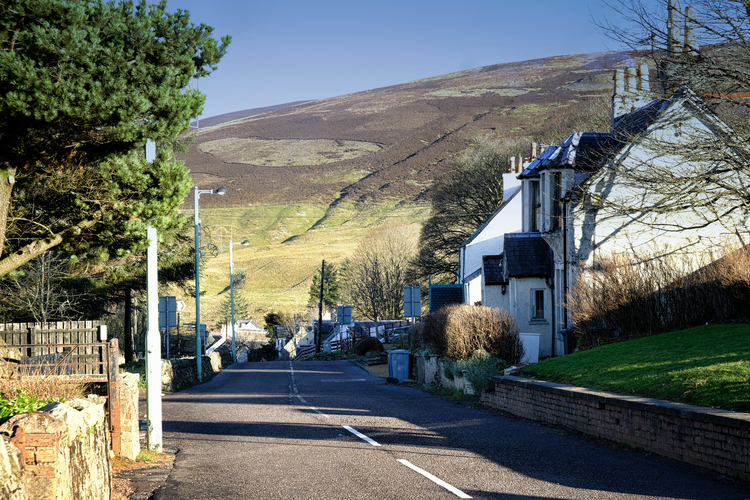
Leadhills
Main Street, Leadhills. Image: Shutterstock

Rory Walsh hunts for gold in the Lanarkshire hills in the latest instalment of Discovering Britain


View • Rural • Scotland • Web Guide

Sat among the rolling Lowther Hills is a place with unusual claims to fame. Leadhills is Scotland’s second-highest village. It’s home to Scotland’s highest golf course and Britain’s highest adhesion railway, both around 456 metres above sea level. The Leadhills Miners’ Library, founded in 1741, is Britain’s oldest subscription library. A grave in the village churchyard, meanwhile, records that resident John Taylor died aged 137.

Leadhills is also a remarkable geological site. This Lanarkshire village is one of the few spots in Britain where people have found gold. Previously named Waterhead, Leadhills developed through mining. Lead mining was underway in the region from at least the 1100s and became an important industry. Mining activity led to alluvial gold deposits being found during the reign of King James IV (1488–1513).


Enjoying this article? Check out our related reads…

  • The hunt for UK gold mines is back on
  • Exploring the World: A history of the Royal Geographical Society’s gold medal recipients
  • Writer’s Reads: Sara Caputo
  • Ecuador’s Amazon under siege by illegal mining & crime, report finds
  • Artisanal mining is leaving a trail of devastation

In the 16th century, up to 300 men worked to mine Leadhills’ gold. There are accounts of nuggets weighing up to 60 grams. Leadhills gold was used to make the Scottish crown jewels, now on display in Edinburgh Castle. Commercial gold mining ceased by the 1620s, when the most accessible ores had been exhausted. Afterwards, generations of lead miners hunted for it as a hobby.

Besides gold and lead, mazes of underground mine shafts revealed that the heather-topped peaks surrounding Leadhills contain more than 70 minerals. Some are unique to the area, including lanarkite and leadhillite. Their abundance means one of Scotland’s largest rock formations is called the Leadhills Supergroup.

An ancient ocean, earth movements and objects from space shaped the village’s geological diversity. Most of the Earth’s gold is contained within rock ores. Scientists estimate that some of it arrived within meteorites. Around 455 million years ago, the land that became Britain lay at the bottom of the vast Iapetus Ocean. Meteorite particles, including gold, settled on the ocean floor. The Iapetus Ocean spanned several tectonic plates of the Earth’s crust. Where these plates collided, land was pushed upwards into peaks. These periods of orogeny raised the buried gold.

Leadhills’ mines closed in the 1920s. Gold has since been found in sediments lining the nearby river, Shortcleuch Water. Fast-flowing rivers erode soft rocks and soils along their course. At Leadhills, this sometimes reveals glittering traces of gold. Visitors with appropriate licenses can pan the river. The phrase ‘there’s gold in them thar hills’ usually evokes the American West. It also reflects this unique part of southern Scotland.
Themes Briefing Discovering Britain

Protected by Copyscape

Primary Sidebar

OUR UK DIRECT DEBITS ARE CHANGING
WINTER SALE

Geographical subscriptions

GEOGRAPHICAL WEEKLY LOGOFREE - Sign up to get global stories, told well, straight to your inbox every Friday

Popular Now

QUIZ: Physical Geography Trivia

QUIZ: Physical Geography Trivia

China and India

Falling into the wrong Thucydides’s trap

Rainy weather in London

Geo explainer: Why is it raining so much in the UK?

A 'black smoker' hydrothermal vent

Could deep sea mining ever go ahead?

Seabed floor

Can we map the whole sea floor?

Footer

  • Facebook
  • Instagram
  • LinkedIn
  • Reddit
  • TikTok
  • Twitter
  • YouTube

Geographical print magazine cover

Published in the UK since 1935, Geographical is the official magazine of the Royal Geographical Society (with IBG).

Informative, authoritative and educational, this site’s content covers a wide range of subject areas, including geography, culture, wildlife and exploration, illustrated with superb photography.

Click Here for SUBSCRIPTION details

Want to access Geographical on your tablet or smartphone? Press the Apple, Android or PC/Mac image below to download the app for your device

Footer Apple Footer Android Footer Mac-PC

More from Geographical

  • Subscriptions
  • Get our Newsletter
  • About Us
  • Contact Us
  • Advertise with us
  • Privacy policy
  • Terms & Conditions

Copyright © 2026 · Site by Syon Media