
• Skip to main content
  • Skip to secondary menu
  • Skip to primary sidebar
  • Skip to footer
Geographical

Geographical

Official magazine of the Royal Geographical Society (with IBG)

  • Geographical Home
  • News
  • Features
  • Opinion
    • Climatewatch
    • Front Lines
  • Podcast
  • Travel
    • Discovering Britain
    • Passport
  • Culture
    • Book reviews
  • Quizzes
    • Crosswords
  • Choose Geography
    • University directory
    • Masters courses
    • Course guides
      • Climate change
      • Environmental science
      • Human geography
      • Physical geography
    • University pages
      • Aberystwyth University
      • Brunel University
      • Cardiff University
      • University of Chester
      • Edge Hill University
      • The University of Edinburgh
      • Newcastle University
      • Nottingham Trent University
      • Oxford Brookes University
      • The University of Plymouth
      • Queen Mary University of London
    • Geography careers
      • Charity/non-profit
      • Education & research
      • Environment
      • Finance & consulting
      • Government and Local Government
    • Applications and advice
  • Magazine
    • Issue previews
    • Subscribe
    • Manage My Subscription
    • Special Editions
    • Geographical Archive
    • Advertise with us
  • Subscribe
    • Direct Debit Changes

233 people arrested in environmental crime crackdown across Latin America and Caribbean

10 October 2026
3 minutes

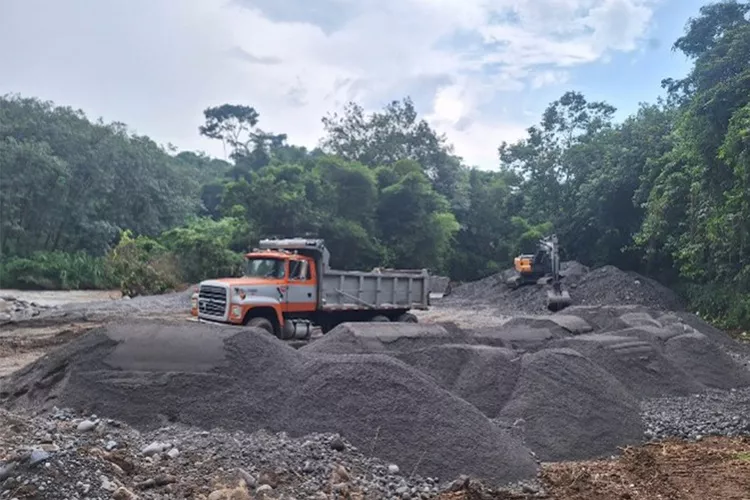
Illegal mining activities disrupted in Guatemala
Illegal mining activities disrupted in Guatemala. Image: Interpol

Nine countries were involved in the latest operation, in which 312 individuals were also suspected of involvement in environmental crimes


By Victoria Heath

International environmental crime networks have been dismantled across nine countries in Latin America and the Caribbean by INTERPOL in an international operation leading to 233 arrests, the recovery of more than 1,000 live animals and the identification of 60,000 hectares of illegally cleared forest.

The operation, known as Madre Tierra VII, took place from 1 June to 31 July and involved nine countries – Colombia, Costa Rica, the Dominican Republic, El Salvador, Guatemala, Honduras, Mexico, Nicaragua and Panama.

Across more than 330 cases reported by the nine participating nations, investigators identified 312 individuals suspected of involvement in environmental crimes. Investigators also found illegal timber and wildlife trafficking networks were operating on an industrial scale along the corridor connecting Central and South America together.


Enjoying this article? Check out our related reads…

  • Was the recent EU-CELAC summit a success?
  • Sea Shepherd founder under arrest in Greenland
  • Ecocide becoming punishable by law across the world
  • Belgium votes to make ecocide a crime under international law
  • Hen harriers: illegal killings on the moors

In Costa Rica, authorities intensified action against illegal mining, seizing 4.6 tonnes of cyanide and 11 containers of mercury – chemicals commonly used in illicit gold extraction. These can have devastating human and environmental impacts on water, biodiversity and surrounding communities.

The illegal gold mining industry is often carried out by poorly trained and ill-equipped individuals, often driven by organised crime.

The practice is also extremely dangerous: in Ghana’s illicit gold mining sector, thousands of children work 14-hour days in hazardous conditions. Meanwhile, in 2025, hundreds of miners illegally operating in an abandoned gold mine in South Africa were trapped, killing 87 individuals. Workers are also exposed to contaminants like toxic dust, which leads to health problems such as chronic pulmonary disease and asthma.
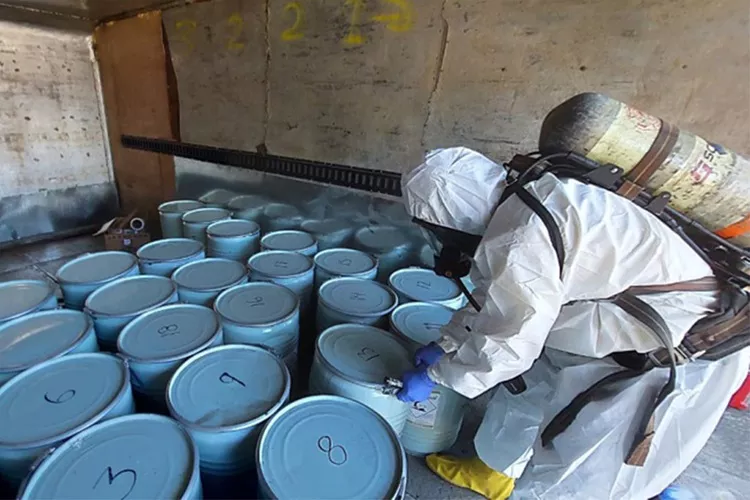
Costa Rican authorities seized 4.6 tonnes of cyanide
Costa Rican authorities seized 4.6 tonnes of cyanide. Image: Interpol

Outside of illegal gold mining, the recent operation also uncovered wildlife used by criminal networks.

In Mexico, authorities recovered several big cats utilised in criminal networks to move narcotics and other illicit commodities. These big cats included two endangered Bengal tigers – one of which was a rare white tiger – as well as jaguars, ocelots and lions.

Nicaragua saw law enforcement recovering a significant number of CITES-listed exotic birds, like parrots and green and red macaws. Across the region, around 165 kilograms of dried shark fins – with an estimated value of $280,000 – were also seized.

The illegal wildlife trade stands as the second largest direct threat to global biodiversity and species survival, and is the fourth biggest illegal trade in the world – worth an estimated £15billion annually.

‘These cases demonstrate the transnational nature of environmental crime, with biodiversity-rich countries increasingly targeted as sources of high-value commodities destined for illicit markets around the world,’ said INTERPOL assistant director of environmental security Thomas Ungerbuehler.

‘They highlight the importance of sustained international cooperation to identify, disrupt and dismantle the criminal networks driving this trade and threatening global biodiversity.’

Themes News Conservation

Protected by Copyscape

Primary Sidebar

SUBSCRIBE

GEOGRAPHICAL WEEKLY LOGO FREE - Sign up to get context, clarity and perspective in a noisy world, every Friday

Popular Now

Hand in ballot box

Brazil’s presidential election heads to runoff in late October

California coast

Kelvin waves: the ocean phenomenon raising sea levels on the US West…

Chinook salmon in water

Why Alaska’s Chinook salmon collapse threatens Yukon River communities

Barcelona, Spain - October 31st 2022 -

Barcelona’s new ‘Netflix-style’ algorithm hoped to combat overtourism

Wind turbines in field

Ministry of Defence objects to at least four wind farms

Footer

  • Facebook
  • Instagram
  • LinkedIn
  • Reddit
  • TikTok
  • Twitter
  • YouTube

Geographical print magazine cover

Published in the UK since 1935, Geographical is the official magazine of the Royal Geographical Society (with IBG).

Informative, authoritative and educational, this site’s content covers a wide range of subject areas, including geography, culture, wildlife and exploration, illustrated with superb photography.

Click Here for SUBSCRIPTION details

Want to access Geographical on your tablet or smartphone? Press the Apple, Android or PC/Mac image below to download the app for your device

Footer Apple Footer Android Footer Mac-PC

More from Geographical

  • Subscriptions
  • Get our Newsletter
  • About Us
  • Contact Us
  • Advertise with us
  • Privacy policy
  • Terms & Conditions

Copyright © 2026 · Site by Syon Media