
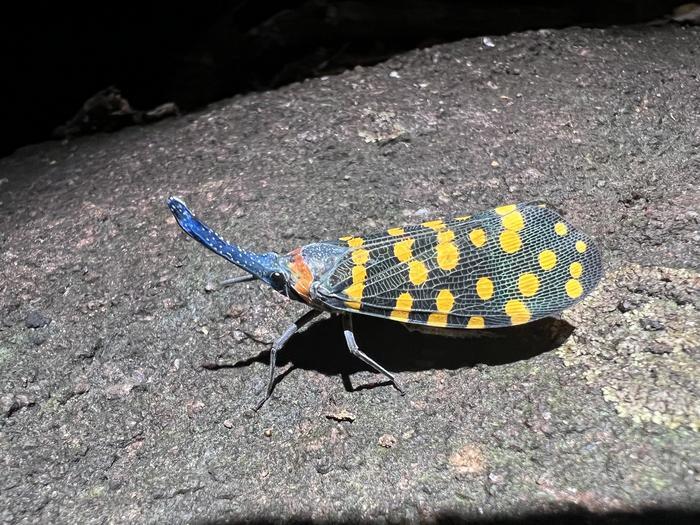
More than 16,000 new species are discovered each year across the world, with the trend showing no sign of slowing
By
Scientists are discovering species quicker than ever before, with more than 16,000 species being discovered each year, a new University of Arizona study has revealed. Such a trend shows no sign of slowing, and researchers behind the new paper predict that biodiversity is much richer than scientists originaly thought.
‘Some scientists have suggested that the pace of new species descriptions has slowed down and that this indicates that we are running out of new species to discover, but our results show the opposite,’ said Professor John Wiens at the University of Arizona.
‘In fact, we’re finding new species at a faster rate than ever before.’
To reach their conclusions, the team analysed the taxonomic histories of roughly two million species, spanning all groups of living organisms. Between 2015 and 2020, researchers documented an average of more than 16,000 new species each year, including more than 10,000 animals, 2,500 plants and 2,000 fungi.
Enjoying this article? Check out our related reads…
‘Our good news is that this rate of new species discovery far outpaces the rate of species extinctions, which we calculated to about 10 per year,’ said Wiens. ‘These thousands of newly found species each year are not just microscopic organisms, but include insects, plants, fungi and even hundreds of new vertebrates.’
As well as monitoring the rate of new species appearing, the team also projected how many species will come into view across time. They estimated there might be as many as 115,000 fish species and 41,000 amphibian species, even though there are only about 42,000 fish and 9,000 amphibian species described now. They also projected that the final number of plant species might be over half a million.
For now, scientists predict that the discovery rate of living organisms will continue to increase.

‘Discovering new species is important because these species can’t be protected until they’re scientifically described,” Wiens added. “Documentation is the first step in conservation – we can’t safeguard a species from extinction if we don’t know it exists.’
Identifying new species can also help to provide natural products with human benefits. For example, spider and snake venoms – as well as many plants and fungi – contain natural products with potential medicinal applications, including treatments for pain and cancer.
Going forward, researchers hope to map where most new species are commonly found to identify geographic hotspots for biodiversity. They are also interested in who is making the discoveries, and are testing whether it has changed from predominantly European scientists to researchers documenting new species from their own countries.
‘Even though Linnaeus’ quest to identify species began 300 years ago, 15 per cent of all known species have been discovered in just the past 20 years,’ Wiens said. ‘So much remains unknown, and each new discovery brings us closer to understanding and protecting the incredible biodiversity of life on our planet.’


