
From cloud seeding to stratospheric atmosphere injections, discover the technologies being used to ensure a sustainable future for our planet
By
Climate change. It’s a phrase that seems to be in most news articles and major headlines across the world – a reminder of how our planet is constantly bearing the brunt of a warming atmosphere, extreme weather events and all of the other effects that a changing climate brings.
This summer has shown just how severe the effects of climate change can be. Heatwaves and wildfires have ravaged Europe, while the UK provisionally recorded its hottest summer on record with an average mean temperature of 16.5°C.
This week, the UN also announced that global temperature rise is set to cross 1.5°C, likely within the next few years – although it is still possible to bring temperatures down and achieve goals set out in the Paris Agreement.
Related reads…
There are the obvious – albeit critical – solutions to tackling climate change: reducing greenhouse gas emissions by transitioning from fossil fuels to greener alternatives; swapping out carbon-intensive foodstuffs for climate-friendly counterparts; walking or cycling rather than taking vehicles that burn through petrol and diesel.
However, many scientists and researchers are developing more innovative solutions. Here, we run through some of these more unique developments…
Cloud seeding
As droughts become increasingly common, cloud seeding – a technology used for around 80 years – offers an innovative approach to mitigate them. The technology adds tiny particles, usually silver iodide crystals deployed by aircraft, to clouds, a process that triggers either rain or snow.
Enjoying this article? Check out our related reads:
- Geo explainer: What is a climate model – and are they always accurate?
- Climate justice in action: 25 years of the Ashden Awards
- Not Just climate: the threats combining to destroy our planet
- 64 per cent of Americans are worried about global warming, survey finds
- Food for thought in a warming climate
According to NOAA, the most common use of cloud seeding is either to increase rainfall or decrease hail. Studies suggest that the technology can cause a 10-15 per cent increase in rainfall. Currently, nine US states use it, while ten have entirely banned or are considering banning the practice. Other countries in the world use the technology, such as the UAE and China.
While cloud seeding offers benefits to areas facing water scarcity, research into its long-term effects is scarce. The silver iodide used to initiate cloud seeding may be toxic to terrestrial and aquatic life. Due to this, scientists have begun to explore using alternative chemicals such as calcium chloride instead.
Stratospheric aerosol injections
These injections are a proposed method of geoengineering. Essentially, they work by injecting sulphur dioxide into the stratosphere – a layer of Earth’s atmosphere extending from around 10-17km (6-11 miles) to 50km (31 miles) above its surface. In turn, this produces sulphate aerosols that reflect the sun’s energy and heat.
Injecting sulphur dioxide into the stratosphere aims to replicate the cooling effects that occur following large volcanic eruptions, which release sulphur into the stratosphere.
Technology is still in the development stage, but scientists believe that soon it will be feasible for stratospheric aerosol injections to be carried out by tethered balloons or a fleet of high-altitude aeroplanes. Such a fleet would take several decades to create, since most current aircraft can only fly at half the altitude that is required to reach the stratosphere.
Sustainable aviation fuels
The aviation industry is one of three sectors – shipping and industry being the other two – which heavily relies on non-renewable energy. However, sustainable aviation fuels (abbreviated to SAF) offer a compelling alternative to planet-polluting fossil fuels.
SAF is produced from renewable feedstocks, such as cooking oils, plant oils, fats and agricultural and forestry waste. Currently, SAF still needs to be blended with conventional fossil fuels before being used for plane travel. Regulations state it can make up to a maximum of 50 per cent of a fuel mixture.
On average, using SAF reduces emissions by up to 80 per cent across the lifetime of a fuel, and it can be used in existing planes without having to change any technology in them.
However, one major sticking point of SAF is its price point. Latest estimates put US jet fuel at $2.85 per gallon, while SAF is $6.69. Such high figures come from the limited production of SAF itself – back in 2024, 1.3 billion litres were produced, representing just 0.3 per cent of global jet fuel production.
This year, the UK has imposed a mandate requiring two per cent of all jet fuel in flights taking off from the UK to be SAF, increasing to 10 per cent in 2030 and 22 per cent by 2040. The EU has also followed suit, requiring fuel suppliers to add an average of 2 per cent SAF to fuel deliveries within European airports.
Genetically engineered animals and plants
It might sound straight out of a sci-fi film, but genetically engineering animals may help mitigate the impacts of climate change. Back in 2021, a company named Colossal received $15 million in private funding to engineer the genomes of Asian elephants. These changes were expected to give animals traits of a woolly mammoth, specifically equipping them with enough dense hair and thick fat to allow them to thrive in Siberia.
In practice, releasing these animals with a preference for cold in a warming planet would work as follows: cold-adapted elephants would knock down sunlight-absorbing trees, exposing light-coloured permafrost that better reflects light and prevents melting.
Genetic engineering could also be used to create naturally heat-tolerant corals that currently face the threat of ever-warming oceans.
As well as this, modifying genetics within cattle so they have greater resistance to parasitic infections would provide a major boost to global food chains, particularly against the backdrop of the planet’s increasing population and subsequent greater mouths to feed.
On a similar note, ensuring the viability of staple crops like rice – the main source of calories for 3 billion people across the planet – is another practical use of the technology. For example, genes could be edited to ensure crops become resistant to harsh conditions such as drought and flooding.
Finally, genetic engineering can also be applied to plants. By changing their genetic make-up, organisms could absorb more atmospheric carbon, helping to mitigate global warming, or grow longer, deeper roots, helping them to store carbon further underground.
Fertilising the ocean
You might think fertilisers stay on land, but applying them to the ocean is, in fact, another beneficial way of tackling our planet’s climate woes. Essentially, the process involves adding nutrients such as nitrogen, iron and phosphorous to the upper sunlit layers of the ocean.
This encourages phytoplankton to grow in what is known as a phytoplankton bloom, enabling them to carry out photosynthesis. As carbon dioxide is used in the process, this in turn decreases the quantity of atmospheric CO2 levels. For every iron atom added into the ocean, around 50,000–200,000 carbon atoms are removed.
Most phytoplankton is eaten by surrounding marine animals, which eventually die and sink to the deep ocean. This process effectively locks carbon there for centuries.
A major drawback of ocean fertilisation is the impact that adding more nutrients into the ocean will have on existing ecosystems and food networks. Most likely, more research into these effects will be required before ocean fertilisation can occur on a larger scale.
Feeding cows seaweed
Livestock – like cows – contribute around 12 per cent of global greenhouse gas emissions to the planet. The largest portion comes from methane that cattle release when they burp.
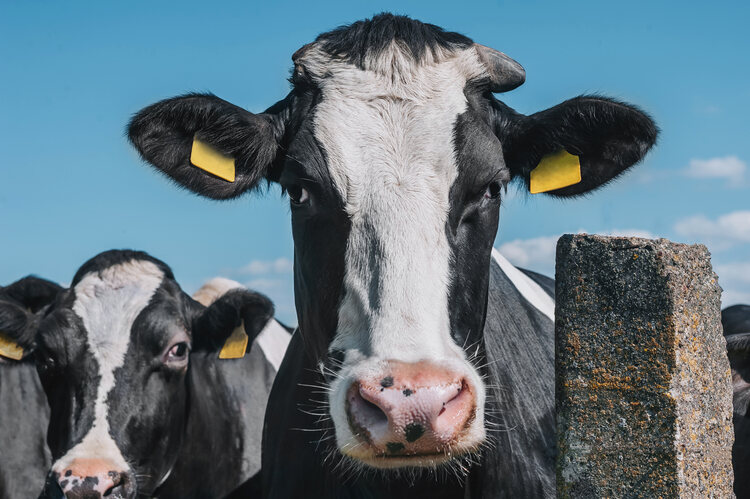
Methane is the primary contributor to ground-level ozone, which leads to 1 million premature deaths each year. The greenhouse gas is also 80 times more powerful at warming the planet compared to carbon dioxide, over a twenty year period.
However, scientists from the University of California, Davis have discovered that feeding cows seaweed supplements can reduce their methane emissions by almost 40 per cent, without impacting cows’ health or weight.
Carbon food labelling
The traffic-light system on food packaging is a familiar sight to many of us. But what if a new label was introduced that instead showed you how carbon-intensive a particular foodstuff was?
Scientists have been developing exactly that – a label which displays a numerical value of greenhouse gas emissions alongside a traffic-light system to denote the environmental impact (green being low, and red high).
Restaurants around the world are already beginning to include these labels on menus. JustEat have also begun to test the labels on food sold by its restaurants in Brighton and London.
If you want to see the climate footprint of some of your favourite foods, a set of digital scales has been created by the Financial Times, using data from Carbon Cloud.
AI smart grids
Artifical intelligence also plays a major role in helping to mitigate the impacts of climate change. By using algorithms, AI can predict demand and manage supply of energy throughout a particular grid.

For example, the technology can be used to manage renewable sources such as wind and solar, forecasting their output and adjusting operations accordingly. In addition, AI is able to bolster the security of smart grids, detecting potential cyber threats long before they can have a significant impact.
Examples of AI smart grids include Creos Luxembourg, which uses the technology to monitor energy consumption in real-time, as well as the city of Barcelona, which integrates AI and renewable energy sources to optimise energy distribution, reducing CO2 emissions and energy consumption.
Synthetic trees
We all know trees play a vital role in absorbing carbon dioxide from the atmosphere as they carry out photosynthesis. But now, scientists are also considering the benefits of synthetic trees that may have greater capabilities than their real counterparts.
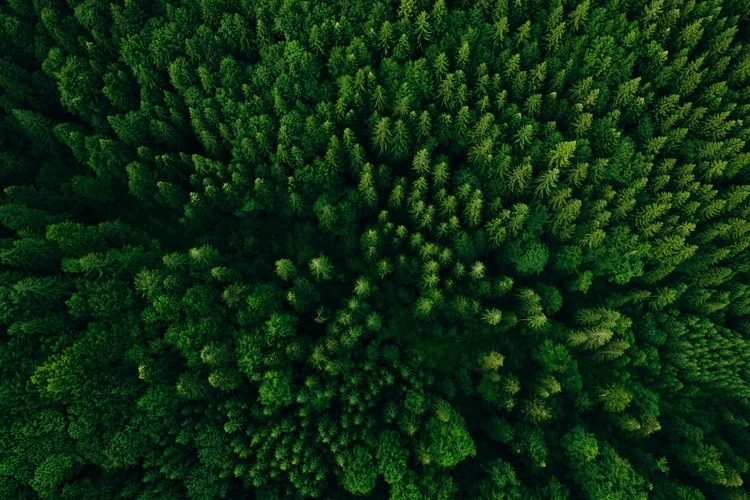
Already, several prototypes of synthetic trees have been created. For example, physicist Klaus Lackner from Arizona State University developed ‘mechanical trees’, structures that can absorb CO2 up to 1,000 times more effectively than natural trees.
Another prototype – by Mexican company BiomiTech – created a 4.2-metre-tall artificial tree capable of using microalgae to absorb pollutants including CO2, nitrogen oxides and particulate matter. Each BiomiTech tree can purify the air equivalent to that of 368 real trees.
Sheep’s wool and underwater curtains to prevent glacial melt
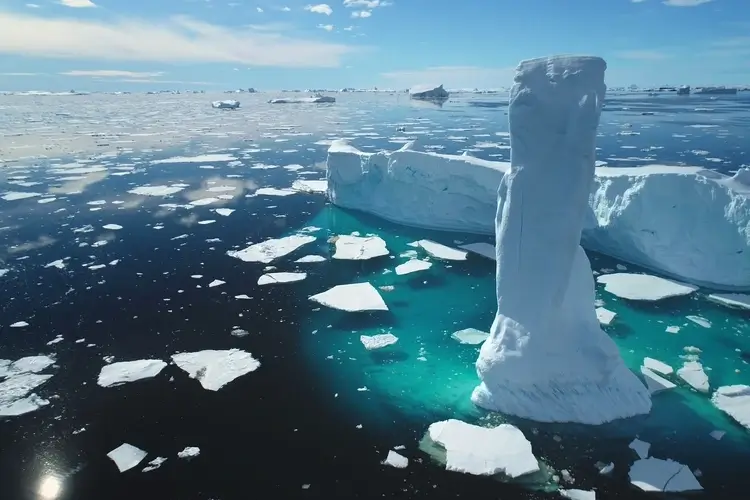
Scientists have developed a plan to build a set of giant 100-kilometre-ling underwater curtains in front of Antarctic ice sheets to protect them from melting due to warmer seawater.
The proposed curtain would stretch along the seabed between the Thwaites and Pine Island glaciers, the loss of which could raise sea levels around the world by three metres if they melted.
As well as this innovative solution, researchers in Switzerland dropped two blankets made of sheep’s wool – each measuring 100 square metres – on a glacier in the Alps in June 2026. Initial observations have shown that the blankets can reduce glacier melt in covered areas by 50 to 70 per cent. However, these blankets only cover around 0.02 per cent of the total glacier area. Scientists warn this is too little to have a significant effect on the glacier retreat caused by climate change.
Ultimately, the most successful way of preventing glacial melt is to reduce global greenhouse gas emissions and, in turn, decrease temperatures.
Harvesting drinking water from fog
In Morocco, fog harvesting technology is aiding water scarcity in arid communities in the nation that are impacted by limited rainfall and the effects of extreme weather patterns. The process uses large vertical mesh nets to capture water droplets that flow into collection channels, which is then filtered and stored for household use.
The system deployed in Morocco is the largest fog-collection network in North Africa, and is particularly effective in the Anti-Atlas Mountains region where consistent fog occurs.
Such technology also reduces the time spent collecting water, a task usually given to women and girls who must walk long distances daily. Access to clean water from fogo harvesting systems also improves public health, reducing exposure to waterborne diseases like diarrhea.


