Landmark case against Avara Foods and Welsh Water is allegedly the biggest ever in the UK over environmental pollution
By
A major environmental claim involving more than 4,500 people reached the UK High Court on Monday, centring on alleged pollution caused by two companies in the Wye, Lugg and Usk rivers.
The claim is against one of the UK’s largest chicken producers, Avara Foods, and a water company, Welsh Water, who are each being sued for negligence, causing private and public nuisance, and trespass where the riverbed has been affected on a claimant’s property. The environmental claim also demands that action be taken to improve river quality and that compensation be paid to affected individuals and businesses.
In response, both Avara Foods and Welsh Water called the claims ‘misconceived’ and ‘misguided’.
Enjoying this article? Check out our related reads…
At the High Court hearing on Monday, no findings had yet been made on whether any defendant caused unlawful pollution or was liable for damages. As such, further hearings are expected.
‘This case comes at a critical time for some of our most cherished rivers and the communities connected to them,’ said River Action’s head of legal, Emma Dearnaley.
‘We believe industrial-scale chicken production supplying major supermarkets and fast-food chains has placed immense pressure on the Wye, Lugg and Usk, driving nutrient pollution levels that these sensitive ecosystems cannot absorb. Sewage pollution must also be reduced and stopped to reverse the decline of these rivers.’
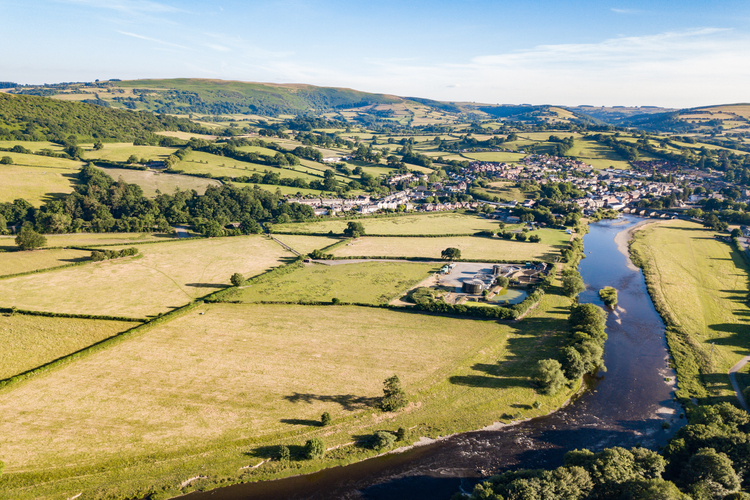
The River Wye is one of the UK’s longest rivers, but in recent years has been a source of concern for those living nearby, who complain it regularly turns green in the summer and has become ‘smelly’ and ‘slimy‘.

The group’s environmental claim has blamed sewage spills, as well as the spreading of chicken manure on farmers’ fields, as potential sources of the problem. When manure is spread on fields, nutrients in it wash off into waterways, leading to high levels of phosphorus, nitrogen and bacteria to enter the river. Such nutrient run-off causes the river’s green appearance, thanks to ‘algal blooming’.
Campaigners have also noted that the rapid expansion of industrial chicken farming near the River Wye may be a culprit in the river’s declining quality. Currently, around 24 million chickens are being raised in the catchment area, a quarter of the UK’s entire chicken population.
In 2023, the UK government’s official advisory body, Natural England, rated the condition of the River Wye as ‘unfavourable – declining’. In 2024, a follow-up action plan blamed excessive nutrients from farming and wastewater discharges, as well as climate change, for increasing the water temperature and reducing water flow in the summer.