Perilous waters, violent storms and sweltering temperatures await many migrants who flee nations to embark on the world’s most dangerous migration routes
By
Around the world, many individuals flee their countries in search of a safer, better life. From escaping the impacts of climate change to fleeing conflict in home nations, the decision to leave often comes with serious considerations for the route being taken. Some of these migration corridors are especially dangerous, with migrants being exposed to threats such as extortion, human trafficking and more.
Below are six of the most deadly migration routes that individuals can take around the world…
Check out our related reads…
1) Central Mediterranean route
According to the International Organisation for Migration (IOM), the Central Mediterranean route – stretching from North Africa to Italy – is the world’s deadliest migration corridor via sea. Since 2014, more than 20,000 deaths have been recorded on this route, although the true figure is expected to be much higher, as many boats disappear without a trace. In 2025 alone, more than 1,870 people lost their lives while travelling here.
Migrants typically travel on overcrowded, unseaworthy boats, and these are often equipped with little equipment or flotation devices in the event they capsize. Bad weather can also lead to capsizing, and many smugglers continue to send boats out even when storms are expected to occur – all factors leading to a greater risk to life for those embarking on such a journey.
In 2025, the corridor remained the most active migration route into the EU, with Bangladeshi, Egyptian and Eritrean individuals the most common nationalities within the corridor.
There are many reasons which push people into navigating such a dangerous migration route. For example, people may be fleeing ongoing conflict and insecurity in countries including Somalia, Sudan, Yemen, Nigeria, the Central African Republic, Mali and Libya. Additionally, the effects of climate change – particularly droughts and famine – can force many individuals to leave their countries.
2) Darién Gap
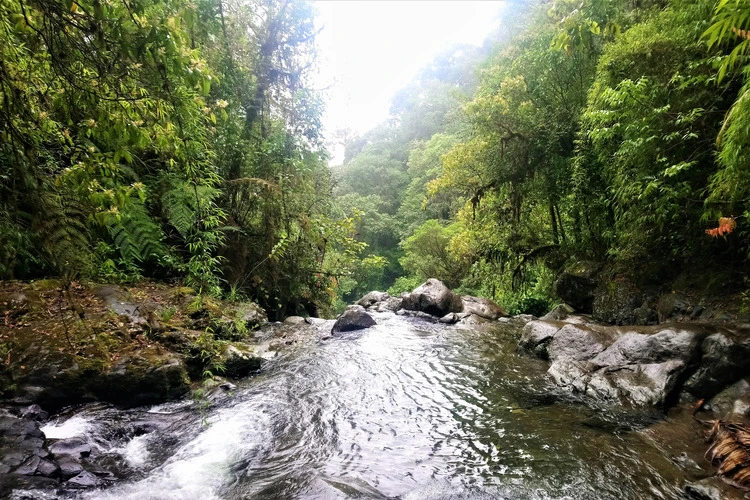
The Darién Gap is a 100-kilometre stretch of rugged terrain – including swamps, rainforests and mountains – between South and Central America. Now, it is one of the most heavily used migration corridors in the Americas.
In 2024 alone, approximately 300,000 people crossed the Darién Gap.
Most individuals who undertake the journey across the Darién Gap are from Venezuela, followed by Ecuador and Haiti, and a staggering one-fifth of all those who cross are children. But others who embark upon the journey through the Darién Gap come from countries across the world, with eight per cent of migrants originating from Asia, and six per cent from African countries.
A variety of factors make the route so perilous. Crossing rivers within the route can leave migrants in waist-high water with fast currents that can easily sweep people away. Environmental factors also include threats from local wildlife, as well as soaring temperatures – above 35°C – that can lead to severe dehydration on the long and arduous journey.
Other dangers exist in the jungle, such as robbery, human trafficking and extortion. Some individuals end up paying up to eight different ‘guides’, who each demand payment of several hundred dollars per person to navigate through the wilderness.
3) Atlantic route
The Atlantic route spans from West Africa to the Canary Islands, in a journey that takes around seven days.
Migrants depart from Senegal, Mauritania, Morocco and The Gambia in wooden fishing boats known as pirogues. These often disappear at sea due to violent winds and strong currents, as well as the fact that no humanitarian boats are present in the waters to aid migrants. Only the Moroccan coast guard and Spanish maritime rescue services can intervene.
More than 3,000 migrants died along the route in 2025.
4) Eastern Mediterranean route
The Eastern Mediterranean route became globally known during the 2015 refugee crisis, when hundreds of thousands of Syrians, Afghans and Iraqis crossed into Europe. It encompasses movements from Türkiye toward Cyprus, Greece, and Bulgaria. It is the shortest route to Europe, but is very risky, not only due to the journey itself, but also abandonment at sea in inflatable rafts and other serious threats.
Key drivers of migration via this route include ongoing conflicts in Syria, Libya, and Afghanistan, political instability in home nations and better economic opportunities.
Since 2016, the EU and Türkiye have signed an agreement that has reduced arrivals significantly, although departures have continued. 2022 and 2023 saw an increase in departures, although still far from the huge numbers recorded in 2015 and 2016.
Today, most of the migrants taking this route originate from Syria, Afghanistan, Iraq, Eritrea, Somalia and Ethiopia.
5) Yemen–Saudi Arabia route
The Yemen–Saudi Arabia route – also known as the Eastern route – is one of the busiest and riskiest migration routes in the world. Approximately 100,000 people migrate from the Horn of Africa to and through Yemen every year.
Between January and September 2025, 890 migrant deaths and disappearances were recorded along the Yemen–Saudi Arabia route.
The number of people passing through the route is also on the rise, increasing by 13 per cent between 2023 (395,000) and 2024 (446,194).
Migrants face severe challenges, including violence, extortion and abuse from smugglers, as they travel along the route.
6) US–Mexico route
In 2022, 686 deaths and disappearances of migrants were recorded on the US-Mexico border. Nearly half (307) of these deaths were linked to hazardous crossings of the Sonoran and Chihuahuan Deserts, among the hottest places on the planet. Such figures make the border the world’s deadliest land route for migrants.
Drowning also poses a significant threat for migrants trying to reach the US. In California, the All-American Canal runs parallel to the US-Mexico border, and its deep, cold and fast-moving waters can quickly overpower those wading through it.
In addition, falling from heights or experiencing car accidents is another leading cause of death among migrants. Some individuals become ejected from moving vehicles in high-speed chases, while other incidents involve collisions with vehicles carrying migrants.