Widespread pesticide contamination across Europe is threatening the essential soil fungi that plants rely on
By
Atrazine, once one of the most-used herbicides in the world, has been banned in Switzerland for nearly 20 years. But according to Marcel van der Heijden, a professor at the University of Zurich’s Department of Plant and Microbial Biology, it’s basically everywhere.
Van der Heijden is the lead author of a landmark study revealing that pesticide contamination is widespread across Europe – and not just on farmland, but throughout forests and grasslands, too. Analysing hundreds of soil samples from 26 European countries, he and a team of researchers screened for 118 commonly used pesticides, including the herbicide glyphosate.
Enjoying this article? Check out our related reads…
They discovered that 70 per cent of the samples contained at least one of 63 detected pesticides. Fungicides were the most frequent, accounting for 54 per cent, followed by herbicides at 35 per cent and insecticides at 11 per cent. Glyphosate, which remains mired in US cancer litigation and fierce European regulatory disputes, was the single most common active ingredient identified.
The results uncovered a toxic legacy: ten of the identified chemicals, such as atrazine, have been banned or discontinued for years. ‘Some fungicides are very persistent in soil,’ says van der Heijden. Because their half-life – the time needed for half the chemical to degrade – can be in the order of decades, these chemicals linger in soils long after farmland has reverted to forest, and can leach into surrounding ecosystems. ‘Pesticides do not stay where they are applied.
Some leach through the soil and end up in ground- and drinking water, or are transported to waterways through soil erosion and runoff.’ They have even been detected as far away as Antarctica, where they were likely deposited by atmospheric currents.
This contamination has a major impact on the soil we rely on for food security, and highlights a critical gap in how pesticides are assessed for safety; evaluations have traditionally focused on human health and high-profile wildlife such as birds and bees. ‘The soil has been rather ignored,’ says van der Heijden. When it’s considered, regulations and risk assessments have commonly focused on the impacts on single species – earthworms or collembola, tiny insect-like organisms that are the standard subjects for soil-pollution tests, yet which represent only a fraction of the soil’s ecosystem and the services it provides. ‘There are many more functions that the soil provides, from disease suppression to nutrient uptake by mycorrhizal fungi.’
Of all the other beneficial soil organisms that are at risk from pesticide use, van der Heijden highlights arbuscular mycorrhizal fungi as a critical casualty. These are fungi that form a symbiotic partnership with the roots of roughly 80 per cent of all land plants. They grow a vast network of tiny threads called hyphae, acting as a biological extension of the plant’s root systems that forages for nutrients. They also protect plants from harmful pathogens, lock in carbon and help to bind the soil together, preventing erosion.
‘They are very strongly affected by pesticides,’ van der Heijden warns. ‘The most affected, I would say.’ Earlier research in Switzerland and other Europe-wide studies shows that, in soils heavily treated with fungicides, the nutrient-gathering capacity of these mycorrhizal fungi is significantly reduced. Without them, plants become more dependent on synthetic fertilisers, creating a self-reinforcing cycle of chemical dependency.
For now, the findings remain correlational, based on observations across diverse landscapes. The full impact of pesticides on soil micro-organisms is still poorly understood, but the study’s authors note that their research provides the first comprehensive, quantitative evidence of how these chemicals affect European soil life.
Technological advances are rapidly closing this knowledge gap. A decade ago, analysing the DNA of an entire microbial community was prohibitively expensive, but sequencing technology has since evolved. ‘The sensitivity of the machines used to detect pesticides has increased,’ says van der Heijden. Modern high-depth sequencing now allows scientists to detect thousands of microbial taxa that were previously invisible, revealing a much higher concentration of cocktail effects – where multiple pesticides interact within a single gram of soil.
Going forward, the researchers want to see regulatory bodies shift from narrow, single-species testing towards a more holistic, ecosystem-level approach. This change would mean specifically accounting for the essential functions of the soil microbiome. But van der Heijden emphasises that consumers, too, can play a role, pointing to wine consumption as a prime example.
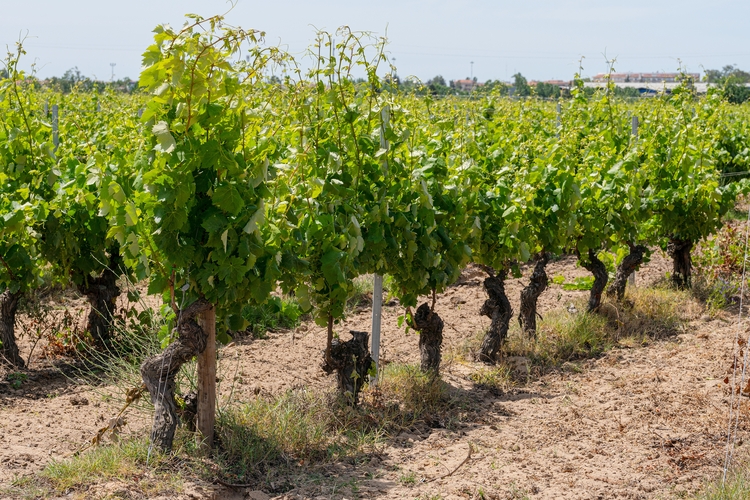
Wine production is one of the most chemically intensive forms of agriculture. Vineyards often require roughly 25–30 kilograms of pesticides per hectare – a staggering amount compared to the three to five kilograms typically used for cereals or maize – to combat persistent diseases such as mildew.
Some growers, however, are now using disease-resistant grape varieties, often referred to by the German abbreviation PIWI, short for pilzwiderstandsfähig, or ‘fungal-resistant’. These specific grape genotypes are bred for natural resilience, and using them can slash pesticide requirements by 80–90 per cent. ‘And it’s good wine,’ adds van der Heijden.
‘There are farming practices that require far fewer pesticides, but it’s not always easy for farmers who are dealing with pests and diseases. I think it’s very important for people to realise that to drive change, there must be demand from consumers.’