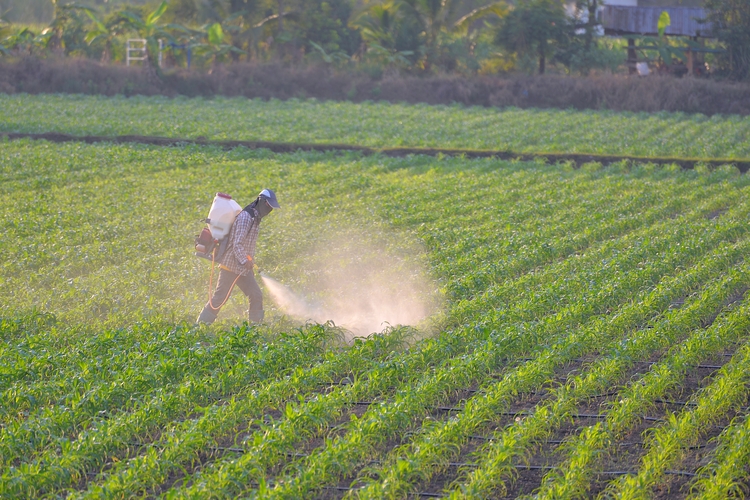
New study reveals how women exposed to pesticides even before becoming pregnant, may be putting their newborns’ health at risk
By Coby Schlosberg
Pesticides are a central pillar of agriculture. Their effect on controlling the insects, weeds and bacteria which threaten crops, property and human health has made it a fundamental – almost revolutionary – substance used in vast quantities around the world.
Despite the triumphs in increasing crop yields and controlling disease vectors, a far darker and more punishing side to pesticides exists. Now, the risk window for human health from exposure has been expanded.
A new study by the University of Arizona, published in the Journal of Exposure Science & Environmental Epidemiology, has linked poorer health in newborns to the exposure of women to pesticides before they become pregnant.
‘Pesticides are designed to be toxic – very often, the biological mechanisms that they act on are present not just in insects and weeds, but also in humans. They have demonstrable biological effects on human health,’ said assistant professor at the Mel and Enid Zuckerman College of Public Health and the senior author of the study, Melissa Furlong.
Enjoying this article? Check out our related reads:
The research team analysed comprehensive records of every pesticide application made in Arizona. The state is one of just two in the USA which continues to archive pesticide use. The team then collected all birth certificate records in Arizona and linked them to the state’s filing of pesticide applications.
The result was that exposure before and during pregnancy to commonly applied pesticides – such as those belonging to the classes of organophosphates, pyrethroids and carbamates – was associated with lower Apgar scores. Evaluating skin colour, heart rate, reflexes, muscle tone and breathing, this score is a measure given to newborns within five minutes of birth and is strongly linked with longer-term health outcomes throughout the baby’s childhood.
‘What’s new in this study is that we identified the preconception period as a possible sensitive window of exposure to some of the commonly used pesticides,’ said the study’s first author, Audrey Yang.
Crucially, although the study found a strong correlation, it refrains from definitively stating that pesticide exposure during preconception and pregnancy worsens the health of newborns.
On a brighter note, Furlong stresses that most pesticide ingredients have alternatives. This means that increased data on the health effects of specific pesticide ingredients can lead to a better regulatory environment for application, which can improve health outcomes.
Rather than blanket all pesticide use as detrimental to health, the danger often comes more from how and where we use it. It is the specific type of ingredients, the overusage, and the proximity of application to people that can really damage human health.
What are the wider health risks from pesticides?

Although vulnerability is heightened for expectant mothers and children, all parts of the population face health risks from pesticide exposure.
Pesticides have both acute and long-term health impacts. A single episode of inhalation, ingestion or skin contact can prompt lethally harmful effects. These range from eye and skin irritations to loss of consciousness and seizures.
The main source of exposure to pesticides in the general population is through the diet, due to lingering residues on fruits and vegetables and on food products of animal origin. Additionally, contaminated drinking water is a common route of exposure. This is because of surface run-off carrying chemicals that were originally on agricultural land into key water sources, such as groundwater through percolation.
Over time, repeated exposure at low levels causes longer-term impacts. The interruption of natural human functions has produced higher rates of sleep disruption among farm workers. In terms of more deadly impacts, exposure is related to the development of Parkinson’s disease and cancers, including leukaemia and non-Hodgkin’s lymphoma, where a 30-41 per cent increase in diagnosis has been associated with exposure to glyphosate, a widely used ingredient in weed control. Cardiovascular mortality rates have also been linked to pesticide exposure.
Health risks strongly depend on the intensity and duration of exposure, how the exposure occurred, and the type of ingredients within the pesticide itself. People who work in agriculture are, of course, the most at risk. Every year, an estimated 11,000 people die as a result of agriculture-related pesticide poisoning, with a further 385 million people affected annually, representing close to half of the world’s farming population.