
• Skip to main content
  • Skip to secondary menu
  • Skip to primary sidebar
  • Skip to footer
Geographical

Geographical

Official magazine of the Royal Geographical Society (with IBG)

  • Geographical Home
  • News
  • Features
  • Opinion
    • Climatewatch
    • Front Lines
  • Podcast
  • Travel
    • Discovering Britain
    • Passport
  • Culture
    • Book reviews
  • Quizzes
    • Crosswords
  • Choose Geography
    • University directory
    • Masters courses
    • Course guides
      • Climate change
      • Environmental science
      • Human geography
      • Physical geography
    • University pages
      • Aberystwyth University
      • Brunel University
      • Cardiff University
      • University of Chester
      • Edge Hill University
      • The University of Edinburgh
      • Newcastle University
      • Nottingham Trent University
      • Oxford Brookes University
      • The University of Plymouth
      • Queen Mary University of London
    • Geography careers
      • Charity/non-profit
      • Education & research
      • Environment
      • Finance & consulting
      • Government and Local Government
    • Applications and advice
  • Magazine
    • Issue previews
    • Subscribe
    • Manage My Subscription
    • Special Editions
    • Geographical Archive
    • Advertise with us
  • Subscribe
    • Direct Debit Changes

Study finds link between climate change and heat-related heart disease 

2 June 2026
3 minutes

Climate change heatwave
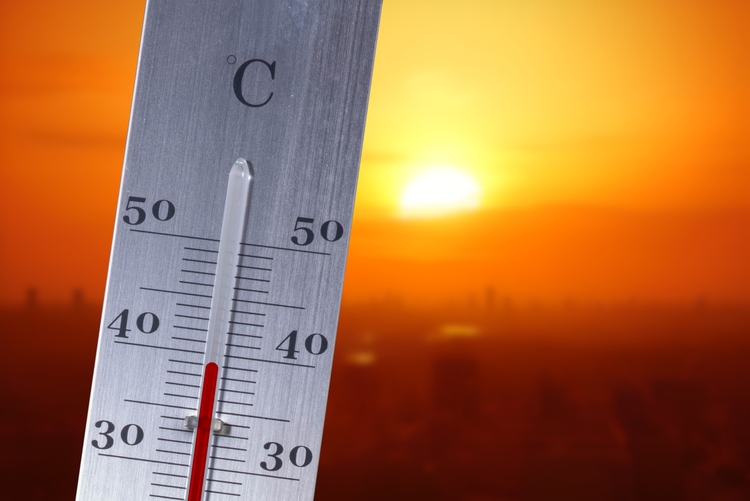
Extreme heat is known to trigger heart attacks and other cardiovascular issues. Image: Shutterstock

A new study predicts that human-caused climate change will accelerate heart-related diseases in the US, particularly in southern states


By Khadeejah Masud

Higher temperatures could increase heat-related heart disease by 200 per cent by 2050, according to a new study published by Case Western Reserve University, University Hospitals and the Louis Stokes Cleveland VA Medical Centre.

The study – published in JAMA Cardiology – drew upon the Global Burden of Disease database and U.S. Census Bureau data to reach its conclusions. They focused on heart disease data from each US county recorded between 2010 and 2016 to develop projections through 2050. 


Enjoying this article? Check out our related reads…

  • High temperatures preferentially killing the young, not old, research finds
  • Heat deaths in Europe set to triple by 2100
  • New study links air pollution to more advanced coronary artery disease
  • Review: Himālaya by John Keay
  • Children lose 8.45 million days of healthy life due to second-hand smoke

‘We already knew that extreme heat could trigger heart attacks and other cardiovascular events,’ said lead author Gokul Parameswaran.

Parameswaran highlights that economic factors will accelerate heart disease burden as much as physical ones, with the biggest impact on poorer communities. He said ‘lower median household incomes are likely to face higher heat-related heart disease burden.’

When temperatures rise, the heart must work harder to keep the body cool, according to the Centers for Disease Control and Prevention (CDC). This increases the likelihood of developing sudden clots in the bloodstream. Extra stress on the heart due to increased temperatures leads to heart attacks or sudden worsening of heart disease, especially in the elderly or those with prior heart conditions. 

The southern US is prone to the highest risk, as it naturally has warm weather, which the greenhouse effect of global warming has intensified. It is also the region with the highest adult obesity prevalence in the nation, exceeding 35 per cent. States like Mississippi, Alabama, and Louisiana consistently rank among the most obese, driven by deep-rooted socioeconomic disparities, regional diet, and limited healthcare access.

Sunset in Wisconsin
Wisconsin, Mississippi, is one region particularly hit by rising temperatures due to climate change. Image: Shutterstock

‘We believe this increase in the South could possibly be driven by three converging factors: the region already carries one of the highest heart disease burdens in the nation, it faces some of the fastest projected temperature increases in the country and presently contains many counties among the poorest in the US with the least healthcare infrastructure to cope with the projected crisis,’ said associate professor in the Department of Surgery and one of the study’s senior authors, Salil Deo.

The study also found that ageing, independent of temperature increases, will contribute an additional 34 per cent increase in heat-related heart disease by 2050 – simply because there will be more older adults by then.

‘Climate change is not just an environmental issue – it is a health equity crisis, and prioritising vulnerable communities must be at the centre of any heat mitigation strategy,’ Deo continued.

Expanding green spaces and tree cover in urban areas could help reduce temperature-related adverse effects. In addition, creating greater access to cooling centres and air-conditioning assistance programs for low-income communities can also help bridge the gap in underserved communities.

‘Climate change is not a distant, abstract threat,’ said director of the Cardiovascular Research Institute, Sanjay Rajagopalan. 

‘It is a present and growing danger to the hearts of every American, and it is coming for the most vulnerable among us first. The choices made today about greenhouse gas emissions, urban planning and healthcare policy will determine whether tens of thousands of Americans live or die from heart-related disease by 2050.’

Themes Climate Change Climate Global Health

Protected by Copyscape

Primary Sidebar

SUMMER SALE

GEOGRAPHICAL WEEKLY LOGO FREE - Sign up to get context, clarity and perspective in a noisy world, every Friday

Popular Now

Band-e Amir National Park, in Bamiyan Province, central Afghanistan's Band-e Amir National Park, in Bamiyan Province, central Afghanistan

Why does Afghanistan have a high risk of natural disasters?

Hormuz closure could trigger global super-spreader event

Hormuz closure could trigger global super-spreader event

England’s largest private landscape restoration project announced

England’s largest private landscape restoration project announced

Out now: August 2026’s Geographical Magazine

Out now: August 2026’s Geographical Magazine

QUIZ: Country Spotlight – Somalia

QUIZ: Country Spotlight – Somalia

Footer

  • Facebook
  • Instagram
  • LinkedIn
  • Reddit
  • TikTok
  • Twitter
  • YouTube

Geographical print magazine cover

Published in the UK since 1935, Geographical is the official magazine of the Royal Geographical Society (with IBG).

Informative, authoritative and educational, this site’s content covers a wide range of subject areas, including geography, culture, wildlife and exploration, illustrated with superb photography.

Click Here for SUBSCRIPTION details

Want to access Geographical on your tablet or smartphone? Press the Apple, Android or PC/Mac image below to download the app for your device

Footer Apple Footer Android Footer Mac-PC

More from Geographical

  • Subscriptions
  • Get our Newsletter
  • About Us
  • Contact Us
  • Advertise with us
  • Privacy policy
  • Terms & Conditions

Copyright © 2026 · Site by Syon Media