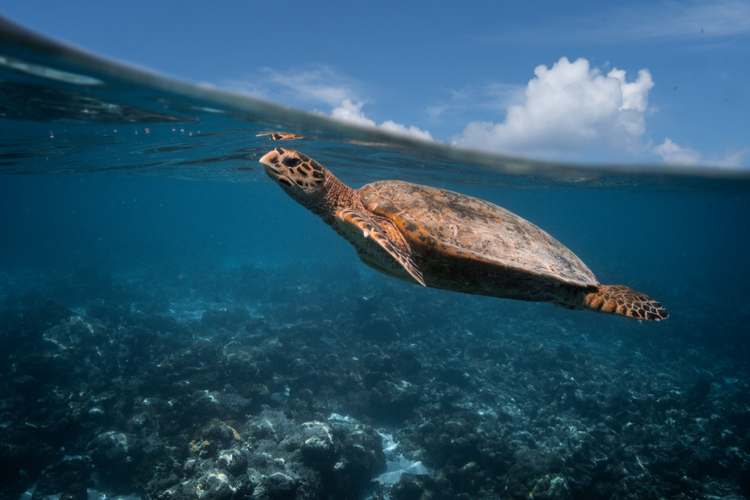
A revolutionary new technology is enabling injured sea turtles to regrow severely injured tissue and safely return to the ocean
By Chris Fitch
Michelle pointed at the X-Ray on the screen in front of us. ‘This was Noor. She was a patient of ours that had severe lung tear, and it didn’t heal.’ She waved the iPad, showing the ghostly image. ‘It was really huge, and she had gas all over her left side.’ I leaned in, trying to identify body parts. A curved sliver, the unmistakable shape of a skeleton beneath the shell. And what appeared to be an old, saggy balloon. ‘Is this an air bubble?’ Michelle nodded. ‘Yeah, in her body cavity. She was really inflamed.’
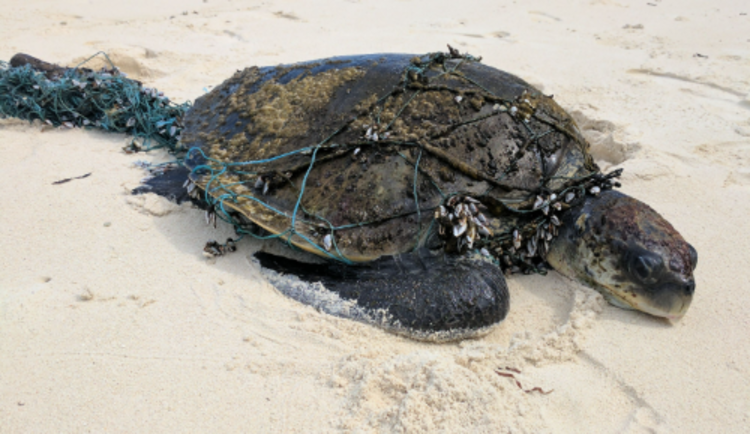
In the Maldives, sea turtles are regularly discovered entangled in discarded fishing gear – so-called ‘ghost nets’. One local citizen-science survey found 137 entangled turtles in just one year, likely a significant underestimate. Such figures suggest the country has one of the highest rates of turtle entanglement in the world.
Enjoying this article? Check out our related reads…
Maldivians themselves don’t fish with nets. The more holistic ‘pole and line’ method of plucking tuna from the ocean one-by-one is enforced, with minimal bycatch. But the archipelago suffers due to its location, surrounded by the Indian Ocean. Nets discarded by boats of other nations often float into the Maldives with currents, sharks, rays, dolphins, seabirds and other marine life trapped inside. When turtles attempt to escape, using their powerful flippers to try and pull themselves free, the strain can tear holes in their lungs, allowing air to leak into the body cavity. The resulting buoyancy can be fatal, since they’re now incapable of diving below the surface.

Sea turtles injured by entanglements are brought to the Marine Turtle Rescue Centre in the Baa Atoll, about 120 kilometres northwest of the capital Malé, into the care of Michelle Cheongneo Rop. Michelle, originally from Nairobi, Kenya, is a veterinary surgeon for the Olive Ridley Project. This NGO may be headquartered in Lancashire, but its global field operations officially opened here in 2013, now stretching across the Indian Ocean.
Leaving their compact laboratory/operating theatre/admin room, Michelle led me a short distance through the humid forest. We arrived in a small clearing full of tanks, gazebos shielding the inhabitants from the hot midday sun. Walking from tank-to-tank, Michelle introduced me to Naalay, Karaa and the rest of the eight turtles currently being treated. Their different injuries and responses to visitors couldn’t have been more diverse. Some barely acknowledged our presence, floating mournfully, while others chased us the length of the tank, beaks snapping at the thick glass.

In mid-December 2023, one wounded olive ridley was brought here after being found entangled. Although one of her flippers had to be amputated, she survived, and was given the name Nooru, meaning ‘Holy light’ in the local language, Dhivehi. After surgery, she gradually began to regain her health. However, she was increasingly struggling with buoyancy issues caused by trapped gas. By early 2024, Nooru was still suffering from the wounds in her lungs, making a long-time recovery.
Michelle explained that survival rates for such injuries vary. ‘For non-severe ones, it’s not bad, they do make it. But severe ones like Nooru’s…’ She paused, having difficulty finding the right words. ‘It’s hard to explain. She was basically very afloat. There was so much gas in her body cavity. We tried different techniques, but it didn’t work.’ In April last year, Nooru finally passed away from her injuries. ‘When she eventually died, she kind of… deflated.’ Michelle’s voice trailed off. ‘It was really sad.’
A magic pill
Lung wounds are one of the two main injuries that can land a wild sea turtle in the care of the rescue centre. Entanglement also inflicts many external wounds. As ropes tighten around limbs or necks, they dig into flesh, often right down to the bone. Many turtles are found missing body parts, or on the verge of losing them.
The good news is that even amputees can, with the right treatment, be safely returned to the wild. Michelle surprised me by claiming that even Dharihulha, a recently arrived turtle with only two flippers – left front and right rear – might be re-released one day, provided she otherwise had a clean bill of health and could dive without difficulty. Regardless, trying to return these animals without such handicaps is a priority.

‘Saving its life is one thing,’ said Max Polyak, director of conservation medicine at the Olive Ridley Project. ‘Returning it to the wild with the best possible chance at success is another. And for me, the best possible chance of success is all limbs intact. Do whatever you can to keep all limbs intact.’
With this in mind, Max and his team have established a ‘limb-salvaging protocol’. This includes immediately analysing blood samples to identify infections and using laser therapy for pain relief and acupuncture to enhance mobility. On top of all that, a revolutionary new therapy is helping combat the many injuries caused by entanglement through, among other things, the clinical use of stem cells.
‘Most of the time when you hear stem cells in humans, you think embryonic stem cells, which is controversial. We don’t do that in sea turtles, because they’re from an egg.’ Instead, Max’s technique involves the surgical removal of a small piece of fat from the turtle – about one cubic centimetre. Using a centrifuge, he isolates stem cells that naturally occur in very small numbers inside that fat. The isolated cells are grown in a laboratory environment for around a month, before being injected back into the injured animal. ‘I grow it to the point where I have a therapeutic dose of their own cells, then re-inject those cells back into the patient, and they work their magic.’
Injured turtles can use the huge quantities of their own stem cells as building blocks for whatever the body deems necessary. Stem cells are ‘pluripotent’, Max explained, meaning that they have the capacity to turn into almost any tissue. ‘Stem cells are great, because they do things that we’re not even aware of. That stem cell is circulating in the body and fixing other problems that I don’t even see. It’s really like a magic pill, but it comes from the body itself.’ Now, when a turtle is facing the prospect of amputation, the introduction of stem cells can enable a full recovery, rebuilding anything from lungs to limbs.
The technology builds upon Max’s experience as a human physician. He refers to it as ‘translational medicine’, with human and turtle research working somewhat in tandem, making breakthroughs that help each other move forward, towards a potential future where something like this could even be done for humans. ‘For example, if someone like Messi hurts his knee on the football pitch, he could get an injection of stem cells into his knee, and that will help heal him.’
Purpose built
Max has his own laboratory in nearby Saudi Arabia, where he has pioneered the treatment of injured turtles. But use of this technology in the Maldives has been limited by rudimentary facilities. At the rescue centre, Michelle showed me a wooden board rammed into one tank as a makeshift divider, separating two solitary turtles. Capacity is an issue, as well as a lack of top-level equipment. A new purpose-facility aims to solve these problems. The Sea Turtle Health Institute opened late last year in a neighbouring atoll, on the island of Jawakara, home to a glamorous five-star luxury resort operated by Crown & Champa Resorts. Everyone insists that this will be a game-changer.
Hasanulhusa, also known as Naul, head veterinary surgeon of the Olive Ridley Project in the Maldives, led me on a walkthrough. It was quiet, awaiting the arrival of cutting-edge machines, veterinarians, and, of course, patients. ‘This site was designed specifically for treating and researching sea turtles,’ she explained. A very different situation from the modest rescue centre.
Naul waved a hand towards five large tanks, all empty, awaiting both water and inhabitants. ‘Only one tank has glass, because we know that sea turtles are very sensitive to literally anything.’ She stepped towards the largest tank, with a gaping hole in the side. ‘This will have glass, to have a look at how the sea turtle interacts with people, how they’re doing in the tank, and to assess their ability to dive.’
After showing off their new classroom for teaching specialised sea turtle medicine, and the new research laboratory, Naul led me behind the intensive care unit, where stem cell and other operations will take place, to two smaller tanks designed for critical patients. She pointed at various holes within the structures, drainage points to control the water level, and also small holes for underwater cameras, to enable remote monitoring.
Every detail has been carefully considered, a luxury rarely afforded to NGOs working in the field.These developments are a drop in the ocean of the wider crisis of abandoned fishing gear,and the global impact on turtle populations. Even Max demurred when asked whether they could have an impact on the conservation status of the species. Sea turtles have been stuck between ‘vulnerable’ and‘critically endangered’ since first being assessed by the International Union for Conservation of Nature and Natural Resources (IUCN) in the 1980s. Nevertheless, they could be transformative on a local scale. The new facility kicks off 2026 with an official opening ceremony, and the first patients are slowly being introduced. Rough waters surely lie ahead, and there will inevitably be more sad stories such as Nooru’s yet to come. But sea turtles now have a powerful new ally to help them fight back.
The seven species of sea turtle
Green turtle (Chelonia mydas)
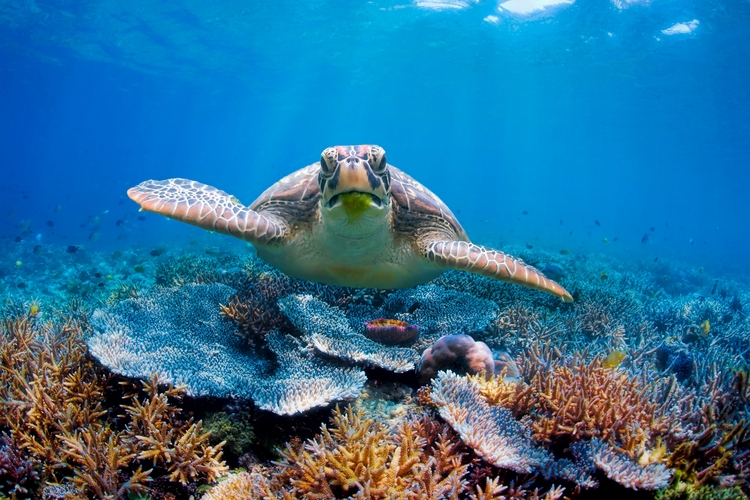
IUCN status: Least concern (global) – a conservation success
Estimated population: ~85,000–90,000 nesting females
Population trend: Increasing in many regions
Facts: Once heavily exploited, green turtles have rebounded in parts of the Pacific and Atlantic due to long-term protection
Leatherback (Dermochelys coriacea)
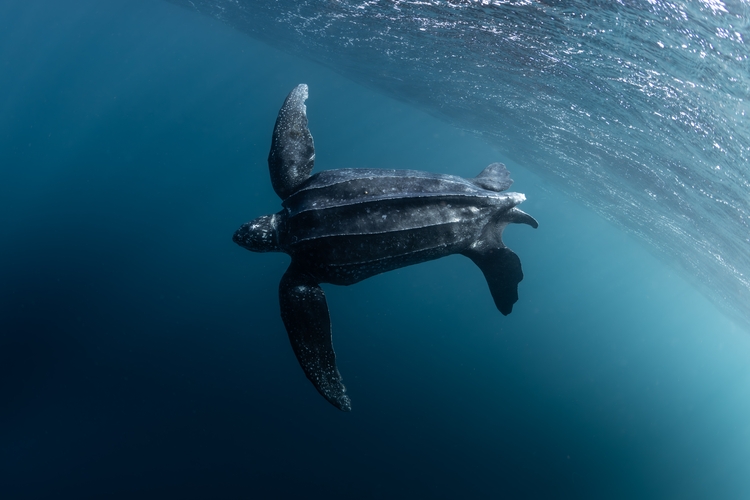
IUCN status: Vulnerable globally
Estimated population: ~40,000–60,000 nesting females globally
Population trend: Many regional populations are declining dramatically, especially in the Pacific
Facts: The largest sea turtle species, capable of migratory journeys of thousands of kilometres
Olive ridley (Lepidochelys olivacea)
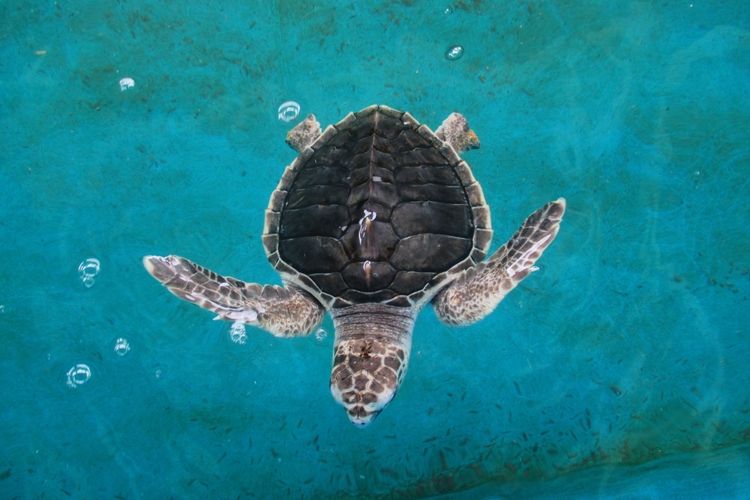
IUCN status: Vulnerable
Estimated population: ~800,000 nesting females
Population trend: Variable by region; conservation efforts have protected nesting sites and reduced take, but threats persist
Facts: Famous for mass nesting events known as arribadas that take place in India, Costa Rica and Mexico
Loggerhead (Caretta caretta)
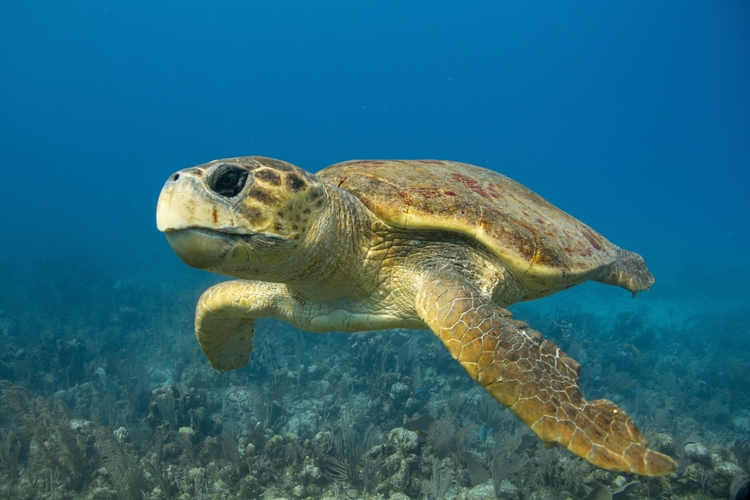
IUCN status: Vulnerable globally
Estimated population: ~50,000–60,000 nesting females
Population trend: Declines in several subpopulations; Atlantic populations are more secure
Facts: Considered a keystone species vital for ecosystems
Hawksbill (Eretmochelys imbricata)
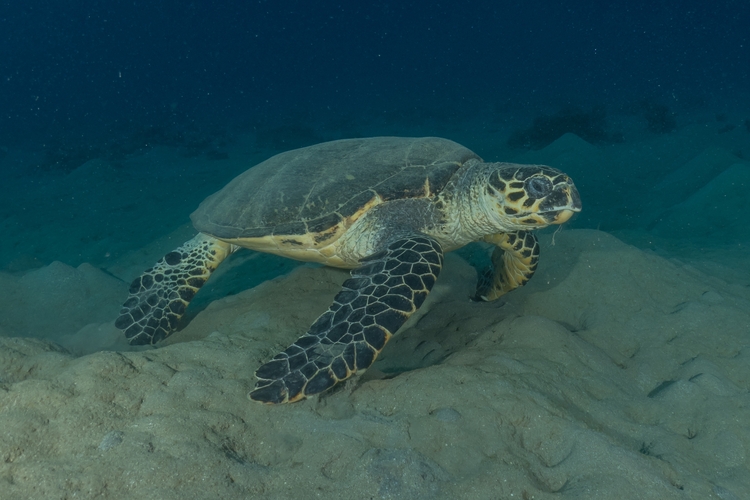
IUCN status: Critically endangered
Estimated population: ~25,000–30,000 nesting females
Population trend: Generally decreasing, with historical losses of up to 80 per cent attributed to the shell trade and habitat destruction
Facts: Feeds mainly on sponges and has a role in coral reef ecology
Kemp’s ridley (Lepidochelys kempii)
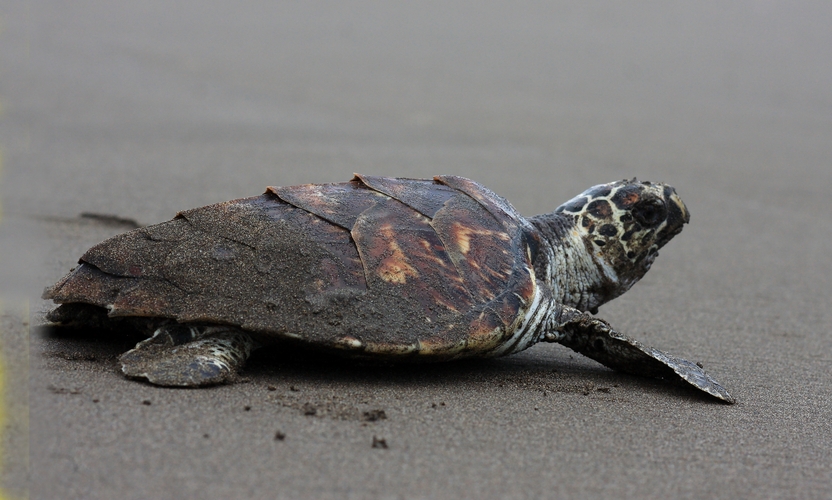
IUCN status: Critically endangered
Estimated population: ~7,000–9,000 nesting females
Population trend: Smallest and most endangered species; population remains tenuous, despite focused conservation
Facts: The rarest sea turtle. After a rebound in the early 2000s, progress has slowed; nesting numbers remain worryingly low
Flatback (Natator depressus)
IUCN status: Data deficient – global risk is unclear
Estimated population: Likely ~20,000 mature individuals
Population trend: Not well quantified; a more limited range compared with other species
Facts: Endemic to northern Australia and nearby waters; generally not as threatened as other species, but poorly studied