Learn more about the fragile network that keeps taps running in the Gulf, and the threats it faces
By
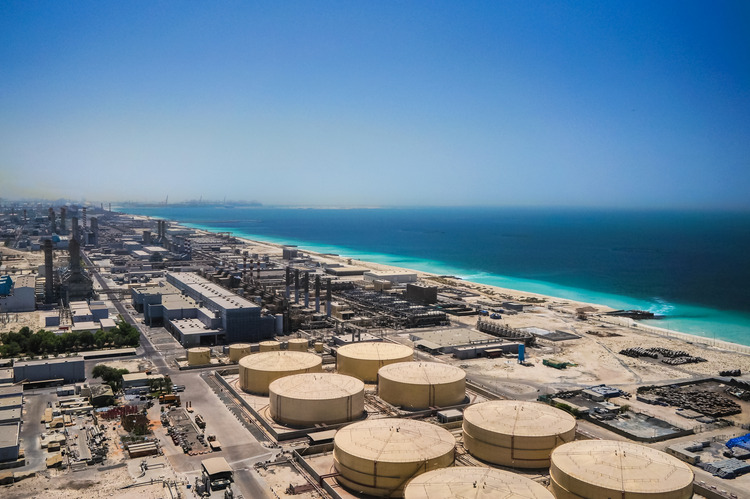
Across the Arabian Gulf, roughly 100 million people rely on purified water produced by vast desalination plants – hubs that remove salt and impurities from water to produce a potable version.
Unlike many regions of the world, the Gulf states have little natural freshwater resources. Rainfall is limited and groundwater reserves are often rapidly dwindling. To meet the demands of their expanding populations, countries such as Saudi Arabia, the United Arab Emirates, Kuwait and Qatar have turned to desalination on an unprecedented scale.
Enjoying this article? Check out our related reads…
In recent days, ongoing conflict in West Asia has placed these desalination plants into the forefront as they begin to emerge as targets in confrontations involving Iran, the US and Israel.
Such a development follows claims by Bahrain on Sunday that an Iranian drone attack led to ‘material damage’ to a water desalination plant in the country.
Iran also accused the US of striking a freshwater desalination plant on Qeshm Island in southern Iran earlier this week. Iranian foreign minister Abbas Araghchi said the attack affected water supply in several villages. The US has denied responsibility.
But why are desalination plants so important? And how reliant are the Gulf states on them? Read on to find out…
Vital desalination plants
Water scarcity in the Gulf has meant desalination is absolutely essential for the region to function. According to a 2020 report by the Gulf Research Center, groundwater and desalinated water together form about 90 per cent of the region’s main water resources.
Some experts reiterate that these Gulf nations should be known as not only ‘petro-states’ but ‘saltwater kingdoms’ – global superpowers in the production of human-made fresh water.
More than 400 desalination plants operate along the Arabian Gulf coast, with eight of the 10 largest desalination plants worldwide located in the Arabian Peninsula. Dependence is particularly high in several states – about 42 per cent of UAE’s drinking water comes from desalination plants, while the figure is around 90 per cent in Kuwait, 86 per cent in Oman and 70 per cent in Saudi Arabia.
Sabatoging water supplies
During conflict, desalination facilities represent a ‘critical vulnerability’ and are prime targets for attack. According to environmental researcher Naser Alsayed, ‘targeting or disrupting desalination facilities would place much of the region’s economic stability and growth at significant risk.’
For Abdullah Baabood, an Omani academic at Waseda University, targeting these facilities most certainly signals an escalation within conflict. ‘Targeting a desalination plant in Bahrain crosses an important threshold and represents a serious escalation,’ Baabood said.
‘In the Gulf, desalination facilities are not merely infrastructure. They are essential lifelines that supply drinking water to millions. Striking them risks turning a military confrontation into a direct threat to civilian survival.’
The CIA has worried about attacks on Gulf region desalination plants since the 1980s. During the 1990–1991 Gulf War, Iraqi forces intentionally destroyed most of Kuwait’s desalination capacity, leading to lasting and severe damage to its water supply.

In recent times, fears of attacks on desalination plants resurfaced after Yemen’s Houthi movement launched drones and missiles at Saudi facilities at Al-Shuqaiq in 2019 and 2022.
The impact of attacks on water desalination plants would vary depending on the country in which they occur. For example, the UAE has 45 days of water storage aligned with its 2036 water security strategy, so contingency plans are in place to manage any disruptions.
Effects are more likely to be felt in smaller states such as Qatar, Bahrain and Kuwait which all have ‘minimal strategic resevoirs’.