

Discover the ten territories which are the most dependent on tourism as a share of their GDP
By
Travelling for leisure is becoming increasingly ubiquitous across the globe. More than 1.5 billion international tourists travelled abroad in 2025, reinforcing the significance of tourism as a major global industry, which is estimated to have contributed about $11.7 trillion to global GDP in 2025.
The importance of tourism as a source of income to individual countries varies dramatically. For some, it is little more than a supplementary source of income, whereas for others, it is the heart of the economy, which almost singlehandedly keeps the country ticking.
Using international tourism receipts from UN Tourism and GDP data from the International Monetary Fund, we rank the top ten territories according to their dependence on tourism as a source of income, in reverse order.
Enjoying this article? Check out our related reads:
10) Saint Kitts and Nevis – 32.9 per cent share of GDP

A dual-island state in the Caribbean formed by volcanic eruptions, its 250,000 annual visitors are attracted to the warm climate and picturesque landscapes which include stunning beaches and rainforests.
The Brimstone Hill Fortress National Park is a UNESCO World Heritage Site rising 250 metres above sea level with panoramic views of the coastline and neighbouring Caribbean islands. The capital, Basseterre, with its museums, markets and fairs, attracts plenty of visitors too. With Victorian buildings and a traffic circle built like London’s Piccadilly Circus, there are nods to the imperial past.
9) The Bahamas – 35 per cent share of GDP

This Caribbean destination includes 16 islands consisting of the typical Caribbean offering of a warm climate, luxurious beaches and beautiful inland landscapes combined with good scuba diving.
About 85 per cent of visitors come from the USA, while visitors here tend to predominantly be families or older retired couples.
Nassau is the capital and largest city which serves as a hub for incoming cruise ships – receiving approximately 3.7 million cruise ship passengers every year. Away from Nassau, Andros Island is home to the world’s third-largest barrier reef.
8) Seychelles – 46.6 per cent share of GDP
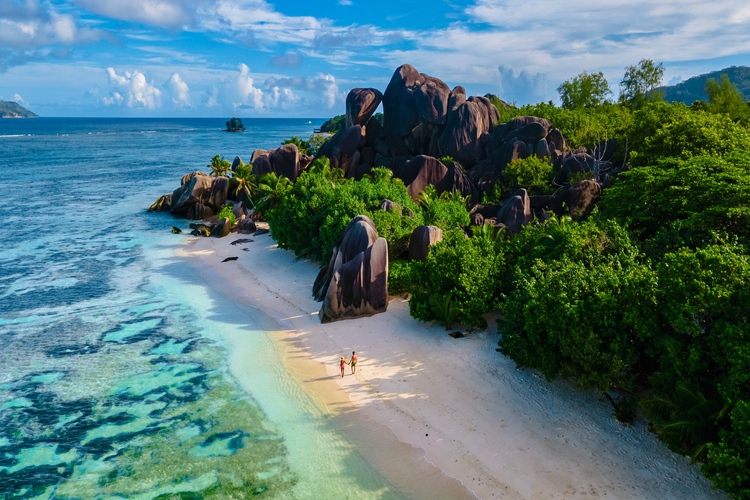
An archipelago of 115 islands in the Indian Ocean off the coast of East Africa, despite being the smallest country in Africa, the Seychelles offers visitors plenty. Beaches, coral reefs and nature reserves provide captivating experiences, including sightings of rare wildlife like the huge Aldabra tortoises.
Seychelles welcomes around 350,000 international tourists each year – this is roughly four times larger than its population. Europe provides the bulk of tourists, with Germany as the largest single source of international visitors at 22 per cent.
There have been some attempts to limit mass tourism and improve the sustainability of tourism due to concerns over the environment. The government has previously limited the construction of large resorts to encourage ‘slower tourism’ and stem overcrowding in flagship destinations.
This is emblematic of a concern that many countries on this list have. Too much tourism is damaging economically, as it can quickly make the very assets that attract tourists less appealing. When the supposedly tranquil and relaxed beach becomes overcrowded, and the museum queues become tedious, Islands like the Seychelles can suffer as tourists are put off from visiting.
7) Antigua and Barbuda – 47.8 per cent share of GDP

Back to the Caribbean, Antigua and Barbuda is best known for its 365 public beaches, including the famous Jolly Beach. Antigua is home to a UNESCO World Heritage Site – Nelson’s Dockyard is a gem of the Georgian Era that is still in use.
The USA provides the majority of tourists to Antigua and Barbuda, followed by the UK and Canada. Most of the time, these are families and retired people going on vacation.
6) Grenada – 48.1 per cent share of GDP
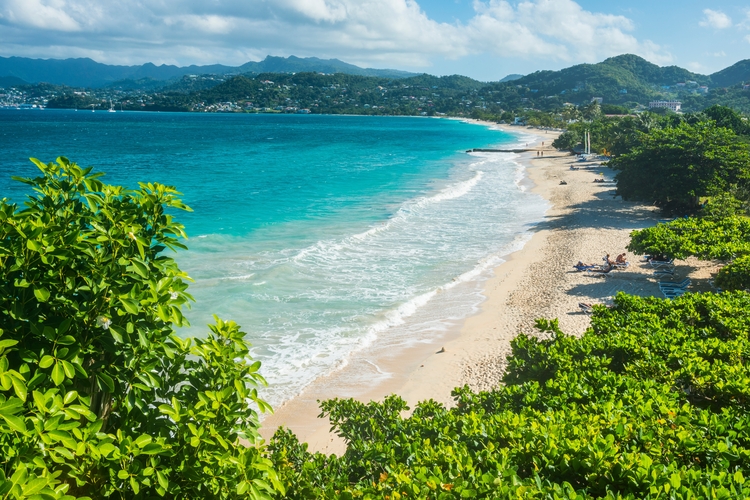
Known as the ‘spice isle’ of the Caribbean, its fertile volcanic soil and tropical climate make it a significant producer of spices such as cinnamon, ginger and cocoa.
However, tourism is the main pillar of the economy, thanks to the country’s wealth of attractive landscapes. The 3km long Grand Anse Beach in St George’s is regularly described as one of the best beaches in the world. The country’s many waterfalls also act as a big draw for visitors.
Like the other Caribbean countries on this list, the USA provides the majority of visitors, with the UK and Canada also bringing significant numbers to the island.
5) Saint Lucia – 53 per cent share of GDP

Into the top half of the list – with over half of total economic output coming from tourism – is the small island nation of Saint Lucia.
With year-round temperatures averaging at 27 degrees Celsius, pristine beaches, and exhilarating physical landscapes such as the two Piton mountains, Saint Lucia is a huge draw for international visitors.
4) Andorra – 66.5 per cent share of GDP

for shopping. Image: Shutterstock
A tiny country situated in the Pyrenees, between France and Spain, Andorra is a major ski destination that is very popular with European tourists.
In the Summer, other outdoor activities such as hiking, cycling and cross-country can be undertaken when the snow has thawed.
3) Maldives – 68.1 per cent share of GDP

Turquoise waters, soft white sand and impressive marine diversity, the Maldives welcomed a record-breaking 2.2 million international visitors in 2025. For the first time on this list, the two biggest source countries for arrivals are non-Western countries – China and India.
The Maldives is covered with resorts offering experiences for all types of visitors. Uniquely, the 187 designated tourist islands in the Maldives are home to a single hotel. This gives a level of seclusion that can be hard to find anywhere else in the world.
A low-lying nation, Maldives is on the front line of climate change and is extremely vulnerable. Rising sea levels signify an increase in beach erosion and coral bleaching. This spoils the very features which draw people to the island and therefore prompts much concern. The World Bank has projected that in the Maldives, sea levels are likely to rise by 0.5 to 0.9 metres by 2100– the hope is that the generous income receipts from tourism can be used to protect local people from future risks to livelihoods.
2) Aruba – 69.7 per cent share of GDP

Most visitors are from North America, soaking up year-round sunshine, luxurious beaches and a lively Dutch-Caribbean culture.
1) Macao – 70.8 per cent share of GDP
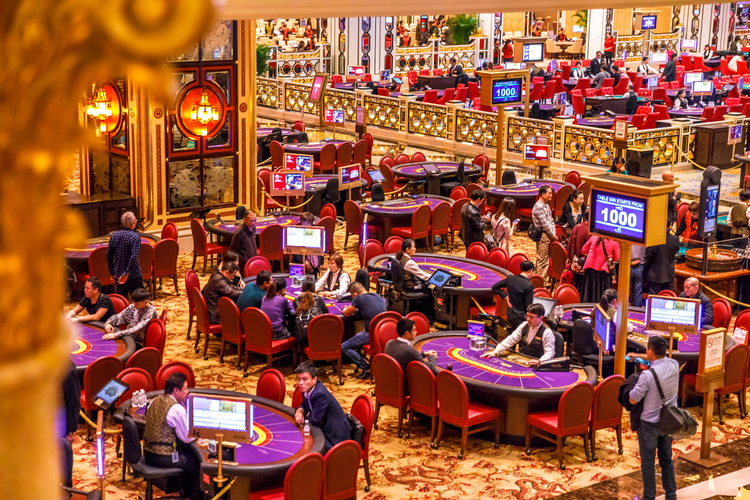
A special administrative region of China, Macao, tops the list. It has one of the highest GDP’s per capita in the world, which is a stark difference from most of the other countries on this list, which tend to be poorer. In addition, it is an extremely urbanised region and one of the most densely populated regions in the world.
Here, sandy beaches are swapped for casinos. Arguably the gambling capital of the world, the gambling industry was seven times larger than that of Las Vegas back in 2013. It is helped by the fact that it is the only location in China where gambling is legal, attracting a multitude of wealthy and high-stakes players. Gross gaming revenue in 2025 was an enourmous $33.3 billion.
Supplementing the gambling industry is a plethora of hotels, budget and high-end, as well as a substantial offering of culture with a blend of Chinese and Portuguese touches due to historical links.


