
• Skip to main content
  • Skip to secondary menu
  • Skip to primary sidebar
  • Skip to footer
Geographical

Geographical

Official magazine of the Royal Geographical Society (with IBG)

  • Geographical Home
  • News
  • Features
  • Opinion
    • Climatewatch
    • Front Lines
  • Podcast
  • Travel
    • Discovering Britain
    • Passport
  • Culture
    • Book reviews
  • Quizzes
    • Crosswords
  • Choose Geography
    • University directory
    • Masters courses
    • Course guides
      • Climate change
      • Environmental science
      • Human geography
      • Physical geography
    • University pages
      • Aberystwyth University
      • Brunel University
      • Cardiff University
      • University of Chester
      • Edge Hill University
      • The University of Edinburgh
      • Newcastle University
      • Nottingham Trent University
      • Oxford Brookes University
      • The University of Plymouth
      • Queen Mary University of London
    • Geography careers
      • Charity/non-profit
      • Education & research
      • Environment
      • Finance & consulting
      • Government and Local Government
    • Applications and advice
  • Magazine
    • Issue previews
    • Subscribe
    • Manage My Subscription
    • Special Editions
    • Geographical Archive
    • Advertise with us
  • Subscribe
    • Direct Debit Changes

Arctic Ocean food chain disrupted as key tipping point passed

28 May 2026
3 minutes

Arctic Ocean
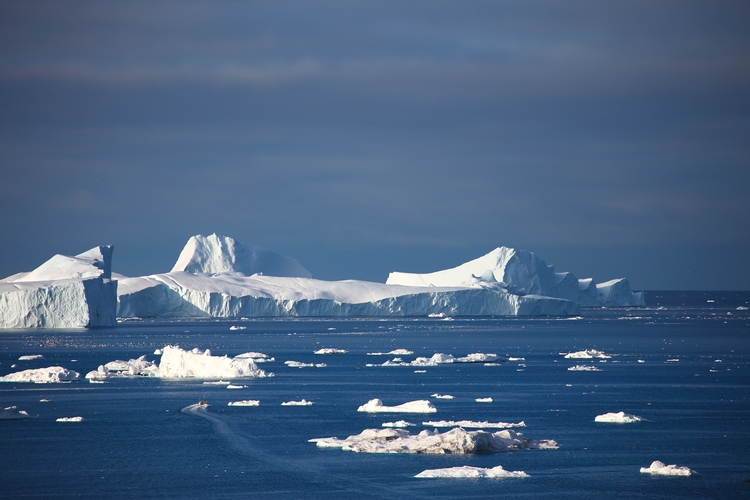
The Arctic Ocean is losing a valuable nutrient that supports its food chain. Image: Shutterstock

Nitrate –  a key nutrient for plankton to grow – is being removed from the Arctic Ocean due to climate change, new study suggests


By Victoria Heath

An irreversible shift in the chemical composition of the Arctic Ocean driven by climate change is disrupting the region’s food chain, a study suggests.

Researchers from the University of Edinburgh found that widespread loss of Arctic sea ice has led to a sharp fall in levels of a key nutrient – nitrate – affecting populations of plankton, fish, seabirds and marine mammals.


Enjoying this article? Check out our related reads…

  • The desert that fed the world
  • The extraordinary world of plankton
  • Excess fine sediment in rivers starves fish habitats of oxygen, study finds
  • What would happen if the Arctic thawed?
  • Arctic nations are squaring up to exploit the region’s rich natural resources

Analysis reveals that vast shallow regions of the ocean previously covered by ice are now being exposed to sunlight, fuelling a process known as benthic denitrification that breaks down nitrate and removes it from seawater.

Nitrate is crucial for plankton – organisms at the bottom of the Arctic food chain – to grow. Reduced levels of the nutrient limit the amount of life the ecosystem can support, researchers say.

In addition, dwindling levels of nitrate could also reduce the Arctic Ocean’s capacity to store carbon, as plankton play a key role in capturing it from the atmosphere via photosynthesis.

Plankton bloom
A plankton bloom. Plankton are vital at the bottom of marine food chains, providing sustenance to countless species. Image: Shutterstock

Recent studies have reported changes in animal populations in Arctic waters, but the causes were poorly understood as there have been few in-depth analyses of the ocean’s chemical composition.

Now, researchers have gained new insights into the changing nutrient levels in the Arctic Ocean by analysing data spanning a 20 year period.

The team assessed more than two decades of sampling data from Fram Strait, the main gateway through which Arctic waters flow into the Atlantic.

Their analysis reveals a clear shift from 2009 onwards, with nitrate levels in waters leaving the Arctic falling steadily. The drop in nitrate levels coincided with a drastic reduction in Arctic sea ice that began around the same time.

Since the change in nutrient conditions is driven by ongoing sea ice loss, it is very unlikely the Arctic Ocean will ever revert to its previous state, researchers say.

Further research is needed to understand the possible wider effects that changes in Arctic waters could have on marine populations in other parts of the world’s oceans, including the North Atlantic.

‘The changes we report suggest that the Arctic Ocean ecosystem passed a tipping point around 2009. How this change cascades through the food chain needs to closely monitored as this has profound implications for us, including on commercial fishing in the North Atlantic Ocean,’ said professor Raja Ganeshram, who led the study.

How is the Arctic Ocean faring under climate change?

The Arctic Ocean is warming at a rate much faster than the global average – around four times more quickly than other seas around the world.

In the same region that University of Edinburgh researchers studied in the latest research, scientists from the University of Cambridge conducted a study and found that the Arctic Ocean has been warming since the beginning of the 20th century.

Since 1900, the ocean temperature has risen by around two degrees Celsius, while sea ice has retreated and salinity has increased.

As the Arctic Ocean gets warmer, ice melts and exposes more of the ocean’s surface to the sun, releasing heat and raising air temperatures. As the Arctic will only continue to warm, permafrost will melt. This permafrost stores vast quantities of methane, a much more potent and damaging greenhouse gas than carbon dioxide.

Themes News Arctic Ocean

Protected by Copyscape

Primary Sidebar

SUMMER SALE

GEOGRAPHICAL WEEKLY LOGO FREE - Sign up to get context, clarity and perspective in a noisy world, every Friday

Popular Now

September 2026 Geographical crossword

September 2026 Geographical crossword

QUIZ: Physical Geography Trivia

QUIZ: Physical Geography Trivia

QUIZ: Country Spotlight – Peru

QUIZ: Country Spotlight – Peru

Surfers riding the tidal bore on the Petitcodiac River in New Brunswick, Canada

Phenomena: tidal bores

Writer's Reads graphic

Writer’s reads: Ayana Elizabeth Johnson

Footer

  • Facebook
  • Instagram
  • LinkedIn
  • Reddit
  • TikTok
  • Twitter
  • YouTube

Geographical print magazine cover

Published in the UK since 1935, Geographical is the official magazine of the Royal Geographical Society (with IBG).

Informative, authoritative and educational, this site’s content covers a wide range of subject areas, including geography, culture, wildlife and exploration, illustrated with superb photography.

Click Here for SUBSCRIPTION details

Want to access Geographical on your tablet or smartphone? Press the Apple, Android or PC/Mac image below to download the app for your device

Footer Apple Footer Android Footer Mac-PC

More from Geographical

  • Subscriptions
  • Get our Newsletter
  • About Us
  • Contact Us
  • Advertise with us
  • Privacy policy
  • Terms & Conditions

Copyright © 2026 · Site by Syon Media