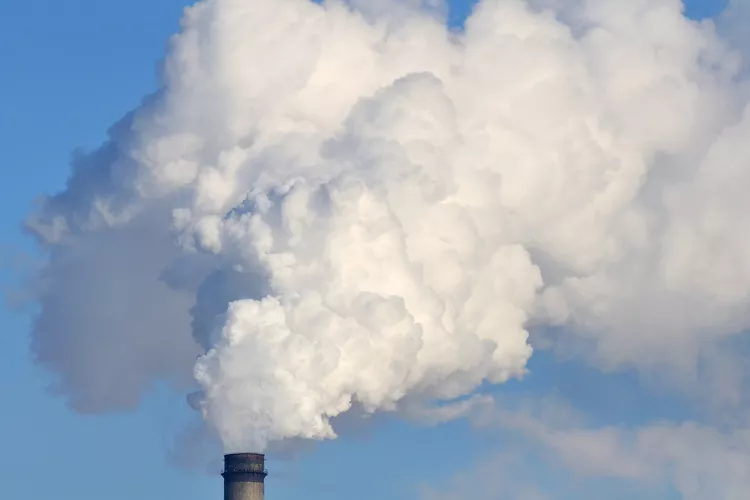
Expansion of solar and wind power, as well as the Iran conflict, are drivers of a slight projected decrease in emissions
By
Global carbon emissions from fossil fuels are projected to marginally decrease by 0.4 per cent in 2026, new research by the Global Carbon Project has revealed.
The 0.4 per cent decrease is driven by the growing deployment of clean energy, alongside a widespread decline in oil emissions – likely a short-term response to energy shocks triggered by the Iran conflict.
‘A decline in fossil CO2 emissions is encouraging, but a reduction driven partly by geopolitical shocks is not a sustainable climate solution,’ said director of the Global Carbon Budget Office at the University of Exeter, Professor Pierre Friedlingstein.
‘The long-term answer remains the rapid deployment of clean energy technologies. While renewables and electric vehicles are increasingly offsetting growth in energy demand, further acceleration is needed if global emissions are to peak and enter a sustained decline.’
In total, 38.2 billion tonnes of fossil carbon dioxide emissions are projected for 2026.
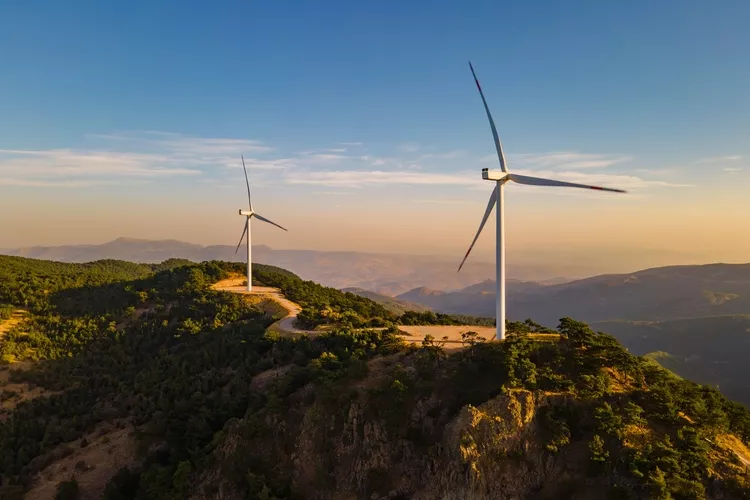
The report also found that solar and wind power, along with electric vehicles, now offset about two-thirds of emissions from rising energy demand. Still, clean energy growth is not yet fast enough for a ‘durable decline’ in global fossil CO2 emissions.
Global CO2 emissions from land-use change have decreased over the past decade, but are projected to rise this year due to peat fires and forest degradation in Southeast Asia, both linked to drier conditions associated with El Niño.
Enjoying this article? Check out our related reads…
Atmospheric CO2 concentration is set to reach 427.7 parts per million in 2026, 54 per cent above pre-industrial levels.
The report also detailed emissions by country. For example, China produces 32 per cent of global fossil emissions, yet is the country most active in deploying clean technologies and increasing carbon sinks through reforestation.
The US’s emissions are projected to fall by 1.3 per cent, mainly because coal emissions are declining. In contrast, India’s emissions are set to increase by 4.4 per cent, higher than the 3.5 per cent average annual growth over the last decade.
Emissions are also projected to fall in the European Union (1.5 per cent), Japan (1 per cent), and the rest of the world (0.7 per cent).