
• Skip to main content
  • Skip to secondary menu
  • Skip to primary sidebar
  • Skip to footer
Geographical

Geographical

Official magazine of the Royal Geographical Society (with IBG)

  • Geographical Home
  • News
  • Features
  • Opinion
    • Climatewatch
    • Front Lines
  • Podcast
  • Travel
    • Discovering Britain
    • Passport
  • Culture
    • Book reviews
  • Quizzes
    • Crosswords
  • Choose Geography
    • University directory
    • Masters courses
    • Course guides
      • Climate change
      • Environmental science
      • Human geography
      • Physical geography
    • University pages
      • Aberystwyth University
      • Brunel University
      • Cardiff University
      • University of Chester
      • Edge Hill University
      • The University of Edinburgh
      • Newcastle University
      • Nottingham Trent University
      • Oxford Brookes University
      • The University of Plymouth
      • Queen Mary University of London
    • Geography careers
      • Charity/non-profit
      • Education & research
      • Environment
      • Finance & consulting
      • Government and Local Government
    • Applications and advice
  • Magazine
    • Issue previews
    • Subscribe
    • Manage My Subscription
    • Special Editions
    • Geographical Archive
    • Advertise with us
  • Subscribe
    • Direct Debit Changes

England and Wales see driest July on record

4 August 2026
2 minutes

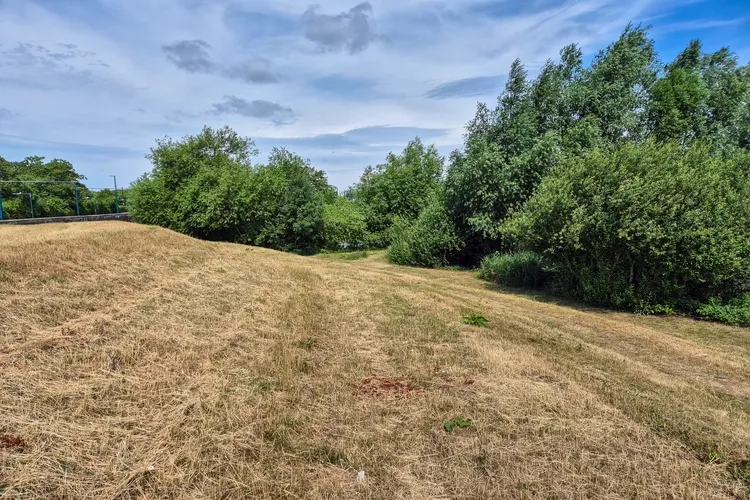
Scorched grass in Nottingham
Just 6.5mm of rainfall was recorded across England in July. Image: Shutterstock

Nineteen counties in England recorded less than or equal to one millimetre of rainfall across the entire month


By Victoria Heath

England and Wales have provisionally recorded their driest July on record – and southern England has seen its driest month since records began in 1836, according to data released by the Met Office.

Just 6.5mm of rainfall was recorded across England in July (10 per cent of its long-term average for the month), while 9.3mm of rainfall was recorded in Wales (9 per cent of its monthly average).

Southern England saw just 1.9mm of rain throughout the month, representing three per cent of its usual average.

Wales had its joint-warmest July on record for mean temperature, while the UK and England recorded their second-warmest July on record for mean temperature. The month was also extremely sunny – England and Wales experienced their sunniest calendar month ever observed.


Enjoying this article? Check out our related reads…

  • Geo explainer: The Guadalupe River
  • Ceredigion: the geographical centre of Wales
  • Greenland’s true size, according to five maps
  • Restoring Welsh forests could help forge a new national identity
  • Why are the world’s driest places getting wetter?

Such records come after a summer filled with heat records, contributing to drought conditions affecting half of England and the entirety of Wales.

‘The combination of record-breaking dryness, exceptional warmth and unprecedented sunshine has delivered one of the most notable summer months in our historical records,’ said Met Office science manager Dr Amy Doherty.
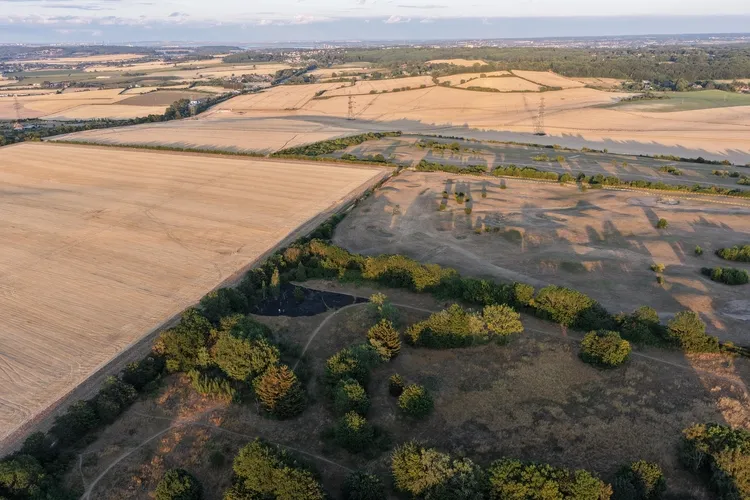
Drought in Kent
Nineteen counties in England saw less than one millimetre of rain in July. Image: Shutterstock

In total, nineteen counties recorded less than (or equal to) 1mm of rainfall across the entire month: Berkshire, Dorset, East Riding of Yorkshire, East Sussex, Essex, Gloucestershire, Greater London, Herefordshire, Isle of Wight, Kent, Leicestershire, Lincolnshire, Northamptonshire, Nottinghamshire, Oxfordshire, Rutland, Surrey, Warwickshire and West Sussex.

‘Dry weather depletes our water, while the hot conditions mean we use more of it. This is a difficult combination, and we are seeing the effects on our farmers, our wildlife, and the amount available for public and business use,’ said chair of the National Drought Group and director of water at the Environment Agency Helen Wakeham.

‘All sectors are taking action, and we are grateful to the public for following the restrictions, where in place, to make sure there is enough water for everyone this summer.’

In 2026, four months so far have seen above average rainfall (January, February, March and June), while three months have seen below average monthly rainfall (April, May and now July).
Themes News

Protected by Copyscape

Primary Sidebar

SUMMER SALE

GEOGRAPHICAL WEEKLY LOGO FREE - Sign up to get context, clarity and perspective in a noisy world, every Friday

Popular Now

Wildfires in northern Australia have been reduced by half since traditional land management has been introduced

Geo explainer: What is hydroclimate whiplash?

Physical Geography Quiz

QUIZ: Physical Geography Trivia

Wasps flying around close-up

Why insects are disappearing and what it means for our future

QUIZ: Glaciation

QUIZ: Glaciation

AI concept

China’s AI push raises the stakes

Footer

  • Facebook
  • Instagram
  • LinkedIn
  • Reddit
  • TikTok
  • Twitter
  • YouTube

Geographical print magazine cover

Published in the UK since 1935, Geographical is the official magazine of the Royal Geographical Society (with IBG).

Informative, authoritative and educational, this site’s content covers a wide range of subject areas, including geography, culture, wildlife and exploration, illustrated with superb photography.

Click Here for SUBSCRIPTION details

Want to access Geographical on your tablet or smartphone? Press the Apple, Android or PC/Mac image below to download the app for your device

Footer Apple Footer Android Footer Mac-PC

More from Geographical

  • Subscriptions
  • Get our Newsletter
  • About Us
  • Contact Us
  • Advertise with us
  • Privacy policy
  • Terms & Conditions

Copyright © 2026 · Site by Syon Media