
• Skip to main content
  • Skip to secondary menu
  • Skip to primary sidebar
  • Skip to footer
Geographical

Geographical

Official magazine of the Royal Geographical Society (with IBG)

  • Geographical Home
  • News
  • Features
  • Opinion
    • Climatewatch
    • Front Lines
  • Podcast
  • Travel
    • Discovering Britain
    • Passport
  • Culture
    • Book reviews
  • Quizzes
    • Crosswords
  • Choose Geography
    • University directory
    • Masters courses
    • Course guides
      • Climate change
      • Environmental science
      • Human geography
      • Physical geography
    • University pages
      • Aberystwyth University
      • Brunel University
      • Cardiff University
      • University of Chester
      • Edge Hill University
      • The University of Edinburgh
      • Newcastle University
      • Nottingham Trent University
      • Oxford Brookes University
      • The University of Plymouth
      • Queen Mary University of London
    • Geography careers
      • Charity/non-profit
      • Education & research
      • Environment
      • Finance & consulting
      • Government and Local Government
    • Applications and advice
  • Magazine
    • Issue previews
    • Subscribe
    • Manage My Subscription
    • Special Editions
    • Geographical Archive
    • Advertise with us
  • Subscribe
    • Direct Debit Changes

England to require cameras on large fishing vessels to protect marine life

11 November 2026
3 minutes

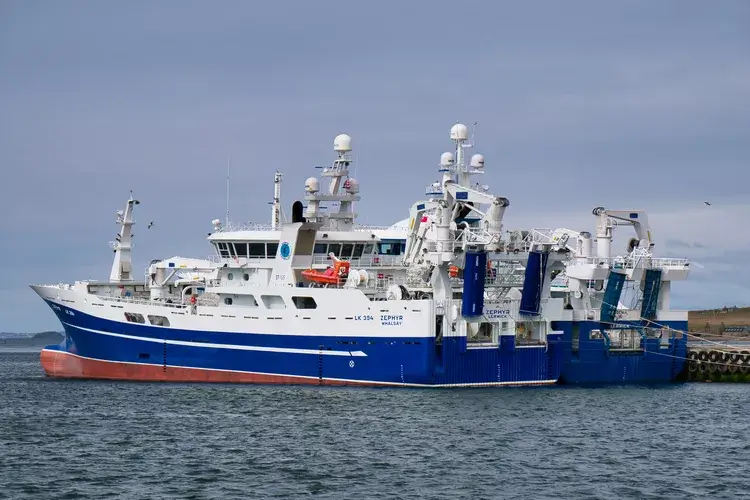
Pelagic fishing vessel
The technology will let regulators respond proportionately to rule-breaking fishing practices, helping manage fisheries and protect marine life sustainably. Image: Shutterstock

New technology will be legally required to monitor fishing activity at sea


By Victoria Heath

Large fishing vessels in English waters will be legally required to install on-board cameras, sensors and GPS to monitor their fishing activity, the Department for Environment, Food & Rural Affairs has announced.

Subject to parliamentary timings, large pelagic fishing vessels will need to install remote electronic monitoring (REM) systems from November 2028. This will make information available to scientists, such as where vessels are fishing, what they’re catching, and whether they accidentally catch marine mammals, seabirds, or sharks.

In turn, this will make it easier for regulators to spot and act proportionately on rule-breaking fishing practices, helping manage fisheries and protect marine life sustainably.

Pelagic trawlers are large fishing boats designed to catch shoaling fish such as mackerel or herring from open waters. Many of these boats already have REM systems installed, so the latest move will bring the rest of the fleet in line.

‘This is a major step forward for protecting our seas, and the fact that most of the fleet is already on board speaks volumes,’ said fisheries minister Stephen Morgan.

‘For the first time, we will be able to fully monitor fishing activity at sea, ensuring a level playing field for everyone in the industry and helping scientists get the evidence they need to support our fish stocks and marine wildlife.’


Enjoying this article? Related reads…

  • Britain’s fish stocks are heading for collapse – report states
  • Why are cod populations dwindling?
  • The online climate tool that Trump removed, but data scientists have now rebuilt
  • Supertrawlers spent more than 7,300 hours fishing in UK MPA’s since Brexit
  • The UK’s overexploited fisheries, explained

The announcement follows new fishing regulations announced by the UK government’s Marine Management Organisation last week. Aimed at rebuilding depleted stocks in the Celtic Sea, English Channel and Irish Sea, the regulations – which come into force from 26 November – stipulate that those fishing must use larger mesh sizes and more selective fishing gear.

This year, new government analysis found that UK fishing quotas exceeded scientific recommendations in 58 per cent of cases in 2026. The International Council for the Exploration of the Sea (ICES) recommended zero-catch limits for some cod stocks and advised consumers to avoid red-rated mackerel because of sustained overfishing and international quota disputes.

Last year, a report by Oceana found half of the UK’s top ten fish stocks – including North Sea cod, North Sea herring, North East Atlantic mackerel and Southern North Sea edible crab – are critically low, being overexploited, or both. One in six of all UK stocks are in a critical condition, yet are still being fished beyond safe limits.
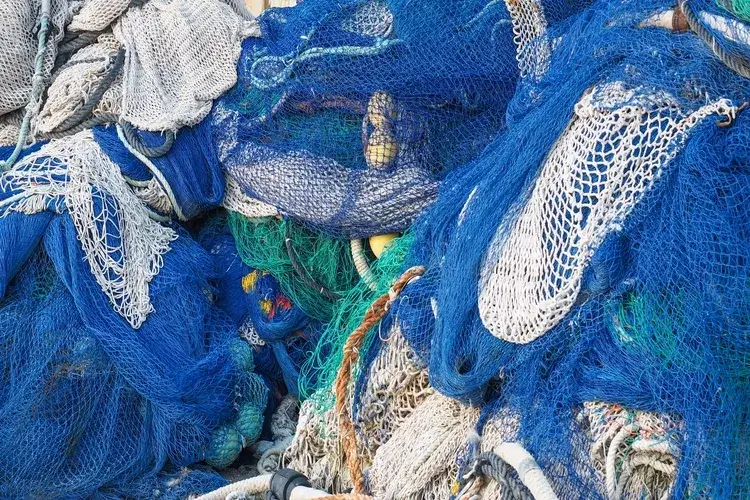
Piles of disorderly fishing nets and ropes at the port of Cala Rajada
New regulations announced last week in the UK include stipulations on net size and fishing gear. Image: Signe Hoppe Fotografie/Shutterstock

Twenty-six giant supertrawlers were also found fishing in the UK’s Marine Protected Areas (MPAs) between January 2020 and January 2025, racking up 4.2 years, almost 37,000 hours, of fishing, equivalent to more than 7,380 hours each year. These vast vessels use enormous nets to catch hundreds of tonnes of fish indiscriminately, meaning they also haul in large amounts of bycatch such as dolphins, seals, rays and sharks.

Only last week did Greenpeace announce it had created an underwater ‘boulder barrier’ in the UK’s most bottom-trawled MPA to protect porpoises living there. In total, the boulder barrier effectively closed 116 square kilometres of the southern North Sea MPA to bottom trawling. 

Themes News Marine wildlife Oceans

Protected by Copyscape

Primary Sidebar

SUBSCRIBE

GEOGRAPHICAL WEEKLY LOGO FREE - Sign up to get context, clarity and perspective in a noisy world, every Friday

Popular Now

China, US, Russia flags

Why Trump, Xi, and Putin can’t carve up the world like the…

Planet Earth, view from space. Our planet with world ocean and clouds on a starry sky. Earth Observation. England, France, La Manche or English Channel and sun glint. Elements of furnished by NASA.

A hole in Earth’s ozone layer is officially the largest recorded in…

Aerial view of solar panels

The future of green jobs is in our hands

Ballot paper into box US flag in background

What is the right to vote worth when the road disappears?

flags

QUIZ: Flags of the World – Hard

Footer

  • Facebook
  • Instagram
  • LinkedIn
  • Reddit
  • TikTok
  • Twitter
  • YouTube

Geographical print magazine cover

Published in the UK since 1935, Geographical is the official magazine of the Royal Geographical Society (with IBG).

Informative, authoritative and educational, this site’s content covers a wide range of subject areas, including geography, culture, wildlife and exploration, illustrated with superb photography.

Click Here for SUBSCRIPTION details

Want to access Geographical on your tablet or smartphone? Press the Apple, Android or PC/Mac image below to download the app for your device

Footer Apple Footer Android Footer Mac-PC

More from Geographical

  • Subscriptions
  • Get our Newsletter
  • About Us
  • Contact Us
  • Advertise with us
  • Privacy policy
  • Terms & Conditions

Copyright © 2026 · Site by Syon Media