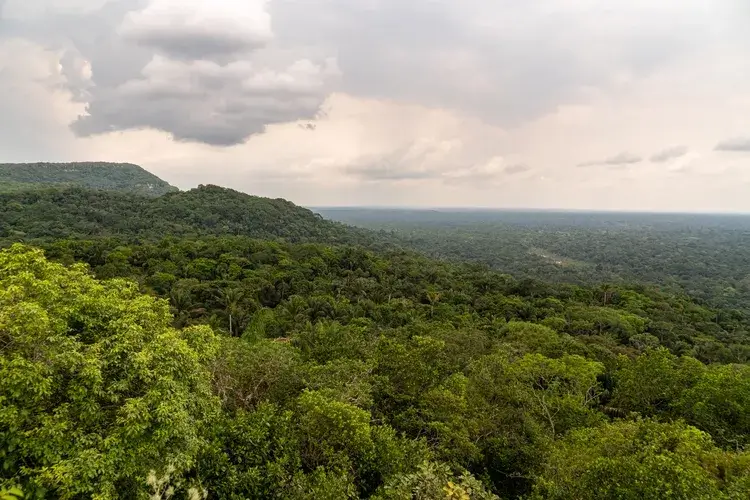
The ‘lungs of the planet’ have been degraded by deforestation, drought and fires, making them a net source of global carbon emissions
By
A study by a team of international researchers found that the Amazon rainforest is now a net source of global carbon emissions. Through deforestation, drought, and fires, the rainforest has degraded, hindering its ability to absorb vast amounts of carbon dioxide from the Earth’s atmosphere.
The study, led by Brazil’s National Institute for Space Research, draws upon 15 years of airborne measurements of atmospheric carbon. Researchers collected these data using research planes that sampled air at different altitudes above the rainforest.
Their findings painted a clear picture of how the Amazon is changing. In relatively wet years with little deforestation or wildfire activity, the Amazon was still a small net source of carbon to the atmosphere. When the climate was relatively mild, but deforestation and wildfire activity were high, net carbon emissions jumped dramatically.
Researchers also found that 2024 was the most severe year for carbon emissions from the Amazon.
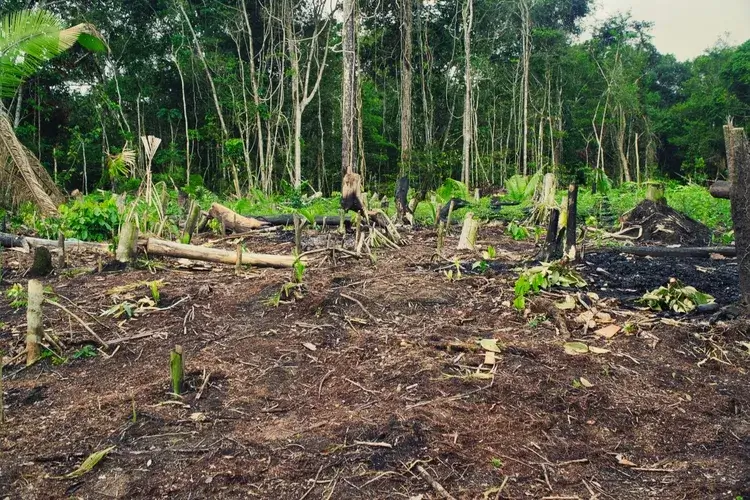
‘That year fell into our Group 3 category, where we had the coincidence of really warm temperatures, very low precipitation and high rates of fire-driven deforestation,’ Johnson said. ‘That cocktail of events led to massive carbon emissions into the atmosphere. Looking back at our time series, that was the year with the single highest annual emissions.’
Despite covering just one per cent of the world’s surface (around seven million square kilometres), the Amazon is home to 10 per cent of all known terrestrial wildlife species. On average, researchers discover one ‘new’ species in the Amazon every other day.
The Amazon stores between 150-200 billion tonnes of carbon, and its 400 billion individual trees release 20 billion tonnes of water into the atmosphere every day. This vast rainforest is also home to around 47 million people, including nearly 2.2 million Indigenous peoples.
Enjoying this article? Check out our related reads…
It faces extensive deforestation. From 1978 to 2017, more than 750,000 square kilometres of the rainforest were destroyed.
Many worldwide impacts would follow if the Amazon collapsed. One study found that if the rainforest experienced reduced rainfall, its temperature would rise, causing dry air to move in with wet, cool air from the south. In turn, this would dry out the USA’s northwest regions and the Sierra Nevada snowpack. This snowpack is vital to California’s water supply and directly affects the state’s ability to produce agricultural goods.
Losing the Amazon would also mean depleting global levels of biodiversity, as well as the cultural extinction of the 385 Indigenous communities who reside there.