In southern Greenland, a bucolic farming landscape sits at the centre of a battle over rare-earth minerals – and an US$11.6billion mining company compensation claim
By
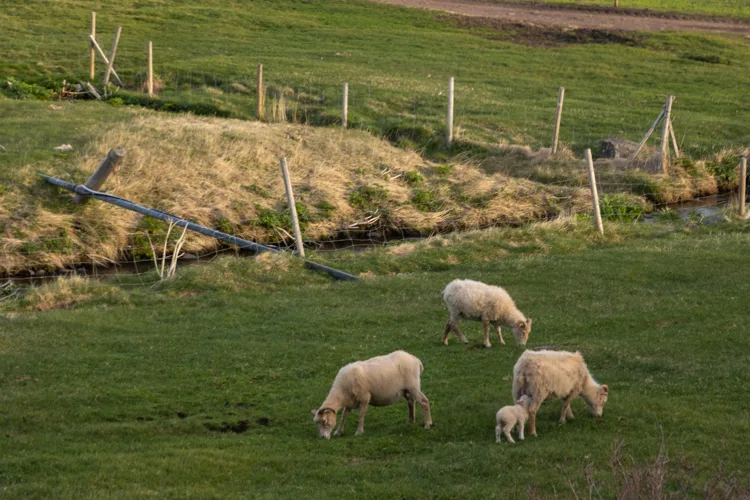
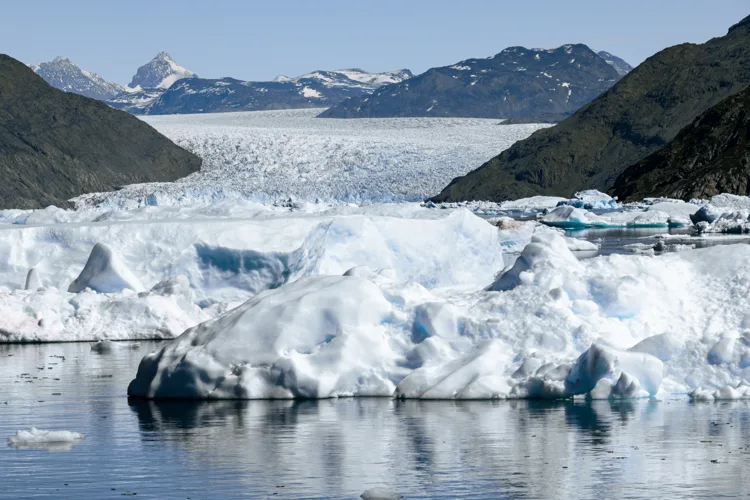
My feet crunching on the pebbles, I walked around the shoreline of a bay filled with drifting icebergs that glinted the colour of stars. At the point where the crystalline waters of a small stream tumbled into the sea, I turned inland and followed it up into a valley of rich green grass where a dozen sheep grazed.
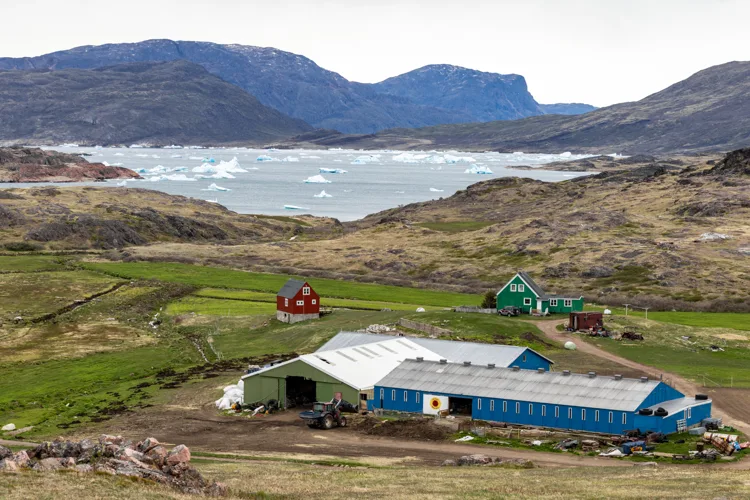
At the centre of the valley stood a collection of boldly painted wood-panelled houses. The sight of them brought a smile to my face. There was something so peaceful about the scene.
It all felt so far away from the problems of the rest of the world. On a mild summer’s day such as this, it made me want to do nothing more than stay there forever, soaking in the silence of the end of the world.
In reality, of course, even the furthest corners of the planet are intimately connected to the demands of the rest of the world. And that is certainly the case in this idyllic valley in the tangled web of fjords in the deep south of Greenland.
Nine times the size of the UK but with a population of about 57,000, the world’s largest island is almost 80 per cent covered in ice. Around parts of the coastal fringe, tundra, grass and life replace the ice. Nowhere is that ribbon of ice-free land more pronounced than in and around southern Greenland’s Tunulliarfik Fjord.
Protected from the worst of the winter storms by two-kilometre-high mountains, the microclimate here is unexpectedly gentle. The grass grows long under the near-constant summer sunlight and thousands of sheep range across the tundra hills.
It was Eric the Red (c. 950–1003 AD) who was the first person to farm sheep in Greenland. Exiled from Iceland after committing murder, he sailed west with his family to finally wash up on the shores of southern Greenland in the year 982.
Finding an apparently uninhabited (in fact, the Inuit had been in Greenland for centuries) and fertile fjord landscape, he, somewhat optimistically, named his new discovery Greenland. He then returned to Iceland and, with an estate agent’s gift of the gab, persuaded about 500 men and women to come and settle with him in Greenland.
Unfortunately, the records don’t record the reactions of the new arrivals when they discovered that most of Greenland is actually icier than Iceland.
Among the luggage carried by these new arrivals were sheep. It turned out that the climate in these southern fjords suited sheep very well and, for a while at least, the new colony thrived. But then, 500 years after they’d first arrived, the Norse and their sheep were gone.
Nobody knows exactly what happened to them, but a colder climate, conflict with the Inuit people, overgrazing of the fragile pastures and bouts of plague have all been put forward as causes.
Whatever the reason, sheep farming wasn’t seen again in Greenland until 1924 (in 1905, a handful of sheep were imported from the Faroe Islands, but they weren’t farmed in a commercial manner), when Otto Frederiksen re-established a proper sheep farm in the village of Qassiarsuk – where Eric the Red had set up his first sheep farm.
Before I could knock on the door of the wood-panelled farmhouse, it swung wide open and Aviâja Frederiksen welcomed me with a smile. ‘We’ve been expecting you,’ she said, before ushering me inside and showing me to the room where I would be sleeping for the next few days.
A couple of hours later, as I finish a delicious lamb lunch with her and her adult son Aqissiaq (who does much of the day-to-day running of the farm), she confides in me that being a farmer hadn’t been her life goal when she was younger. ‘I’m half-Danish, half-Greenlandic.
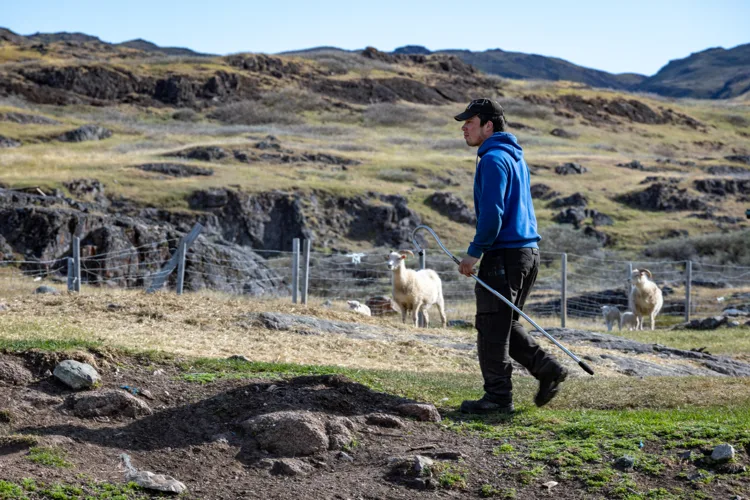
I grew up in a town and had dreams of becoming the captain on a ship. I certainly never saw myself becoming the wife of a sheep farmer in Greenland!’ Getting up from the table to clear away the dishes, she continues talking.
‘This is a hard life. But at least we have heating, running water and internet nowadays. Imagine how difficult life must have been just 50 years ago!
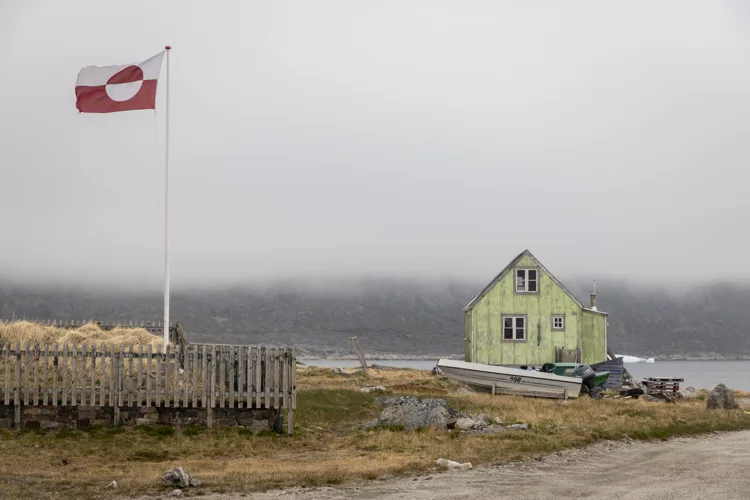
The winters are long and cold. As well as working on the farm, I also work part time in the school on the other side of the mountain and sometimes in winter the snowstorms are so bad that even on my skidoo I can’t get there! But I wouldn’t trade this life for anything else.
Although,’ she adds cryptically, ‘maybe one day I will have to.’
Over the days that followed, I filled my time watching newborn lambs finding their feet for the first time, hiking over tundra hills to ice-sheet viewpoints and enjoying evenings watching the sun flirting with the horizon as the ice in the bay burnt orange and pink.
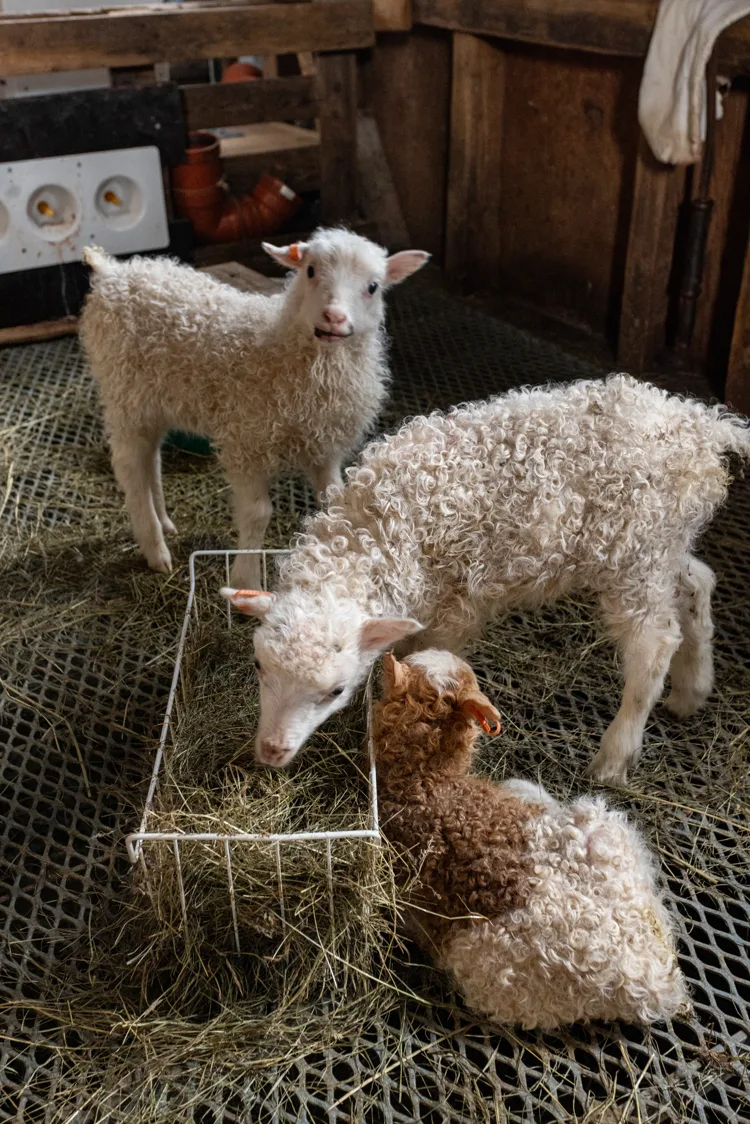
With no phone signal to disturb me and no real time pressure, I started to understand why Aviâja had become so enthralled by this land and lifestyle. But then, one evening, Aviâja dropped the bombshell and suddenly her cryptic comment about having to give up the farm made sense.
She was showing me some tumbledown ruins of what was once a Norse settlement next to her house. The faint outline of a house, the proud foundation stones of what must have been the community church.
She was even able to point out where – 500 years earlier – a sheep barn had stood in pride of place next to the church. Looking at the remains of Arctic farming’s past, I was inspired to hear her thoughts on what sheep farming here would be like in the future.
Instantly, the atmosphere changed and I felt a pall of sadness descend upon her. ‘If the mine goes ahead, then we will have to give up sheep farming. I think all the farmers around here will.’
Her fears are part of a much bigger battle over the future of southern Greenland – one in which the government now faces a compensation claim of up to US$11.6billion from the mining company behind the proposed project.
According to the website of Greenland Mining, a mining consulting company that provides services for international mining companies wanting to operate in Greenland, the island ‘holds some of the world’s most significant untapped mineral deposits – rare earth elements, gold, zinc, lead, uranium and iron ore’.
Celebrating the economic opportunities that a changing climate might bring, its website goes on to remind investors and mining firms that as ‘the ice sheet recedes, more resources become accessible’.
Many of the minerals thought to be hidden beneath the ice, waves and sheep pastures of Greenland are what are termed critical minerals, which are essential for the shift to green energy and for powering so much of the technology we are reliant upon today. These minerals are normally hard to find and extract.
The US Energy Act of 2020 defines critical minerals as minerals essential to the economic or national security of the USA, with supply chains vulnerable to disruption and functions in manufacturing for which there are no ready substitutes. All of this makes the estimated 1.5 million tonnes of rare earth minerals buried under Greenland highly tempting.
As I listened, Aviâja told me that if the mine materialised, it was going to change everything around here. The proposed Kvanefjeld (Kuannersuit) open-pit mine site is in the hills near the small town of Narsaq, which is the main supply centre for the villages and sheep farms in the nearby fjords.
The site is thought to contain one of the world’s biggest deposits of rare earth oxides. The deposit also contains uranium. When we contacted the company behind the mine, Energy Transition Minerals, which is listed on the Australian Stock Exchange, it told us: ‘We respect the concerns raised by local farmers, and we take them seriously.
We are confident the project can proceed without harming the environment or the farms around it. The proposed mine was designed to strict environmental standards. Our environmental impact assessment found that its effects on the surrounding area, including nearby farmland, would remain well within Greenlandic safety guidelines.
Independent scientific studies also support that conclusion. They found no evidence that the many years of exploration work around Kvanefjeld have had any harmful effect on local sheep.’ But locals aren’t convinced.
‘The pollution from the mine will make it unsafe for the sheep and we won’t be able to sell the meat. Who would want to buy lamb that has grown up by a uranium mine?’ Aviâja asks rhetorically.
‘We are only a few farmers and fishermen up against a big mining company and politicians like Trump. I don’t know where we would go or what we would do if the mine comes,’ she says in despair.
When I ask Aqissiaq what he would do if the mine goes ahead, he replies gloomily: ‘I will have to go to a city and find work as a mechanic. But I would hate to live in a city. I need the freedom of the farm.’
With no roads to speak of, when the day came to leave Aviâja’s farm, I simply picked up my backpack and hiked over the mountains to the opposite side of the fjord and the farm of Elna Jensen.
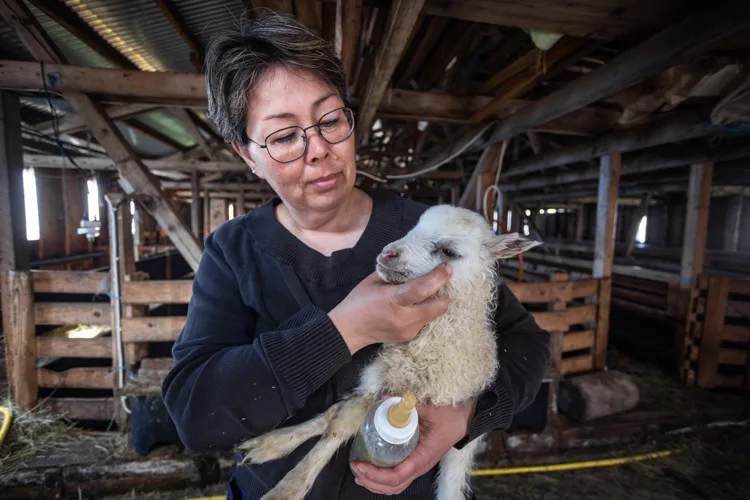
When I arrived, Elna was in the sheep barn, busy trying to bottle-feed a group of lambs, the majority of which seemed more interested in trying out their newly acquired ability to run and play than in wasting time patiently sitting still and drinking milk.
When I ask her what it is she enjoys about farming at the ends of the Earth, she puts down the bottle and thinks for a moment before replying: ‘I like the independence. Only the sheep dictate what we can and cannot do. And we have nature all around us all the time.’
As one of the lambs makes a break for the sunlit pasture outside and Elna chases after it, she shouts back to me: ‘I also enjoy the challenges of farming here. That’s what makes it fun. I don’t want it to be easy!’
Scooping up the runaway lamb, Elna informs me that at the start of this century, there were around 50 sheep farms in Greenland. Today, that number has fallen to 34 and Elna puts that down to money and changing priorities. ‘Financially, it’s getting harder.
Things have gotten worse since Covid and the start of the Ukraine war. Another important factor is that increasingly, when farmers retire, their children don’t want to take over.’ I ask her how this makes her feel and she shoots back instantly: ‘It’s sad but maybe it’s inevitable.
Especially if the mine comes. They’re still doing test drills for the mine, and they want to continue doing these even when the sheep are out grazing in the mountains, but the noise and pollution from the drilling will disturb the sheep.
The land where we graze our sheep runs right up to the edge of where they want to mine. People have already told us that if the mine comes, then they won’t buy our lamb. And I expect tourists won’t come here either.
There is already talk that the mining operation will expand to take up this whole area. It will end up swallowing all the farms here. If the mine goes ahead, then I will leave Greenland.
I don’t want to live in a land where locals aren’t heard. We have been here for so many years and could be here for hundreds more. But all that could go.
The life of the mine is only expected to be 37 years, after which they will go home leaving behind nothing but a big hole in the ground and a lot of pollution.’
Mining has always been a touchy subject in Greenland. This is one of the most pristine wildernesses on the planet, and most Greenlanders want it to remain that way. Yet the estimated wealth hidden under the ground here is in the region of US$186billion, with the Kvanefjeld site alone thought to be worth at least US$7.5billion.
It’s money that Greenland desperately needs for development purposes. Due to the uranium expected to be removed from the ground, the Kvanefjeld mine site is particularly controversial. In 2015, the government of the time granted Energy Transition Minerals (then known as Greenland Minerals) the rights to the Kvanefjeld site.
Before work could really get started, though, Greenland’s 2021 general election ushered in a new government that was more cautious about the granting of mining licences and outright banned uranium mining. This meant that the development of the Kvanefjeld project – which would involve the extraction of uranium – was halted.
In retaliation, Energy Transition Minerals initiated arbitration proceedings against the governments of Greenland and Denmark, claiming that the ban expropriated its investment. Since then, the project has been tied down in court proceedings and red tape, with no further development of the mine.
But now things are starting to move again. In 2025, Energy Transition Minerals announced that it was suing the government of Greenland, demanding that it either be allowed to continue with the mining project or receive compensation of up to US$11.6billion, a figure that is almost ten times the annual budget of Greenland.
This amount reflects the US$100 million already invested in the project, the estimated US$7.5billion of profit the mining company says it will lose out on and an additional US$4billion in interest.
When questioned about why such an astronomical sum was being sought, a spokesman for the mining company told us that the sum ‘reflects the expected value of the project had the exploitation licence been granted. An independent expert prepared the valuation using independently sourced mine engineering and price forecast inputs.
It is valued as of 1 December 2021, the date the Uranium Act took effect and blocked the project.’ The spokesman went on to emphasise the job-creation benefits of the mine: ‘We believe the decisions taken by the Greenlandic authorities are unlawful.
We hope the government of Greenland will reconsider them and allow a project that would create local jobs to move forward.’
Exactly how many jobs it might create is uncertain, but estimates say that during the construction phase, up to 1,171 temporary positions might be available and that, once the mine was operational, anywhere between 400 and 787 staff might be required. However, these figures don’t specify what percentage will be specialised staff brought in from outside the area.
Enjoying this article? Check out our related reads…
This is, though, higher than the estimated 150–200 jobs the sheep farms have created. But once other industries likely to be negatively affected by the mine, such as tourism and fishing, are factored in, the overall number of jobs that might be affected if the mine project goes ahead would be higher.
Kuluk Frederiksen, the great-great-grandson of Otto Frederiksen, the founding father of modern sheep farming in Greenland, shakes his head in dismay at the thought of the mine. ‘We have been protesting against it. Not one person around here wants it.
Yes, it might make a few jobs, but it will destroy everything else. The plans show it will be an open-pit mine less than 50 kilometres from here. I’ve heard that it will be the third-biggest open-pit uranium mine in the world!
When the wind blows up the fjord, it will carry all that pollution with it. They say that the minerals they’re going to dig out of the ground are for green power. It might be green energy and good for the environment in some places, but here there will be nothing green about it.’
Pausing to glance down at one of his young children playing at his feet, he says: ‘My great-great-grandfather started all the sheep farming in Greenland, but my children won’t be able to farm this land.’ He looks wistfully out across the fjord and mumbles: ‘Maybe we’ll go to Iceland. I hear they need more sheep farmers there.’
Bases in the wilderness
On 22 September 2026, after months of threats from US president Donald Trump – including the threat to occupy Greenland by force – Greenland, Denmark and the USA signed a security agreement.
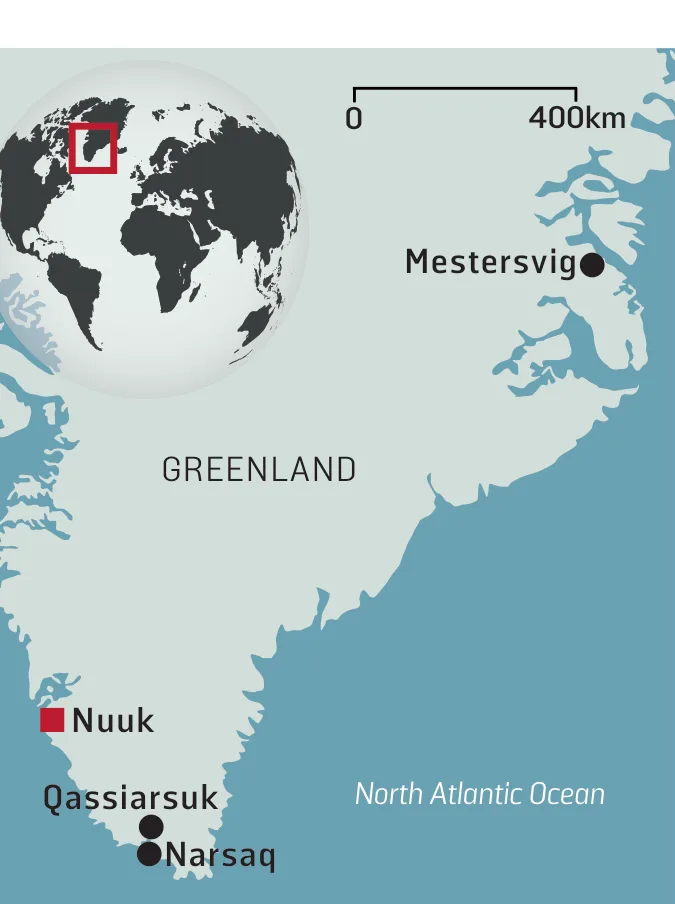
The agreement, which has been published in full but must still pass the necessary parliamentary procedures before entering into force, provides for an increased US military presence in Greenland and two additional US defence areas, at Narsarsuaq and Mestersvig.
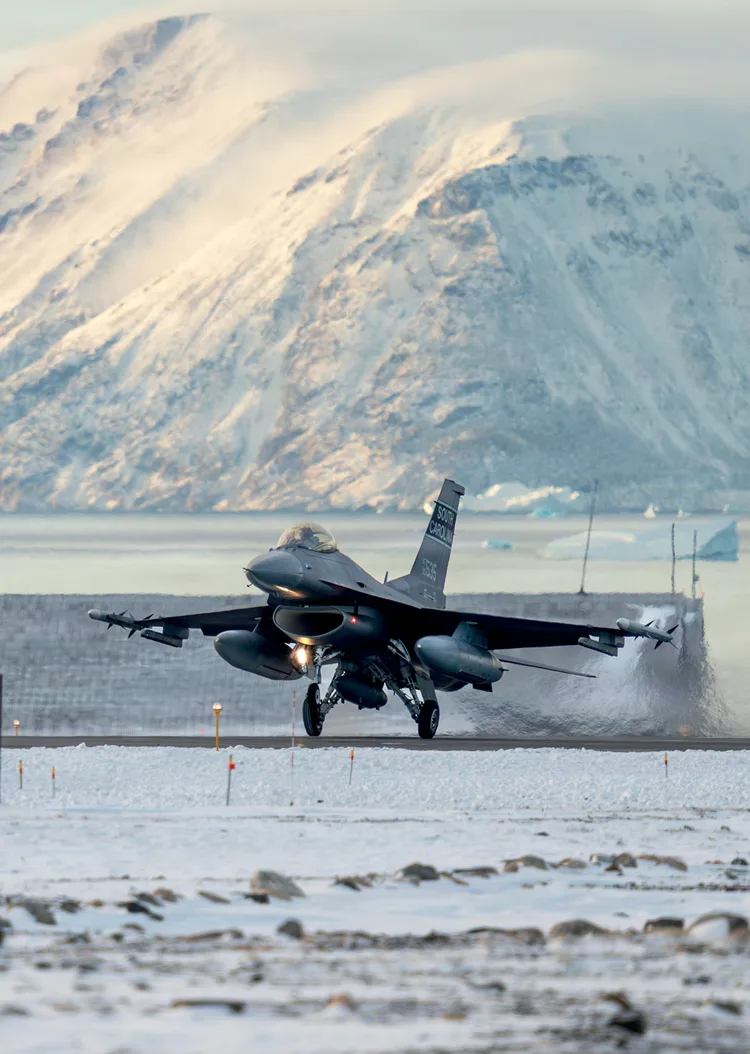
Narsarsuaq is on the opposite side of Tunulliarfik Fjord to the majority of the sheep farms. Until April 2026, it was home to the main airport serving southern Greenland. On 16 April, a new airport opened at Qaqortoq, the biggest town in the south, replacing Narsarsuaq as the region’s main gateway.
At the time of our visit, in June 2026, Narsarsuaq was hosting small numbers of military personnel from Denmark and other European nations. There are as yet few details about the scale of the expanded US presence there.
According to the farmers I spoke to, no locals in Tunulliarfik Fjord were consulted beforehand about the new US defence area, and it remains to be seen what impact it will have on the farms and local environment.
The second new US defence area will be at Mestersvig, a remote outpost in northeastern Greenland within Northeast Greenland National Park, which covers 972,000 square kilometres – nearly half of Greenland. It’s the world’s largest national park, a vast wilderness with no permanent civilian settlements, although personnel are stationed at a handful of meteorological, research and military facilities.
It’s also home to polar bears and other high-Arctic wildlife. It remains to be seen what impact an expanded military presence would have on this part of the national park.