It’s not a perfect picture, but the Paris Agreement has brought in stronger climate frameworks and lower emissions since 2015
By
Nearly ten years ago, almost every country in the world signed the Paris Agreement. As the world’s first international climate treaty, it was touted as a historic and landmark deal in equal measure.
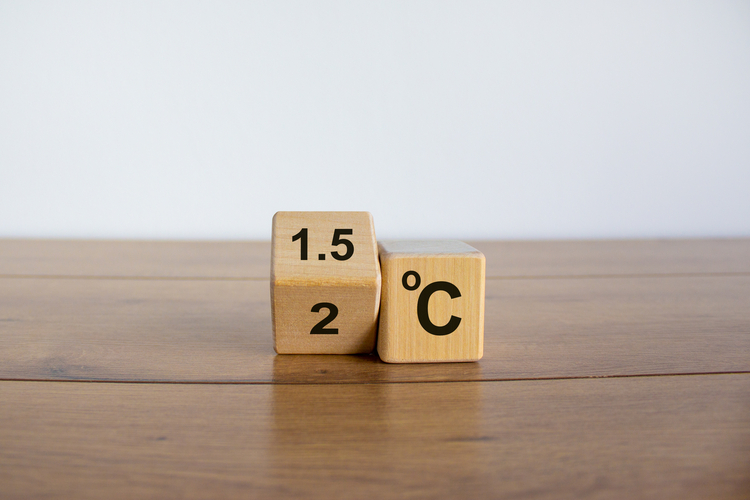
Essentially, the agreement sought for countries to limit global warming below 2°C, relative to pre-industrial temperatures. As well as this, an aspirational goal of limiting warming below 1.5°C was set.
Enjoying this article? Check out our related reads:
However, ten years on and countless nations are still failing to meet the goals stipulated under the Paris Agreement. Current pledges to reduce heat-trapping pollution fall far short of goals – instead putting the planet on track for at least 2.6°C of global warming – and would result in a ‘dangerously hot’ world by the end of the century.
So, in the last decade, has any tangible progress been made under the Paris Agreement? Is the planet still on track for an inevitable, ever-warming future, or are there steps being made to curb the impacts of climate change?
Amping up the heat
The future of the deadliest form of weather, extreme heat, hinges on the Paris Agreement, according to new global analysis.
With current Paris Agreement pledges (2.6°C of warming by 2100), countries can expect an average of 115 hot days per year by 2100, a number double that which individuals face today.
However, without the Paris Agreement, warming would be around 4°C by 2100, meaning nations would experience nearly 172 hot days per year by the end of the century. That’s nearly six months of extreme heat per year, or around triple the number of hot days currently.

In particular, in the US, the average person currently experiences around 58 hot days annually. If current Paris Agreement pledges are fully met, the nation would see three months – 88 days – worth of hot days annually by the end of the century.
Yet without the Paris Agreement, the US would see around 118 days worth of hot days annually by 2100, a significant uptick of around one month.
In terms of experiencing hotter days, then, following the Paris Agreement under current pledges is not optimal but still results in a better outcome than a situation without the agreement at all.
Exceeding renewable expectations
In 2015 – the year the Paris Agreement was signed – BP predicted that the global non-fossil share of power generation would rise from 32 per cent that year, to 38 per cent by 2035. Yet by 2024, non-fossil generation already accounted for more than 41 per cent of the global power supply, making more progress in 10 years than was predicted in more than 20.
Ultimately, clean energy investment has boomed in recent years, with estimates suggesting it will reach $2.2trillion in 2025, double the spend on fossil fuels.
Solar and wind have also hugely surpassed expectations predicted back in 2015. In 2024, the world installed 553 gigawatts of energy, overshooting the 2015 International Energy Agency (IEA) forecasts by more than 1,500 per cent.
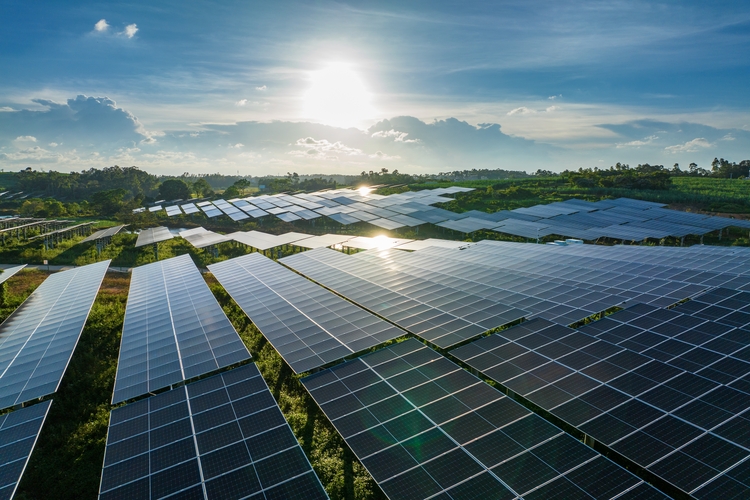
Total global solar capacity is now more than four times what was predicted in 2015, and is set to double every three years. Currently, renewables have now overtaken coal as the biggest source of electricity generation.
Since the Paris Agreement was signed, another major inroad has been made into renewables: electric vehicles. Deployment of these vehicles is already 40 per cent above the IEA’s 2015 projections, and on track to be 66 per cent higher by 2030.
The Paris Agreement’s target of 100 million EVs on the road by 2030 is a target set to be hit as soon as 2027.
A drop here, a rise elsewhere
Since 2016, annual CO2 emissions are up just 1.2 per cent, compared with 18.4 per cent in the decade before the Paris Agreement was signed. In the decade before the agreement (2005–2014), global greenhouse gas emissions rose at a rate of 1.7 per cent per year. Yet since the agreement, that annual increase has slowed to just 0.32 per cent – a five-fold drop.
While emissions are on a downward trend, climate policy is maturing and on the rise. Since the Paris Agreement was signed, framework climate laws have more than tripled. National climate policy tools are up seven-fold, and at least 83 per cent of the global economy remains covered by net-zero targets including 19 G20 members.
Clean energy jobs are also on the rise. They now outnumber (36.2 million) those in oil, gas, coal and fossil-engine manufacturing (32.1 million). Renewable jobs have almost doubled from 8.5 million in 2015 to 16.2 million in 2023.
So, what can we make of the Paris Agreement?
Ten years on from the Paris Agreement, one thing is certain: the ambitions of a long-awaited climate deal have fallen short in some areas, and exceeded in others. Climate policies have strengthened in the last decade, as well as support for clean energy and renewables as major companies shift away from planet-polluting fossil fuels.
However, there is still more work to be done. The world is still on a dangerous trajectory of warming between between 2.7°C and 3.1°C – even under current pledges – and climate leadership still remains threatened by the current US administrations’ withdrawal from the Paris Agreement.
Ultimately, ensuring that countries’ pledges become more ambitious – allowing more of the key indicators to be reached – will be pivotal in ensuring the Paris Agreement can be a concrete set of measures rather than fallible, empty promises.