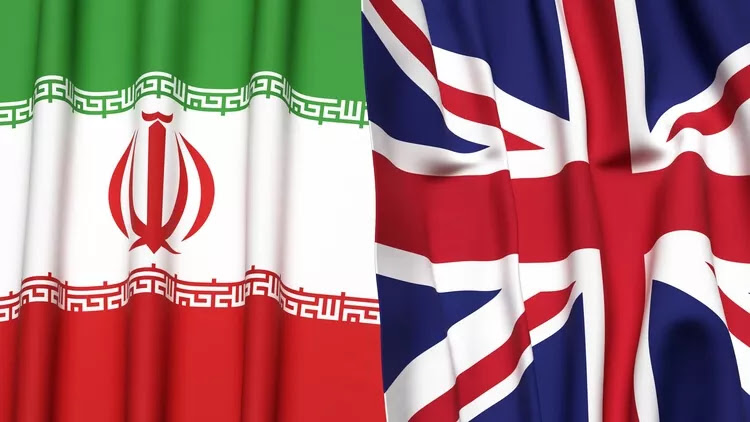

As Britain responds to reported Iranian threats, questions remain over what is proven, what is suspected and what is precautionary

By
When US military aircraft left RAF Mildenhall amid reports of an Iranian threat, their departure offered a visible expression of a danger whose details remain largely undisclosed. The images invite an apparently reasonable conclusion: if the US is moving its aircraft, the intelligence must be serious. Yet that reasoning can quietly turn a decision taken under uncertainty into confirmation that the danger is established, allowing the precaution to become part of the evidence for the threat.
The distinction became clearer when West Suffolk MP Nick Timothy revealed that a defence minister had told him the threat was directed at RAF Mildenhall, rather than the town’s civilians or infrastructure. The minister also confirmed that the threat was not imminent and that the military had taken precautionary measures. Nothing in that account makes moving aircraft unreasonable, because protecting people sometimes requires acting before the evidence is conclusive. What it does challenge is the assumption that a sensible response to possible danger means the threat is imminent or that those suspected of presenting it are capable of carrying it out.
This is a more useful starting point than asking whether Iran’s threats are real or whether everything is propaganda. It allows us to recognise that governments may have legitimate reasons to act on incomplete information, while insisting that the public account should not become more certain than the evidence permits. The threshold for taking a precaution is not necessarily the threshold for declaring responsibility, and neither automatically determines what further action would be justified. This is not an argument for equal doubt about everything, but for confidence that increases only as the relevant evidence strengthens.
France’s attribution of the October refrigeration attacks to Iran illustrates why those thresholds matter beyond military bases. Its investigators have blamed Shahid Kaveh, a unit associated with Iran’s Revolutionary Guards, for sabotage affecting roughly 700 retail sites, reporting substantial food losses and at least 15 fires. Their assessment cites shared attack infrastructure, familiar reconnaissance techniques, Farsi traces and publicity through an associated propaganda outlet –although the underlying logs and technical identifiers have not been published. There is an evidential argument here, but readers cannot independently reconstruct it.

That limitation does not demonstrate that France is wrong, any more than Iran’s denial means it was not involved. It means that an official attribution should be reported as an investigative conclusion with a stated basis, rather than treated either as an unsupported accusation or as proof that every similar disruption elsewhere has the same author. Otherwise, the authority attached to one investigation begins doing work that belongs to another.
The verdicts at Woolwich Crown Court on 12 November provide a firmer foundation for assessing particular Iranian operations, precisely because they discriminate rather than generalise. Mostafa Sepahvand and Farhad Javadi Manesh were convicted of assisting Iranian intelligence through surveillance of targets in Britain, including journalists associated with Iran International. Sepahvand was also convicted of preparatory conduct involving intended serious violence, while Manesh was acquitted of that charge and a third defendant was acquitted entirely. Taking these threats seriously requires respecting the acquittals as carefully as the convictions.
Those verdicts cannot, however, decide the separate allegations surrounding RAF Fairford, where US prosecutors this week announced charges against three alleged Iranian-backed operatives. Their account describes paid surveillance, vans and fuel, directions to drivers and coded communications from prison, but remains a prosecution case rather than a finding of guilt. The existence of proven wrongdoing elsewhere makes these allegations neither implausible nor proven, even if their appearance alongside one another encourages readers to assemble them into a single story.
It is in that assembly, rather than in the invention of entirely imaginary threats, that the idea of the ‘folk devil’ becomes useful. Stanley Cohen’s work examined how media representation and political authority turn particular groups into recognisable embodiments of danger, narrowing the space for reasoned debate. Applied here, the risk is that ‘Iran’ becomes an explanation available before an investigation begins, with evidence from one case lending unearned certainty to every subsequent allegation. Genuine wrongdoing can sustain that process without making its wider conclusions legitimate.
The resulting picture also depends on what is left outside the frame, particularly when British places appear only as recipients of violence originating elsewhere. Fairford has been used by US bombers conducting strikes against Iran, making it part of the conflict’s military infrastructure rather than a location suddenly drawn into somebody else’s war. Acknowledging that relationship does not excuse attacks, but it challenges a geography in which our actions disappear while the adversary’s intentions explain everything, leaving protection as the only apparently relevant political question.
Enjoying this article? Check out our related reads…
The alternative is not to demand that intelligence services disclose every source or that commanders wait for an attack before acting, but to insist that different decisions remain answerable to different standards of evidence. Protecting a base does not establish the necessity of military escalation, just as prosecuting an intelligence operation does not make a population collectively suspect. Without those distinctions, a justified concern can become an increasingly unrestricted argument for whatever response political leaders wish to pursue.
What holds these events together should therefore be a question about the uses of evidence, rather than an assumption that they all demonstrate the same expanding danger. Aircraft may need to move before an allegation can be proved, but their movement should not relieve anyone of the obligation to substantiate it. Taking Iranian threats seriously means protecting those at risk while preserving the distinction between what is known, what is suspected and what has merely become easier to believe.