
Falling international recruitment could leave some universities with fewer courses, limiting opportunities for UK students who cannot simply study elsewhere

By
The number of international students in the UK is falling fast. Tougher immigration and tighter regulatory frameworks are making both prospective students and university leaders question how viable this route now is. But keeping an international student out of Britain can also close a door for someone already living here. If falling international recruitment makes a local university course financially unviable, the consequences extend beyond prospective overseas students. For people who cannot simply move elsewhere to study, a policy designed to restrict immigration can also restrict their own educational opportunities.
That connection is largely missing from the argument about international students. Falling arrivals are counted nationally; the consequences, though, are felt locally. A smaller intake may become a cancelled course, an unfilled academic post or a department stripped of the expertise that made it worth attending.
Applications for sponsored study visas from main applicants fell 16 per cent in the year ending August 2026. Grants to main applicants fell 12 per cent in the year ending June. These are different measures, not final enrolments for this autumn, and fewer applications cannot simply be equated with more refusals, but the contraction is very real.
The border now operates partly through universities themselves. Since June, universities sponsoring student visas must keep visa refusal rates below five per cent, down from ten in previous years. Failure can bring recruitment restrictions and, through escalating enforcement, threaten the right to sponsor international students. This has already happened at Bucks New University.
This gives universities a powerful incentive to avoid applicants they believe are at greater risk of having their visas refused. Even an academically suitable student can become a liability if their visa refusal could jeopardise the university’s ability to recruit international students more widely. Admissions becomes a calculation about the state’s likely response to a passport, rather than simply an assessment of someone’s capacity to learn.
Enjoying this article? Check out our related reads…
University leaders have reported suspending recruitment from particular countries amid refusal concerns. The Home Office disputes claims that refusals have risen significantly across the board. Yet exclusion can spread without appearing in refusal statistics at all: the student denied university sponsorship never reaches the visa decision. The state need not refuse every applicant; it makes institutions afraid to admit.
For some nationalities, the exclusion is explicit. Since March, the government’s visa brake has required refusal of affected overseas student applications from nationals of Afghanistan, Cameroon, Myanmar and Sudan. This does not explain the entire recruitment decline, but it does expose the bluntness of a policy under which nationality can settle an application before academic eligibility is considered.
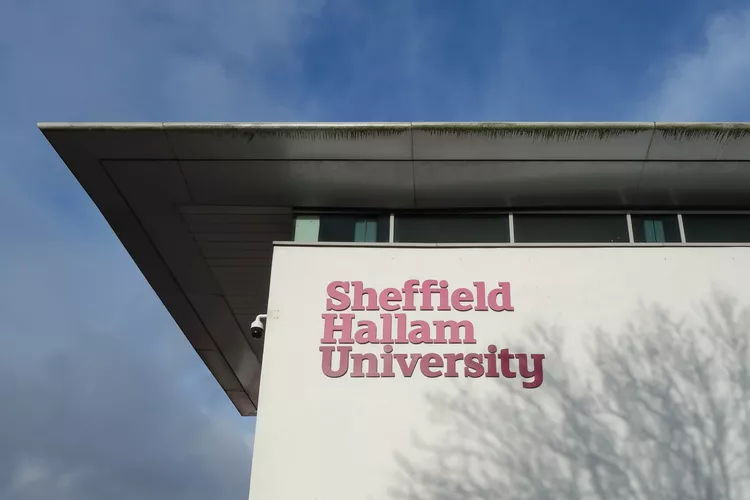
The consequences cannot be contained within the countries students leave. Universities recruit through different relationships and depend on different combinations of courses and nationalities. A restriction that looks uniform from Whitehall can therefore land very differently in Bradford, Sheffield or London.
Existing recruitment patterns show why this matters.
In the 2025 UCAS cycle, international undergraduate acceptances grew 11 per cent at Russell Group universities, the research-intensive group that includes Oxford and Cambridge, against two per cent elsewhere. Overseas acceptances at Sheffield Hallam and Bradford fell 44 and 39 per cent respectively. These figures predate the latest rules and cover only undergraduate admissions. They reveal the uneven system into which the new restrictions have been inserted.
The effect on home students
For people with the money and freedom to relocate, concentration may look like an inconvenience. For those tied to a place by work, care or housing costs, it can mean exclusion. A degree available two hundred miles away is not an alternative if attending requires abandoning everything that makes studying possible.
And a university need not close for that exclusion to deepen. The buildings can remain, the branding can survive, and the prospectus can continue promising opportunity while the range of subjects contracts. A town retains its university but loses some of the futures it once offered. Counting institutions is no substitute for asking what can actually be studied within reach.
Where specialist capacity disappears, the loss can extend beyond enrolled students. A community may lose people able to interpret its environmental risks, scrutinise development or preserve local histories, long before any campus gates are locked.
None of this makes every course closure a direct consequence of a refused visa. Funding differs across the UK, university leaders choose how financial pressures are distributed, and they must answer for those choices. But government cannot tighten the conditions under which institutions recruit and then treat the educational consequences as failures of management alone.
The defence of international students must also escape the language of financial rescue. Their value is not exhausted by the fees that sustain other people’s opportunities. They help determine whose experiences enter a seminar and which assumptions survive examination. A university becomes intellectually poorer when its internationalism is reduced to recruiting the nationalities least likely to trouble a compliance calculation.
Ministers cannot claim the political credit for fewer arrivals while disclaiming responsibility for what follows. If tighter borders help make local courses unviable, that is a consequence of policy, not evidence that those places never deserved them. Universities, meanwhile, cannot invoke the Home Office to disguise their own choices about whose education is expendable.
A serious government would account for both sides of this equation. It would have to explain why controlling entry should leave a student already in Britain travelling further, paying more or giving up.
That is where the border turns inward. When education survives only where students can afford to follow it, opportunity is rationed by the ability to leave. A policy sold as keeping people out risks becoming a policy that keeps others in their place.