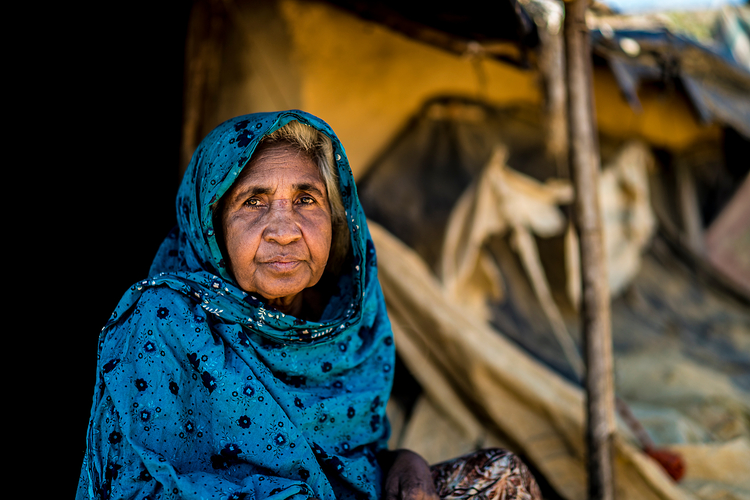
The Gambia told judges at UN top court that Myanmar’s leadership has carried out ‘brutal and vicious violations’ against the Muslim minority group
By
The International Court of Justice (ICJ) will hear a landmark case brought by The Gambia, accusing Myanmar of deliberately trying to destroy the minority Rohingya population. Such proceedings, held at the Peace Palace in The Hague, mark the beginning of the case after years of preliminary legal arguments.
Across the next three weeks, ICJ judges will hear oral arguments from both sides, examine witnesses and experts, and consider if Myanmar breached its obligations under the Convention on the Prevention and Punishment of the Crime of Genocide, to which the country is a party.
Enjoying this article? Check out our related reads…
A detailed schedule will be followed, which includes two rounds of pleadings by The Gambia and Myanmar, as well as sessions that will allow witness testimony including Rohingya survivors.
The proceedings are the first genocide case the ICJ has heard in more than a decade, and are likely to shape how future allegations are assessed, including South Africa’s case in which the nation accused Israel of genocide.
Speaking on behalf of The Gambia, Attorney General and Minister of Justice Dawda Jallow told the court that the nation presented the case ‘after reviewing credible reports of the most brutal and vicious violations imaginable’ committed against the Rohingya.
Jallow also said the Rohingya ‘had suffered decades of appalling persecution and years of dehumanising propaganda’ which was followed by the military crackdown and ‘continual genocidal policies meant to erase their existence in Myanmar’.
Myanmar is expected to present its arguments later this week. When the Court makes its final judgement – which could take months or longer after the hearing concludes – will be legally binding. The ICJ cannot prosecute individuals for genocide or other serious crimes, but its opinions carry significant weight with the UN and other international bodies.
The Gambia first filed its application in November 2019, accusing Myanmar of breaching the Genocide Convention. A UN Human Rights Council-mandated fact-finding mission said in 2018 that it had reasonable grounds to conclude serious crimes had been committed under international law, including genocide, war crimes and crimes against humanity. The nation is supported in its efforts to seek justice by the 57 member states of the Organisation of Islamic Cooperation, as well as 11 other countries including the UK, France, Germany and Canada.
Today, nearly one million Rohingya remain living as refugees in camps in Bangladesh, with many others either displaced or trapped in Myanmar. (See Geographical’s Country Profile of Myanmar – a Country At War With Itself)
Who are the Rohingya?
The Rohingya are described by UN Secretary-General Antonio Guterres as ‘one of, if not the, most discriminated people in the world’. They are one of Myanmar’s many ethnic minorities.
The government of Myanmar – which is mainly a Buddhist nation – denies the Rohingya citizenship, and even excluded them from the 2014 census. Instead, the regime sees them as illegal immigrants from Bangladesh.
After Rohingya Arsa militants launched deadly attacks back in 2017, a mass exodus of Rohingya occurred. Those who arrived in Bangladesh said they fled after troops, – supported by local Buddhist mobs – responded by burning their villages and attacking and killing civilians.
According to satellite imagery by Human Rights Watch, at least 288 villages were partially or totally destroyed in northern Rakhine in August 2017.
Back in 2018, a UN report accused Myanmar’s military of carrying out mass killings and rapes of Rohingya with ‘genocidal intent’. Now, more than half a million Rohingya are believed to live in Myanmar’s Rakhine province. UN investigators have warned there is a ‘serious risk that genocidal actions may occur or recur’.