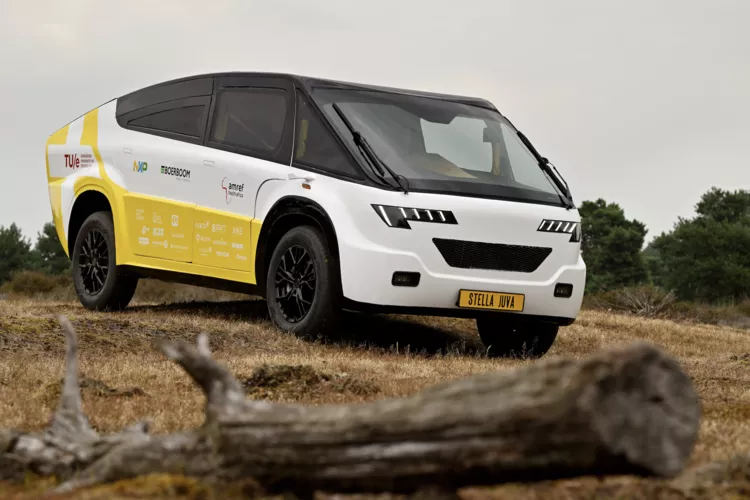
Designed to carry diagnostics, vaccines and treatment into remote communities, a student-built solar vehicle will allow healthcare to operate without fuel supplies or reliable electricity
By
Students at Eindhoven University of Technology in the Netherlands have unveiled Stella Juva, billed as the world’s first solar-powered ambulance and designed to take healthcare into remote communities rather than simply transport patients to hospital.
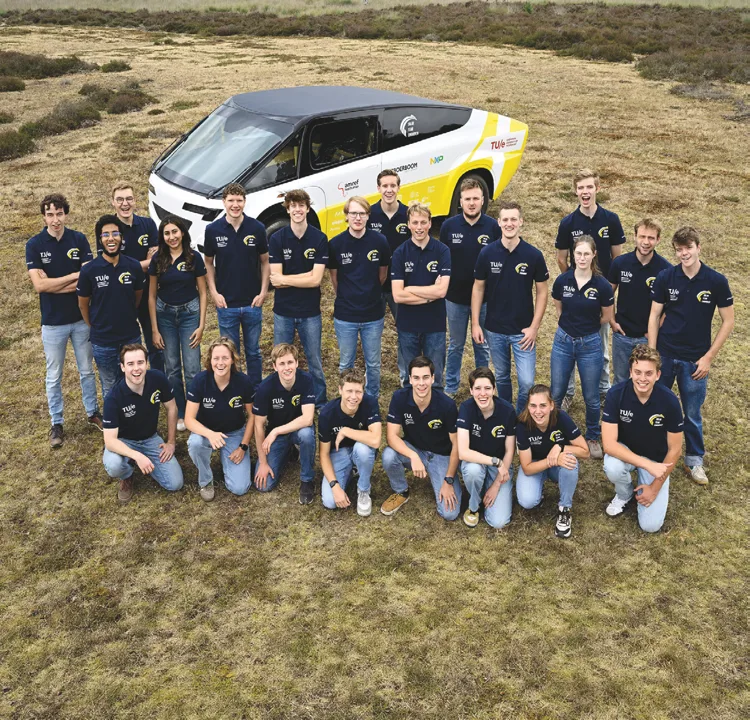
Built by a team of 23 students, the prototype combines an off-road electric vehicle, a roof-mounted solar array, deployable solar panels and a suite of medical equipment in a single mobile clinic. Its designers say it could help health workers reach places where poor roads, fuel shortages and unreliable electricity make even basic care difficult to provide.
The vehicle was developed with input from Amref Health Africa, an international health organisation that has worked to improve healthcare in Africa for almost 70 years. It is currently being trialled in Kenya, driving hundreds of kilometres on solar power and running simulated healthcare scenarios at two field locations.
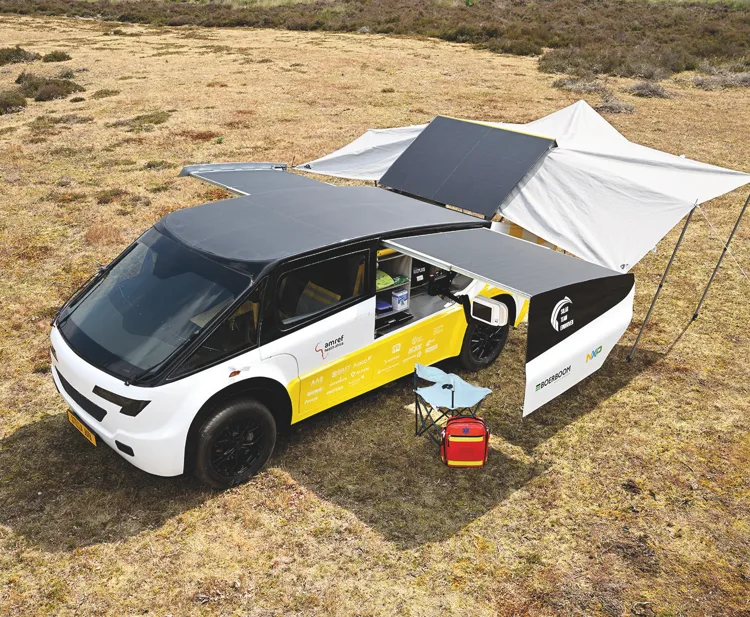
Although Stella Juva is described as an ambulance, it differs sharply from the conventional model. Rather than collecting a patient and racing towards a well-equipped hospital, it is intended to bring some of a clinic’s essential services to the patient. Health workers could use it to carry out blood tests, screen people for tuberculosis and malaria, administer vaccines and perform pregnancy ultrasounds. The vehicle can also carry a portable X-ray machine, blood pressure monitor, thermometer, automated external defibrillator and first-aid supplies.
That distinction is particularly important in sparsely served regions, where a clinic may be many hours away and the journey itself can delay diagnosis or treatment. Bringing equipment into a community could allow common illnesses to be detected earlier, improve access to antenatal care and reduce the distance patients must travel for routine screening. It could also support vaccination campaigns without depending on a permanent local electricity supply.
‘For millions of people, good healthcare remains out of reach,’ says Femke Maurits, partnerships manager at Amref Health Africa in the Netherlands. ‘Access to care shouldn’t depend on whether there’s access to electricity or fuel.’ In remote areas, she adds, health workers sometimes travel long distances by bicycle, while reliable power is needed to keep vaccines cool and operate medical equipment.
Stella Juva is designed to provide that power for itself. It has 326 solar cells fixed to its roof and a further 216 on extendable panels. The electricity they generate is stored in a 50 kWh battery and used both to drive the vehicle and to run its medical equipment. Integrated power outlets allow other electrical devices to be connected when the mobile clinic is in use.
On a sunny day, the team expects the vehicle to be able to travel up to 715 kilometres on paved roads. Its average off-road range is estimated at about 360 kilometres, depending on the terrain, and its top speed is limited to 120 kilometres per hour. The figures have yet to be tested through routine healthcare use. The combination of solar generation and battery storage is intended to reduce dependence on fuel deliveries and public charging infrastructure.
The same energy system also addresses one of the less visible barriers to healthcare in remote areas: the need for a dependable cold chain. Stella Juva carries a cooler for vaccines and medicines, allowing temperature-sensitive supplies to travel with the health team. The battery can power the cooler and diagnostic equipment after the vehicle has stopped, including when sunlight is weak or after dark.
This dual use of energy is central to the design. A solar vehicle that arrives with too little charge to run an ultrasound machine or refrigerate vaccines would have solved only half the problem. Stella Juva therefore treats mobility and healthcare as parts of the same system: the vehicle must travel over difficult ground, generate and store enough electricity for the journey, and still provide useful medical services when it reaches its destination.
The project began with the United Nations Sustainable Development Goals in mind, according to team manager Mathijs van Gerven. ‘We were inspired by the United Nations’ Sustainable Development Goals, which strive to make good healthcare accessible to everyone,’ he says.
Enjoying this article? Check out our related reads…
Solar Team Eindhoven has previously concentrated on stretching the possibilities of solar transport. Successive student teams won the Cruiser Class of the World Solar Challenge in Australia four times in a row. In 2021, the group built Stella Vita, a solar-powered camper, and drove it to the southernmost tip of Europe. Two years later, its off-road solar car, Stella Terra, travelled more than 1,000 kilometres from northern Morocco to the Sahara. Stella Juva applies that experience to a more explicitly social purpose.
‘Together with healthcare organisations, we’re developing a vehicle that fits real-world practice,’ says partnerships manager Yarno Basten. ‘We hope to improve healthcare access, and make it more sustainable.’ He says the project is also intended to show what can be achieved when engineers and social organisations work together.
The Kenyan trials put the vehicle to the test in real conditions. During August, Stella Juva travelled more than 800 kilometres through Kenya with Amref Health Africa, including over rough roads to a clinic without electricity. While stationary, its solar array generated more energy than all the onboard medical equipment consumed. The equipment was not used on patients, but the journey tested the vehicle, its energy system and its ability to operate away from conventional infrastructure.
There are still substantial hurdles between a student prototype and a fleet of working health vehicles. Cost, local maintenance, repairability, staff training and medical regulation would all shape whether Stella Juva could be deployed at scale. Its claimed range will also vary with weather, terrain, payload and the amount of electricity consumed by the equipment on board.
Even so, the prototype offers a different way of approaching a familiar geographical problem. In places where distance is compounded by poor roads, scarce fuel and unreliable power, access to healthcare depends on more than the number of doctors or clinics. It depends on whether people, equipment and energy can be brought together at the same place and time. Stella Juva’s proposed answer is to put all three on wheels — and let the Sun help take them where they are needed.