Scientists predict it could take more than 100 years to remove plastic waste from the ocean’s surface, according to new study
By
Scientists from Queen Mary University of London have developed a simple model to show how buoyant plastic can settle through the water column, and they predict it could take more than 100 years to remove plastic waste from the ocean’s surface.
Published today in Philosophical Transactions of the Royal Society A: Mathematical, Physical and Engineering Sciences, the study builds on earlier research to paint a complete picture of how plastic can move from the ocean surface to the seafloor.
The research revealed that even if plastic was immediately stopped from entering the oceans, fragments of buoyant plastic debris would continue to pollute the ocean surface and release microplastics for more than a century.
Enjoying this article? Check out our related reads:
Using a model that simulates the slow breakdown of large plastic particles, and their interaction with marine snow (sticky organic material that helps to transport debris to the deep sea), researchers show that the degradation process has a clear impact on removing plastic from the surface.
‘People often assume that plastic in the ocean just sinks or disappears,’ said the paper’s lead author Dr Nan Wu. ‘But our model shows that most large, buoyant plastics degrade slowly at the surface, fragmenting into smaller particles over decades. These tiny fragments can then hitch a ride with marine snow to reach the ocean floor, but that process takes time. Even after 100 years, about 10 percent of the original plastic can still be found at the surface.’
These findings help to explain the mismatch between the amount of buoyant plastic entering the ocean and the relatively small amounts observed at the surface. This phenomenon is often referred to as the ‘missing plastic’ problem.
‘This is part of our wider research that shows how important fine and sticky suspended sediments are for controlling microplastic fate and transport. It also tells us that microplastic pollution is an intergenerational problem and our grandchildren will still be trying to clean up our oceans even if we stop plastic pollution tomorrow,’ said co-author and project supervisor Professor Kate Spencer.
How damaging is plastic on the ocean’s surface?
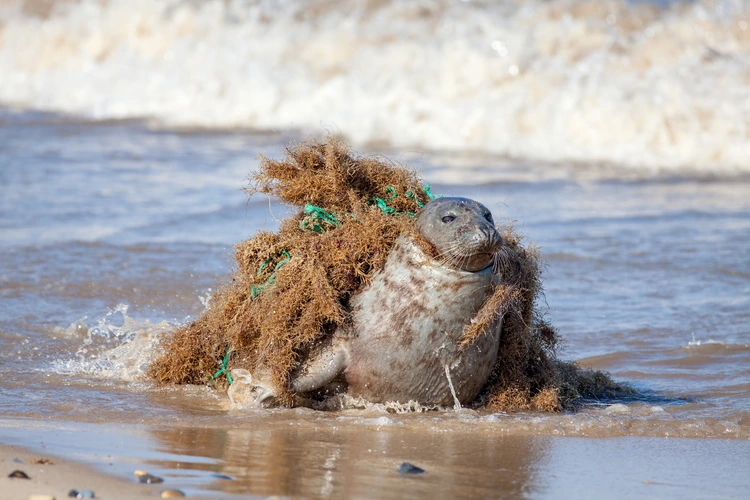
One estimate suggests there are 5.25 trillion pieces of plastic in the ocean, of which about 269,00 tons float on the surface. Larger floating items like nets, ropes and packaging can trap animals, causing injuries, drowning or starvation.
Many species also mistake plastic pieces on the surface as prey – such as turtles mistaking plastic bags for jellyfish. This can clog digestive tracts, reduce feeding capacity and lead to either malnutrition or death.
Plastics on the surface can also impede surface-dwelling plankton. For example, floating debris can shade light and consequently impact primary productivity.