
• Skip to main content
  • Skip to secondary menu
  • Skip to primary sidebar
  • Skip to footer
Geographical

Geographical

Official magazine of the Royal Geographical Society (with IBG)

  • Home
  • Briefing
  • Science & Environment
  • Climate
    • Climatewatch
  • Wildlife
  • Culture
  • Geopolitics
    • Geopolitical hotspots
  • Study Geography
    • University directory
    • Masters courses
    • Course guides
      • Climate change
      • Environmental science
      • Human geography
      • Physical geography
    • University pages
      • Aberystwyth University
      • Brunel University
      • Cardiff University
      • University of Chester
      • Edge Hill University
      • The University of Edinburgh
      • Newcastle University
      • Nottingham Trent University
      • Oxford Brookes University
      • The University of Plymouth
      • Queen Mary University of London
    • Geography careers
      • Charity/non-profit
      • Education & research
      • Environment
      • Finance & consulting
      • Government and Local Government
    • Applications and advice
  • Quizzes
  • Magazine
    • Issue previews
    • Subscribe
    • Manage My Subscription
    • Special Editions
    • Podcasts
    • Geographical Archive
    • Book reviews
    • Crosswords
    • Advertise with us
  • Subscribe
    • Direct Debit Changes

New campaign on babies’ exposure to plastics launched in UK Parliament

9 June 2026
3 minutes

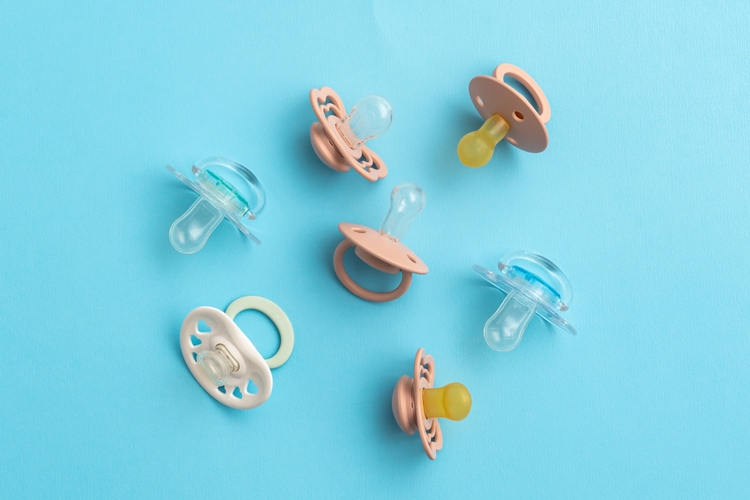
Baby,Pacifiers,On,Blue,Background,With,Copy,Space,,Top,View
Researchers have linked chemicals found in items such as pacifiers with reproductive disorders and neurodevelopmental effects. Image: Shutterstock

National campaign urges government to launch a cross-government call for evidence on babies’ exposure to plastic chemicals in baby products


By Victoria Heath

A global campaign to reduce babies’ exposure to potentially toxic chemicals from plastic products during the first 1,000 days of life has been launched today, calling first on the UK Government to tackle one of the most pressing health issues facing infants.

Backed by scientists and clinicians, the campaign led by A Plastic Planet argues that regulation has not kept pace to protect health.

The first 1,000 days of life – from conception to two years old – are widely recognised by medical professionals as the most critical period of human development.


Enjoying this article? Check out our related reads…

  • The longest & shortest election campaigns around the world
  • New study finds toxic pesticides in commercial baby food
  • New report reveals shocking scale of hidden global microplastic exposure
  • Health experts warn of plastic chemical exposure as Netflix documentary launches
  • The Geographical Podcast, Editor’s Picks: Stop the train

During this time, the foundations for lifelong health are being established – such as organ formation and hormones directing growth – but evidence suggests babies are routinely exposed to chemicals associated with plastics that may hinder such development. This is through a wide range of products such as feeding bottles, pacifiers, bedding, mattresses and even before birth through placental transfer. 

A 2026 study found a dummy labelled ‘BPA-free’ released the highest quantities of BPA, an industrial chemical that can interfere with the body’s natural hormone system. Even the lowest-leaching dummies exceeded safe daily limits by up to 50-fold; the worst exceeded them by 11,600-fold.

As well as dummies, infants spend 12 to 16 hours daily in contact with sheets, blankets and mattresses that can emit volatile organic compounds, phthalates and flame retardants.

Another study attributed 1.97 million preterm births in a single year (2018) to exposure to just one phthalate chemical, DEHP, alongside an estimated 74,000 deaths and nearly 6.7 million years of life lost.

Research has identified links between exposure to these endocrine-disrupting chemicals and reproductive disorders, neurodevelopmental effects, metabolic disease and hormone-related cancers.

Steriliser for baby
The campaign is urging a package of reform, including mandatory testing of chemicals included in baby products, clear labelling, and phased bans of certain products such as plastic feeding bottles or teethers. Image: Shutterstock

The campaign argues that evidence is needed to bring together scientific research and healthcare expertise to determine how safer alternatives can be scaled without increasing costs for families.

Already, safe alternatives exist for many products – such as glass, stainless steel, medical-grade silicone and natural-fibre materials. However, these come with a higher price tag – something the latest campaign argues should not be the case.

In the European Union, regulators have taken further steps to restrict chemicals, such as endocrine disruptors, in products used by babies and young children. California has also prohibited bisphenols above trace levels in feeding bottles and sucking or teething products.

In the UK, legislative mechanisms are available to act, such as the UK REACH regulations and the Environmental Protection Act 1990, which allow restrictions on products such as plastic straws, cotton buds and stirrers.

Following an urgent call for evidence, the latest campaign is also urging mandatory testing of chemicals included in baby products, clear labelling and phased bans of certain products such as teethers or plastic feeding bottles.

‘We ask families to make safe choices, but we surround them with almost all plastic options and don’t give them the information, transparency or affordable alternatives. It is time for government to make the plastic-free option a reality and address the plastic health crisis impacting our children,’ said visiting scientist at the University of Cambridge Dr Dolly van Tulleken.
Themes Briefing Global Health Plastic pollution

Protected by Copyscape

Primary Sidebar

SPRING SALE

GEOGRAPHICAL WEEKLY LOGO FREE - Sign up to get context, clarity and perspective in a noisy world, every Friday

Popular Now

Crashing waves on rough sea

Trump administration to dismantle 900 deep-sea monitoring instruments

The village doctor visits a sick old woman and gives her an injection.

The diseases that are resurging across the world

UK houses in a row

Millions of UK homes under threat of sinking due to climate change,…

In the isolated wilds of the Altai Mountains, 12-year-old Aykerim holds a golden eagle outside her family’s home

Inside the world of Mongolia’s eagle hunters

Northern gannets

More than 10,000 seabirds and 1,000 whales & dolphins killed in UK…

Footer

  • Facebook
  • Instagram
  • LinkedIn
  • Reddit
  • TikTok
  • Twitter
  • YouTube

Geographical print magazine cover

Published in the UK since 1935, Geographical is the official magazine of the Royal Geographical Society (with IBG).

Informative, authoritative and educational, this site’s content covers a wide range of subject areas, including geography, culture, wildlife and exploration, illustrated with superb photography.

Click Here for SUBSCRIPTION details

Want to access Geographical on your tablet or smartphone? Press the Apple, Android or PC/Mac image below to download the app for your device

Footer Apple Footer Android Footer Mac-PC

More from Geographical

  • Subscriptions
  • Get our Newsletter
  • About Us
  • Contact Us
  • Advertise with us
  • Privacy policy
  • Terms & Conditions

Copyright © 2026 · Site by Syon Media