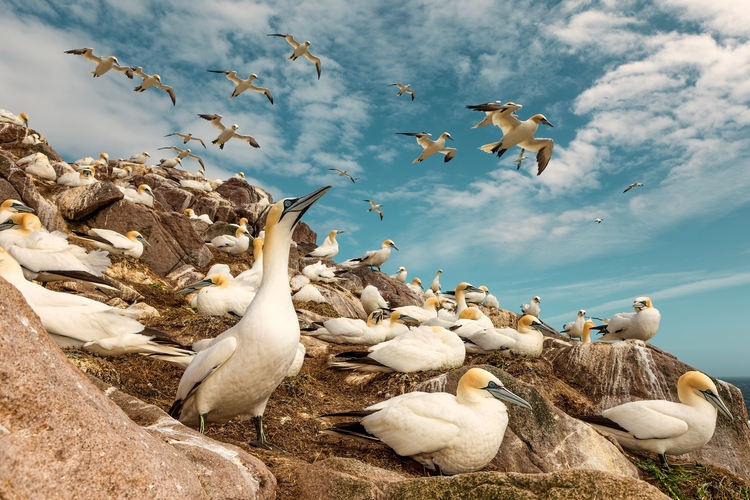
Humpback whales, razorbills and seals are among the victims of bycatch by fishing boats in UK
By
Analysis has revealed the devastating toll that bycatch – the accidental capture and killing of non-target animals during commercial fishing – is having on marine wildlife in the UK.
According to the latest report by Wildlife and Countryside Link, more than 10,000 seabirds, 1,000 whales and dolphins, and hundreds of seals are being accidentally killed every year by commercial fishing boats operating in UK waters. This is due either to nets being dragged through the water or along seafloors – sweeping up everything in their path – or to static nets hanging like curtains in the water.
Check out our related reads…
In the report, more than 120 tonnes of protected sharks, skates and rays were found to be caught as bycatch each year, along with more than 1,000 endangered Atlantic salmon. Animals such as humpback whales, razorbills and seals are also exposed to threats from fishing boats, including one seal named ‘Legs’ who was tangled in a net for seven years.
The new report – the first-ever to expose the scale of bycatch in the UK – revealed the true numbers of marine wildlife impacted are likely far worse, due to chronic underreporting and a lack of monitoring across much of the UK fishing fleet.
It also shows that the UK Government is failing to meet legal obligations to achieve a Good Environmental Status in UK seas, with bycatch identified as a major cause of marine wildlife decline.

‘The scale of dolphins, sharks, seals and seabirds accidentally caught in fishing gear is shocking,’ said head of marine conservation at The Wildlife Trusts, Ruth Williams. ‘For many in the fishing industry, bycatch is a distressing and unwanted outcome – these species are critical to the health of our seas, and their deaths will have serious consequences on marine ecosystems.’
Wildlife and Countryside Link is calling on the UK Government to require electronic monitoring on all fishing vessels operating in England, including those under 10 metres, which it said are largely responsible for bycatch.
Despite such damning findings, the report has also shown successful solutions to bycatch issues being used in UK fisheries. For example, in Filey Bay on the Yorkshire coast, a collaboration between fishers and conservationists reduced seabird deaths from around 700 per year to four or five by using heavier fishing nets.
Trials of weighted ropes in creel fisheries have also reduced the risk of whales becoming entangled in fishing gear.