
• Skip to main content
  • Skip to secondary menu
  • Skip to primary sidebar
  • Skip to footer
Geographical

Geographical

Official magazine of the Royal Geographical Society (with IBG)

  • Home
  • Briefing
  • Science & Environment
  • Climate
    • Climatewatch
  • Wildlife
  • Culture
  • Geopolitics
    • Geopolitical hotspots
  • Study Geography
    • University directory
    • Masters courses
    • Course guides
      • Climate change
      • Environmental science
      • Human geography
      • Physical geography
    • University pages
      • Aberystwyth University
      • Brunel University
      • Cardiff University
      • University of Chester
      • Edge Hill University
      • The University of Edinburgh
      • Newcastle University
      • Nottingham Trent University
      • Oxford Brookes University
      • The University of Plymouth
      • Queen Mary University of London
    • Geography careers
      • Charity/non-profit
      • Education & research
      • Environment
      • Finance & consulting
      • Government and Local Government
    • Applications and advice
  • Quizzes
  • Magazine
    • Issue previews
    • Subscribe
    • Manage My Subscription
    • Special Editions
    • Podcasts
    • Geographical Archive
    • Book reviews
    • Crosswords
    • Advertise with us
  • Subscribe
    • Direct Debit Changes

Millions of UK homes under threat of sinking due to climate change, study finds

11 June 2026
3 minutes

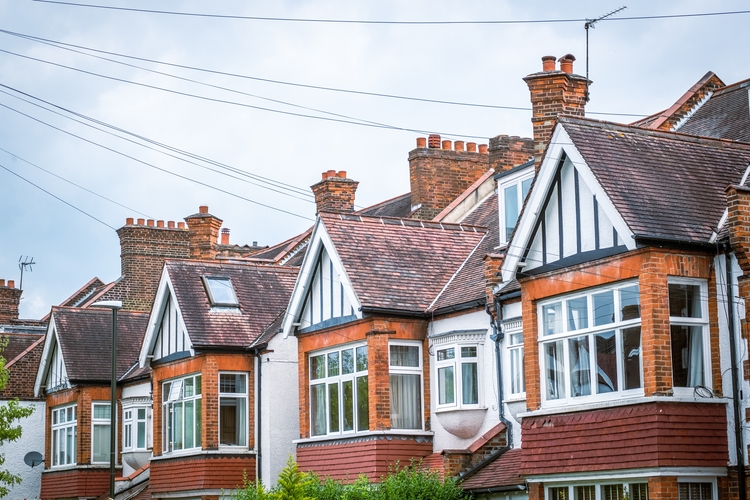
UK houses in a row
Subsidence-related insurance claims totalled £153million in the first six months of 2025. Image: Shutterstock

London, Essex and Kent are hotspots more vulnerable to hotter, drier weather, which makes the ground shrink and drags house foundations down


By Victoria Heath

Millions of homes in the UK – particularly across London, Kent and Essex – are at risk of climate-related subsidence, according to a new report by the British Geological Survey (BGS).

Hotter and drier conditions – made more frequent under climate change – cause the ground beneath houses to shrink and drag foundations down with it, in a process known as shrink-swell ground movement.


Enjoying this article? Check out our related reads…

  • Coastal cities under threat as flood risks increase, study finds
  • Scientists reveal our best and worst-case scenarios for a warming Antarctica
  • The popular beaches predicted to shrink the most by 2100
  • Why are some Indian cities sinking?
  • The holy waters of Romney Marsh

New BGS data projects that by 2070, more than 4.2 million properties could be affected by shrink-swell subsidence under a high-emissions scenario; around 1.8 million properties under a medium-emissions scenario; and 500,000 properties under a low-emissions scenario.

The most susceptible regions, according to the BGS, are found in highly populated parts of London, such as the northern and central boroughs, including Islington, Barnet and Camden, as well as in Kent and the south-east of England.
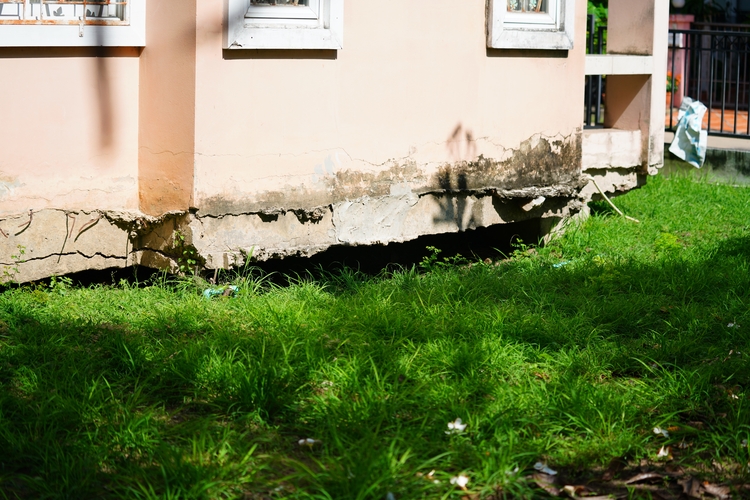
A house experiencing subsidence
The effects of subsidence can be far-reaching, and climate change is only projected to make them more widespread. Image: Shutterstock

Subsidence-related insurance claims are already becoming commonplace in the UK. In the first six months of 2025 alone, they totalled £153million. Fixing the issue of a sinking house can be costly, leading to increased insurance premiums, decreased house prices, and in some cases, engineering works to stabilise land or property.

With climate change projections indicating that hotter, drier conditions are likely to become more frequent over the coming century, the number of properties susceptible to sinking is rising.

‘Dry weather and high temperatures are a major factor in the emergence of shrink-swell subsidence. Looking ahead, these increases in hotter, drier summers and warmer, wetter winters are projected to continue,’ said BGS scientist Anna Harrison.

Scientists say there are ways that planners, owners and developers can limit the future effects of a sinking property. These include taking specialist advice before starting major building work and avoiding planting trees with larger root systems close to properties.

Where is subsidence worst around the world?

Many sinking cities are found in Asia, including Jakarta, Bangkok, Ho Chi Minh City, and Shanghai. Other sinking cities can be found in Africa, including Lagos in Nigeria.

One of the most common causes of subsidence in these cities is groundwater extraction, especially in areas where households and industries drill too many wells or boreholes. Extracting excessive amounts of water over extended periods compresses the soil, causing the surface and buildings to sink. For example, now almost half of Jakarta sits below sea level, making it particularly vulnerable to further subsidence-related threats.

These cities have tried several measures to counter the effects of their sinking cities, including building walls and sand barriers along coastlines to prevent flooding from the sea. However, as walls get higher, a ‘bowl effect’ can occur in which rain and river water become trapped and prevented from flowing back into the sea.
Themes Briefing UK

Protected by Copyscape

Primary Sidebar

SUMMER SALE

GEOGRAPHICAL WEEKLY LOGO FREE - Sign up to get context, clarity and perspective in a noisy world, every Friday

Popular Now

Our seven favourite New Zealand locations

Our seven favourite New Zealand locations

QUIZ: Country Shapes – Hard

QUIZ: Country Shapes – Hard

A tree with a view from the ground

The booming growth of 66 billion trees on China’s Great Green Wall

QUIZ: Physical Geography Trivia

QUIZ: Physical Geography Trivia

QUIZ: True or False – Country Facts

QUIZ: True or False – Country Facts

Footer

  • Facebook
  • Instagram
  • LinkedIn
  • Reddit
  • TikTok
  • Twitter
  • YouTube

Geographical print magazine cover

Published in the UK since 1935, Geographical is the official magazine of the Royal Geographical Society (with IBG).

Informative, authoritative and educational, this site’s content covers a wide range of subject areas, including geography, culture, wildlife and exploration, illustrated with superb photography.

Click Here for SUBSCRIPTION details

Want to access Geographical on your tablet or smartphone? Press the Apple, Android or PC/Mac image below to download the app for your device

Footer Apple Footer Android Footer Mac-PC

More from Geographical

  • Subscriptions
  • Get our Newsletter
  • About Us
  • Contact Us
  • Advertise with us
  • Privacy policy
  • Terms & Conditions

Copyright © 2026 · Site by Syon Media