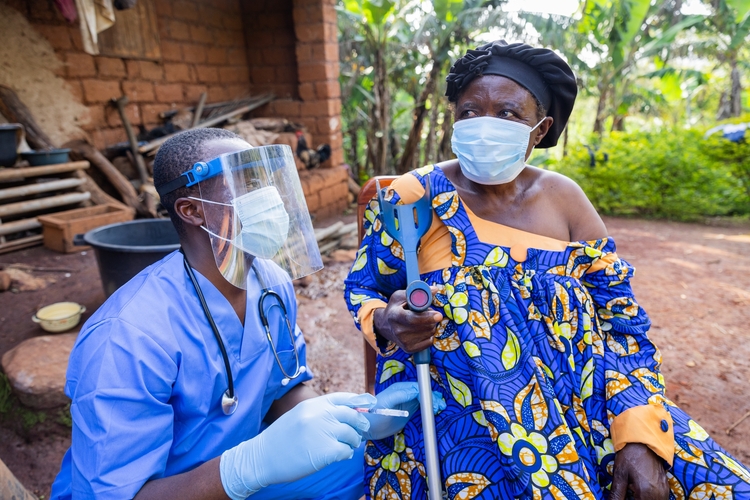
Diseases such as mumps, measles and malaria are on the increase around the world – but why?
By
Through global health initiatives like vaccination programme rollouts and accessible treatments, millions of lives have been saved from being infected with life-threatening – and in some cases, deadly – diseases.
However, many diseases once thought to be under control have recently begun to resurface in countries around the world. So, the question arises: why are their case numbers increasing?
Below are six examples of diseases that are resurging in society, and exactly why their incidences are on the rise…
Malaria
Around the world, malaria cases and deaths have continued to rise since 2020. The number of cases globally reached 263 million in 2023 (up 11 million from 2022), with the largest increases in Africa.
Check out our related reads…

In 2023 alone, malaria – an entirely preventable and treatable disease – killed nearly 600,000 people in Africa. And as of 2025, several countries have reported sharp surges in cases and deaths compared with the same period in 2024. For example, Zimbabwe experienced 111,998 cases and 310 deaths, a dramatic increase from 29,031 cases and 49 deaths the previous year. In Botswana, cases rose from 218 to 2223, with 11 deaths reported in 2025 compared to none in 2024.
Decades of progress are being challenged by drug resistance, weakened health systems and reduced global financial commitment. In addition, the aftermath of the COVID-19 pandemic disrupted health services and diverted resources, causing the rollout of solutions to malaria, such as indoor spraying and the distribution of treated nets, to be stalled.
Mumps
Worldwide, cases of mumps have been increasing since 2006. A viral infection spread through droplets and saliva, mumps can easily spread as individuals carry the virus, often before becoming symptomatic. The main reason for such an uptick in the virus is vaccine uptake.
Earlier this year, health officials in the US issued an alert after mumps cases rose sharply in Maryland. In previous years, significant outbreaks were also reported in England, with more than 5,000 cases in 2019 alone, driven largely by university students who missed out on childhood vaccines.
Many cases resolve without lingering health issues, but mumps can affect the central nervous system and, in some instances, cause permanent hearing loss.
The MMR (measles, mumps and rubella) vaccine is highly effective at preventing mumps – two doses are estimated to be about 86 per cent effective at stopping infection with the virus.
Measles
Measles has experienced a resurgence in cases worldwide in recent years. In England in 2024, there were 2,911 cases – the highest number in decades. Most of these cases were in unvaccinated children under 10 years old.
Elsewhere in the US, between January 2025 and March 2026, more than 3,500 measles cases were reported, mostly among children and teenagers. This was the largest number of cases in an outbreak since 2000.

Today, in the UK, the uptake of the routine childhood measles vaccine is the lowest it has been in a decade, and well below the 95 per cent uptake needed to protect the population and prevent outbreaks. The same can be said for the US; nationally, measles vaccination rates fell from 95 per cent in 2019 to 92 per cent in 2023. As such, the virus can easily take hold in communities around the world and infect individuals.
Two doses of a measles vaccine provide 97 per cent protection – a percentage much higher than other vaccines.
Tuberculosis
Tuberculosis (TB) is the leading infectious cause of death around the world, and is spread via droplets in the air transmitted by infected individuals. Around 10 million cases are reported annually, with two million people dying from TB every year – more than malaria and HIV combined.
Cases of TB increased globally by 4.6 per cent from 2020 to 2023. In the US alone, TB cases rose by more than 15 per cent from 2022 to 2023.
Several factors combine to cause this uptick: during COVID-19 lockdowns, people could not readily access healthcare for early diagnosis of TB. As well as this, the US experienced shortages of one of the primary TB drugs between 2021 and 2023. It is estimated that pandemic-related disruptions in care resulted in nearly 700,000 excess deaths from TB worldwide.
Another factor causing TB’s resurgence is behavioural: faced with stigma and the prospect of lengthy treatment, many people are slow to seek out treatment or quit before completing it entirely, giving the disease a chance to both spread and mutate into highly drug-resistant strains.
Dengue fever
Dengue fever is another disease that has experienced a significant resurgence in recent years. According to the World Health Organisation (WHO), there has been an eight-fold increase in dengue cases between 200 and 2019.
In 2023, more than 5 million cases were reported across 80 countries. That number more than doubled in 2024.
The disease is spread via the bite of an infected mosquito, and is on the rise for three main reasons.
Warmer, wetter years mean there are more mosquitoes to spread the disease. Secondly, large outbreaks of dengue occur in areas with living conditions that make it harder to protect against mosquito bites. And thirdly, people are travelling more, especially to tropical regions where dengue is more common.
Permafrost diseases
Some researchers remain concerned about the thawing of permafrost – a frozen mixture of soil, rocks and ice – and the diseases that may be locked within it. Permafrost covers one-fifth of the northern hemisphere, including Arctic tundra and the boreal forests of Canada and Russia.

Back in 2016, an anthrax outbreak occurred in Russia’s Yamal Peninsula, which was linked to the thawing of permafrost that exposed a decades-old reindeer carcass. The carcass released anthrax spores into the environment and infected more than 2,000 reindeer as well as dozens of humans.
The risk of such diseases will only increase as more permafrost melts due to climate change. Already, Greenpeace has expressed concerns that these ‘resurrected’ pathogens could spark a pandemic, and scientists fear such viruses could pose a risk to people.
Under the right conditions and with the right hosts, there is a theoretical risk that an ancient virus could adapt to infect new species, including humans.