
• Skip to main content
  • Skip to secondary menu
  • Skip to primary sidebar
  • Skip to footer
Geographical

Geographical

Official magazine of the Royal Geographical Society (with IBG)

  • Geographical Home
  • News
  • Features
  • Opinion
    • Climatewatch
    • Front Lines
  • Podcast
  • Travel
    • Discovering Britain
    • Passport
  • Culture
    • Book reviews
  • Quizzes
    • Crosswords
  • Choose Geography
    • University directory
    • Masters courses
    • Course guides
      • Climate change
      • Environmental science
      • Human geography
      • Physical geography
    • University pages
      • Aberystwyth University
      • Brunel University
      • Cardiff University
      • University of Chester
      • Edge Hill University
      • The University of Edinburgh
      • Newcastle University
      • Nottingham Trent University
      • Oxford Brookes University
      • The University of Plymouth
      • Queen Mary University of London
    • Geography careers
      • Charity/non-profit
      • Education & research
      • Environment
      • Finance & consulting
      • Government and Local Government
    • Applications and advice
  • Magazine
    • Issue previews
    • Subscribe
    • Manage My Subscription
    • Special Editions
    • Geographical Archive
    • Advertise with us
  • Subscribe
    • Direct Debit Changes

More than 2,700 deaths linked to May and June heatwaves, study finds

13 July 2026
2 minutes

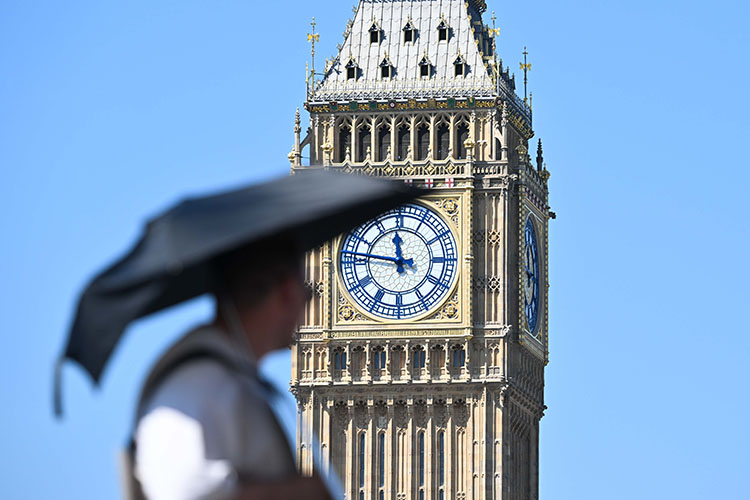
Researchers attributed around 59 per cent of deaths in May and 38 per cent in June to additional heat from human-caused climate change. Image: Shutterstock

Climate change is estimated to be responsible for 42 per cent of the deaths across both heatwaves, researchers find


By Victoria Heath

More than 2,700 people are thought to have died from heat-related causes in the May and June heatwaves in England and Wales, new research from Imperial College London, the Met Office and the London School of Hygiene and Tropical Medicine has found. Of these deaths, around 42 per cent were caused by extra heat attributed to human-induced climate change.

Approximately 550 people are estimated to have died due to heat-related causes during the May heatwave (21–29 May 2026) and about 2,200 during the June heatwave (18–28 June 2026) in England and Wales.

May temperatures hit a peak of 35.1°C at Kew Gardens on 26 May – far higher than the previous record of 32.8C set back in 1922. In June, temperatures reached a high of 37.7°C at Lingwood, Norfolk.


Related reads…

  • The Gaza ‘Board of Peace’: Neocolonial governance in the twenty-first century
  • Geo explainer: What causes heatwaves?
  • Geo explainer: What are marine heat waves – and are they getting worse?
  • The longest heatwaves in history – and how they’re getting worse
  • Which nations are the biggest plastic waste culprits?

‘These are big numbers, and we don’t want to see this many people dying,’ said lead author Dr Clair Barnes. ‘We’ve reached the point where the heat is so extreme that we can’t help but acknowledge the impacts it has.’

In comparison, around four people die every day from road traffic collisions, and 35 a day due to alcohol and drug use.

Researchers attributed around 59 per cent of deaths in May and 38 per cent in June to additional heat from human-caused climate change.

They stress that daytime maximum temperatures across England and Wales are now 3-4°C hotter than they would have been without human-induced climate change, further raising risks associated with heatwaves.

Across western Europe, a heatwave in June soared temperatures above 35°C. Video: Global News

In addition, estimates suggest that the death rate (per million population) was similar in the Midlands to the south, where temperatures were at their hottest. As such, it suggests heatwave risks may shift northwards across time.

Previously, the UKHSA found that more than 10,000 people died in Britain because of summer heatwaves between 2020 and 2024. This year, both heatwaves were caused by a heat dome – when a stalled area of high pressure traps hot air over a region.

‘Hopefully, just the sheer size of the numbers is really illustrating to people that this is something we need to be worrying about and preparing for,’ said Barnes. ‘We can stop making it worse by transitioning towards net zero, because that is not a political target; it’s a physics-based target. If we stop adding greenhouse gases, we stop adding warming, and we stop making these heatwaves worse.’

Themes News

Protected by Copyscape

Primary Sidebar

SUMMER SALE

GEOGRAPHICAL WEEKLY LOGO FREE - Sign up to get context, clarity and perspective in a noisy world, every Friday

Popular Now

Wildfires in northern Australia have been reduced by half since traditional land management has been introduced

Geo explainer: What is hydroclimate whiplash?

Physical Geography Quiz

QUIZ: Physical Geography Trivia

QUIZ: Glaciation

QUIZ: Glaciation

Wasps flying around close-up

Why insects are disappearing and what it means for our future

AI concept

China’s AI push raises the stakes

Footer

  • Facebook
  • Instagram
  • LinkedIn
  • Reddit
  • TikTok
  • Twitter
  • YouTube

Geographical print magazine cover

Published in the UK since 1935, Geographical is the official magazine of the Royal Geographical Society (with IBG).

Informative, authoritative and educational, this site’s content covers a wide range of subject areas, including geography, culture, wildlife and exploration, illustrated with superb photography.

Click Here for SUBSCRIPTION details

Want to access Geographical on your tablet or smartphone? Press the Apple, Android or PC/Mac image below to download the app for your device

Footer Apple Footer Android Footer Mac-PC

More from Geographical

  • Subscriptions
  • Get our Newsletter
  • About Us
  • Contact Us
  • Advertise with us
  • Privacy policy
  • Terms & Conditions

Copyright © 2026 · Site by Syon Media