New study reveals that the world has warmed faster in the last decade than in any previous decade since records began
By
The year of the Paris Agreement, 2015, is often seen as a breakthrough year for progress on climate change. Now, a new study by the Potsdam Institute for Climate Impact Research (PIK), published in Geophysical Research Letters, has shown that in the decade since this point, the estimated warming rate has been its most significant yet: around 0.35 °C.
‘We can now demonstrate a strong and statistically significant acceleration of global warming since around 2015,” says Grant Foster, a US statistics expert and co-author of the study.’
The study accounted for the known natural influences on global temperature, such as changes caused by El Niño, volcanic eruptions, and solar cycles. ‘We filter out known natural influences in the observational data, so that the ‘noise’ is reduced, making the underlying long-term warming signal more clearly visible,’ Foster added.
The estimated warming rate of 0.35 °C illustrates a rise from a rate of just under 0.2 °C per decade on average from 1970 to 2015. In all datasets, the acceleration became apparent in 2013 or 2014.
Enjoying this article? Check out our related reads:
The research team worked with five large, established global datasets (NASA, NOAA, HadCRUT, Berkeley Earth, ERA5). They tested the change in warming rate using two statistical approaches: a quadratic trend analysis and a piecewise linear model that objectively determined when the warming rate changed.
‘If the warming rate of the past 10 years continues, it would lead to a long-term exceedance of the 1.5°C limit of the Paris Agreement before 2030,’ says Stefan Rahmstorf, PIK researcher and lead author of the study. ‘How quickly the Earth continues to warm ultimately depends on how rapidly we reduce global CO₂ emissions from fossil fuels to zero.’
Even though an acceleration in the warming rate is consistent with existing climate modelling, it is far from ideal that the decade since the landmark Paris Agreement has seen the highest warming rate since records began. The data on anthropogenic climate change is unequivocal. The key question is whether we can effectively and efficiently pool the resources on a governmental, corporate and grassroots level – there is no Planet B.
Global warming as a systemic injustice

The effects of global warming are felt unequally around the world, with those who have done the least to cause the problem bearing the brunt of the impacts.
It is greenhouse gas emissions such as carbon dioxide and methane which drive the atmosphere’s warming rate. As these emissions are synonymous with increasing resource consumption and wealth, they have been produced in highly unequal ways between countries and populations. The USA accounts for 25 per cent of cumulative carbon dioxide emissions since 1751 alone. This proportion contrasts with the three per cent for the entire continent of Africa, which is considerably lower than the UK’s share.
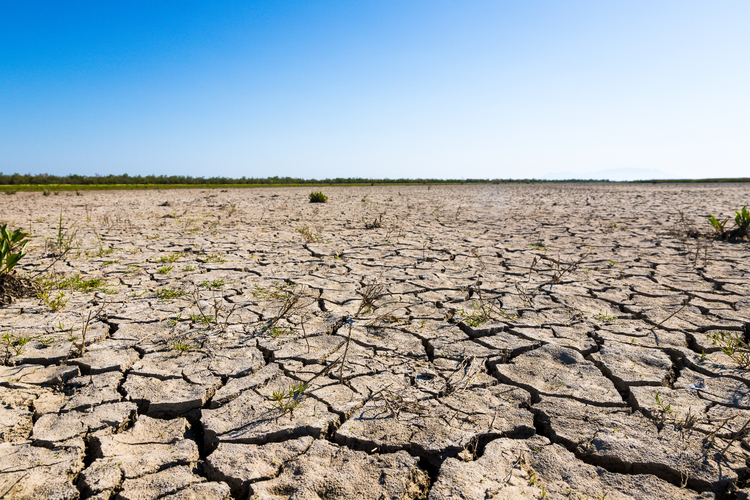
The impacts of global warming also exacerbate existing, entrenched inequalities. For example, poorer communities already facing economic hardship, including unemployment and food insecurity, will suffer disproportionately when droughts and desertification stall agricultural production. Just this week, a severe drought in Kenya followed four consecutive failed wet seasons in the Horn of Africa.
This symbolises how it is Global South countries and particularly the more marginalised communities within them who are on the front line of climate change. Whether it’s challenges with livestock, crop failures, or water sources, these communities rely most on their natural environments for their livelihoods. Due to generally poor adaptation infrastructure and management, they are also usually the worst placed to respond to these challenges.