
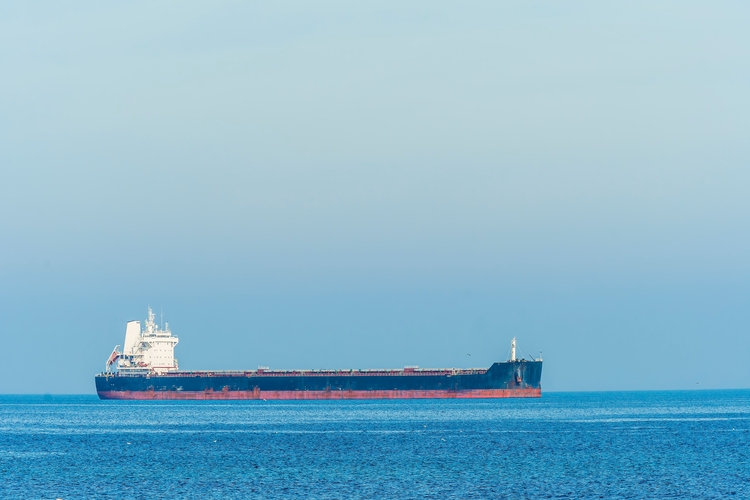
Discover more about the ships that bypass Western sanctions and evade capture in the seas around the world
By
Last week, a 300-metre-long ship was seized by US forces in the Atlantic. Despite not carrying any oil, the ship appears to be of significant value. Theories as to why it is coveted have been bandied around, ranging from it carrying Russian weapons in the hull to its potential in becoming a symbolic trophy in a power struggle between the US and Russia.
Named the Marinera, the ship is allegedly part of ‘shadow’ or ‘ghost’ fleets used by Russia, Iran and Venezuela. But what exactly are these fleets, and how do they operate?
What is a shadow fleet?
According to Lloyd’s List, shadow or ghost fleets are ships for which deceptive practices are used in order to allow them to transport goods – including oil and gas – in violation of sanctions and price caps.
For years, shadow fleets have moved cargo and cheap fuel around the globe, including to China. Efforts to stop them reached boiling point last month when Trump imposed a naval blockade on these tankers operating near Venezuela, a key destination for shadow fleet vessels.
The Marinera is one of several tankers that have attempted to evade such sanctions. In December, it avoided being captured in the Caribbean Sea – changing its name from Bella 1 – before switching course toward northern Russia ahead of its eventual capture earlier this week.
It is registered as Russian, and flies a Russian flag – although a report from the Guardian says the tanker’s crew quickly painted a Russian flag on the ship last month. Under maritime law, fraudulent reflagging can render a vessel stateless and allow enforcement on board. However, Russia contends that the Marinera was fraudulently reflagged and instead purports that the ship underwent a proper re-registration.
Other shadow fleet ships have also been captured in recent months. Back in December, US special forces seized Skipper – a tanker off Venezuela that the US treasury had placed under sanctions in 2022, after claims it had been smuggling oil on behalf of Iran’s Revolutionary Guards and Hezbollah.
What do shadow fleets do?
One of the main nations using shadow fleets is Russia. The country built its fleet to circumvent the G7 price cap, created to limit the oil revenues Moscow could put towards its war efforts in Ukraine. According to analysis by the Centre for Research on Energy and Clean Air, shadow tankers – either sanctioned or suspected – account for 62 per cent of shipped Russian crude oil exports. China and India are the biggest customers for crude, followed by Turkey and the European Union.
In total, Russia’s shadow fleet transports an estimated 3.7 million barrels of oil per day, generating up to an estimated £80 billion in annual revenue. To put this figure into perspective, revenue from this illicit trade network has matched – if not exceeded – the total value of economic and military assistance provided to Ukraine since the start of the war. However, amassing such a large fleet has come with a price tag – estimates place the total cost of acquiring all these ships at roughly $10 billion.
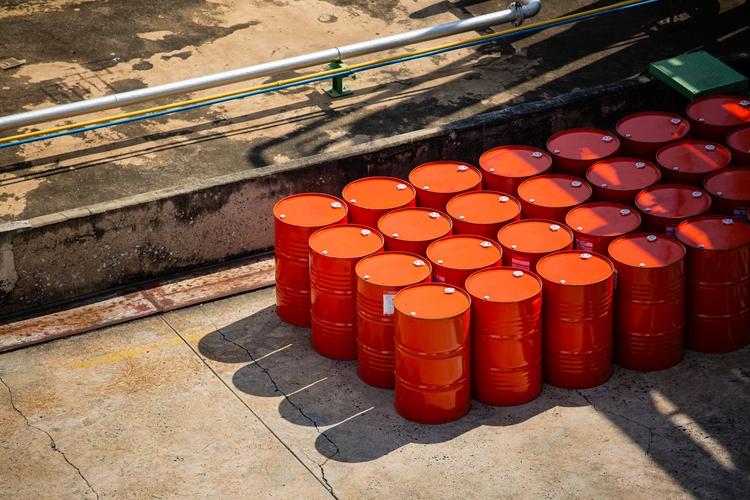
Using shadow fleets give Russia the benefit of deniability, making it difficult to trace control of a vessel back to the nation. For example, the ship Eagle S is operated by a company based in the United Arab Emirates, managed by an Indian firm, and registered under the Cook Islands flag. Such complexity allows Russia to claim ignorance, as it did when Finland seized the Eagle S.
Last year, forty ships accused of belonging to a large ‘shadow fleet’ moving sanctioned oil for Venezuela and others were reflagged to Russia in what the Guardian has dubbed as an apparent attempt to‘gain Kremlin protection from American seizure’.
As well as moving sanctioned oil, some shadow fleets have also been suspected of undersea sabotage, illicit drone launches and ‘spoofing’ their location data.
These ships often sail without a valid national flag, meaning vessels are stateless and lack proper insurance. This can pose a significant problem if an accident occurs – such as a billion-dollar oil spill – which is likely, considering 72 per cent of shadow fleet ships are more than 15 years old. In this case, it might make it nearly impossible for any country to pick up the cost. Instead, it is likely that European taxpayers or coastal states in Southeast Asia will foot the bill.
As enforcements increase and sanctions tighten, the number of shadow fleets doubled in 2025 to more than 450, according to an IMO database. And it is becoming increasingly difficult to find their owners – the beneficial owners of around 60 per cent of shadow fleet vessels remain essentially unknown.
How can they be stopped?
It remains a difficult task to track – and stop – shadow fleets, primarily because they can hinder comprehensive mapping by spoofing locations and turning off transponders.
In addition, shadow fleet operations exist in legal grey zones, making arrests and seizures legally complex.
If they are to be stopped, researchers will need to use open-source tools to firstly map key oil production facilities, storage sites and transportation systems.

At the same time, this data must be followed downstream to study ships’ historical travel patterns. This would help identify not just the locations of ships, but also key routes – including where ships dock at port, when they turn off their transponders and where they meet up for oil drop-offs at sea through ship-to-ship transfers.
In addition, using satellite imagery to capture these transfers in action could help to identify and track shadow fleets.
Enhanced naval protection can also form part of the response to stopping shadow fleets, but this is resource-intensive and cannot guarantee complete security. For example, cable sabotage can take place in a matter of minutes, leaving little time to react in vast open waters.


