Holiday traditions differ around the world, from roller skating to morning mass, to eating fast food on Christmas Day
By
More than two billion people celebrate Christmas around the world every year. Each have their own traditions – from personal ones to those stemming from national heritage.
So, how do national traditions start? And why do they catch on?
Here, we look at five different festive traditions from different countries, and dive into the history behind them.
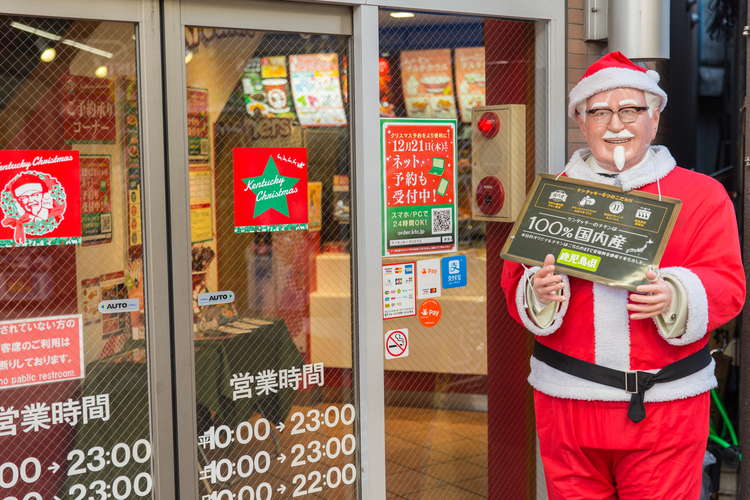
Japan – KFC Christmas

On Christmas Day in Japan, people aren’t stuffing their turkey to roast in the oven or cutting their potatoes, – they’re digging into a bucket of KFC. This tradition can be traced back to 1970, when the first KFC was opened in Nagoya, Japan by Takeshi Okawara. Allegedly, Okawara overheard an expat saying that they missed eating turkey for Christmas, and that chicken was the next best option during the holidays – and thus the tradition was born.
In 1974, KFC launched a nationwide marketing campaign called ‘Kurisumasu ni wa Kentakkii’ or Kentucky for Christmas. Every year, around 3.6million families tuck into KFC, with most people pre-ordering their food.
Enjoying this article? Check out our related reads…
Roller Skating – Venezuela
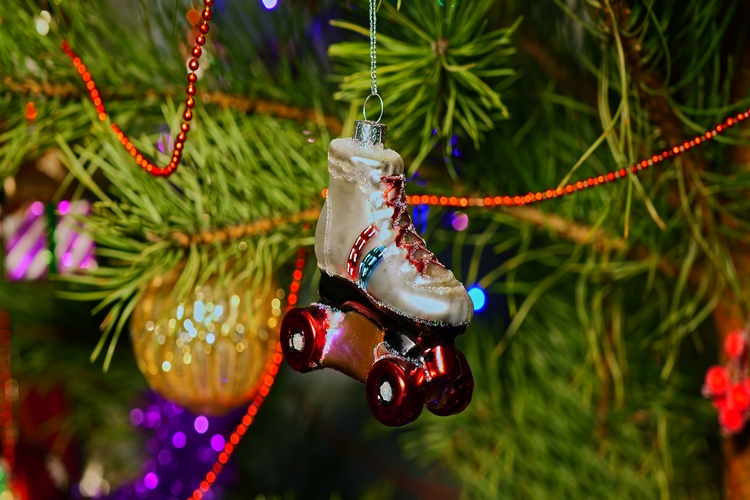
‘Las patinatas’, meaning, ‘the skating’ is a Christmas tradition in Venezuela which began in the 1950s. From 16 to 24 December, people will roller skate to Misa de Gallo (early morning mass or ‘the cockerel’s mass’) which is held around five or six a.m.
Most roads will close overnight, and people will wear festive clothing, eat treats and drink hot chocolate and coffee. Community is at the heart of this tradition; everyone comes together to enjoy themselves – arguably the most important part of Christmas. Sadly, this tradition is on the decline, due to the country’s political turmoil, socioeconomic decline, food shortages and crime.
The Gävle Goat – Sweden
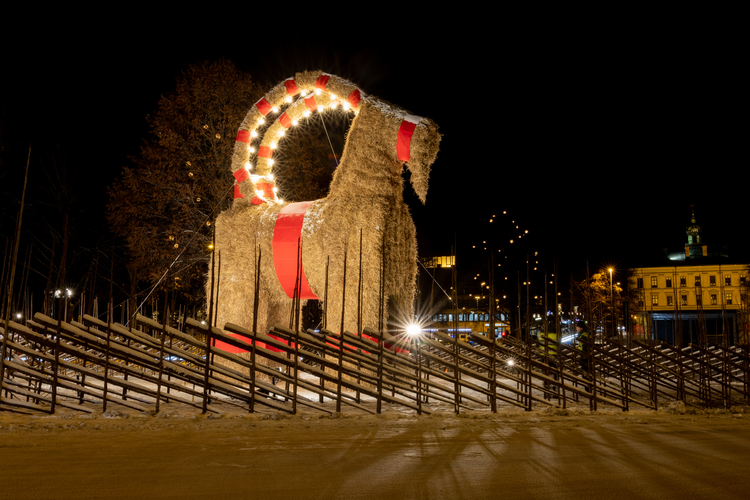
Each year, the Swedish town of Gävle puts up a giant straw goat in their town square to mark the beginning of the holiday season. Then, residents wait and watch to see how long the goat will last before it’s burned to the ground. The tradition started in 1966. On 1 December, the goat was put into place for the first time, standing at 13 metres tall and 7 metres long. On New Year’s Eve, at midnight, the goat was set on fire. The perpetrator was found and charged for vandalism. In the past 56 years, the Gävle Yule goat has been destroyed at least 35 times.
The town has put many preventative measures in place, having stationed guards, security cameras and fences. There’s even a livestream where you can watch the goat at all hours. The straw has also been sprayed with water and flameproof chemicals – but it rarely helps. The dedication and lengths people go to burn this goat is staggering, but still the goat stands tall every year.
Krampus – Germany and Austria
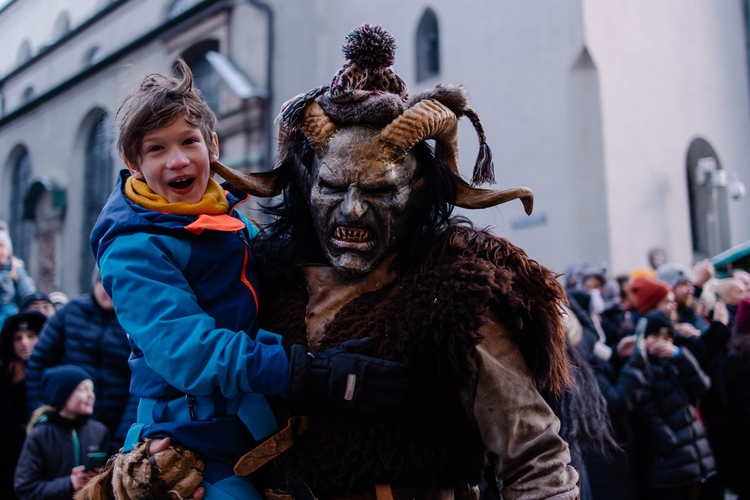
Krampusnacht or ‘Krampus night’ is celebrated on 5 December annually in Germany, Austria and other Central European Alpine regions. Krampus is a horned creature, depicted as a devil or monster which punishes children for misbehaving in the run-up to Christmas by swatting them and carrying them away in his sack. The tradition is centuries old. On Krampus night, children will leave shoes by their door, hoping to receive sweets from Saint Nikolaus if they’ve been good. However, if they’ve been bad, Krampus will leave them a lump of coal or a tree branch.
In Southern Germany especially, people will dress up as Krampus, roaming around the streets and Christmas markets, and even chasing people during festive parades called Krampuslauf (Krampus Runs).
Caga Tió – Catalonia, Spain

We all know children love treats – but how far are they willing to go to get them? In Catalonia, Spain, children rely on Caga Tió or ‘defecating log’ for their Christmas treats. Caga Tió is a small wooden log, covered in a blanket and always wearing a smiley face – despite his poor treatment. Children will feed him dried bread, beans and orange peel, and then on Christmas Eve, they will beat him with sticks until he ‘poops’ presents.
Also named ‘tió de Nadal’, (Log of Christmas), the tradition started from a log being bought into the house around Christmas to symbolise warmth and light given by the earth. As the years went on, more commercial versions of the log appeared, and the tradition of Caga Tió was born.