
• Skip to main content
  • Skip to secondary menu
  • Skip to primary sidebar
  • Skip to footer
Geographical

Geographical

Official magazine of the Royal Geographical Society (with IBG)

  • Home
  • Briefing
  • Science & Environment
  • Climate
    • Climatewatch
  • Wildlife
  • Culture
  • Geopolitics
    • Geopolitical hotspots
  • Study Geography
    • University directory
    • Masters courses
    • Course guides
      • Climate change
      • Environmental science
      • Human geography
      • Physical geography
    • University pages
      • Aberystwyth University
      • Brunel University
      • Cardiff University
      • University of Chester
      • Edge Hill University
      • The University of Edinburgh
      • Newcastle University
      • Nottingham Trent University
      • Oxford Brookes University
      • The University of Plymouth
      • Queen Mary University of London
    • Geography careers
      • Charity/non-profit
      • Education & research
      • Environment
      • Finance & consulting
      • Government and Local Government
    • Applications and advice
  • Quizzes
  • Magazine
    • Issue previews
    • Subscribe
    • Manage My Subscription
    • Special Editions
    • Podcasts
    • Geographical Archive
    • Book reviews
    • Crosswords
    • Advertise with us
  • Subscribe
    • Direct Debit Changes

Fires could emit more air pollution than previously estimated, study finds

30 December 2025
2 minutes

Organic compound emissions from wildland fires could be 21 per cent higher than previously thought, according to study


By Victoria Heath

A new study, published in ACS’ Environmental Science and Technology, has found that wildfires worldwide could emit substantially more gases – including those that contribute to air pollution – than previously thought.

Estimates suggest that organic compound emissions from wildland fires could be 21 per cent higher than previously estimated.

To reach their conclusions, researchers assessed a database of burned land area for global forest, grassland, and peatland wildland fires from 1997 to 2023. They also collected data on carbon-based compounds released during fires as each vegetation type burned. Then, the team combined these datasets and calculated annual global emissions.


Enjoying this article? Check out our related reads…

  • New microbe discovered in US waters may help cancer treatments
  • Bioprospecting the Arctic: a new frontier for antibiotic discovery
  • Does Shell’s win against landmark ruling spell disaster for the climate?
  • Out now: May 2025’s Geographical Magazine
  • Record-breaking Amazon fires in 2024 drive unprecedented carbon emissions

Altogether, researchers estimated that wildland fires released an average of 143 million tons of airborne organic compounds each year of the study – a 21 per cent increase on earlier estimates.

Multiple emission hotspots for both wildfire and human activities that release airborne compounds emerged from the comparison: Equatorial Asia, Northern Hemisphere Africa and Southeast Asia. Researchers say that these regions’ air pollution challenges are complex, requiring different strategies to reduce them.

Are wildfires getting worse?

In short, yes – wildfires around the world are intensifying in both frequency and severity. Forest fires now burn more than twice as much tree cover each year as they did two decades ago.

For example, throughout the US, the area damaged by wildfires has doubled since the 1980s. In California alone, eight of the state’s 10 largest fires on record have occurred in the past five years.
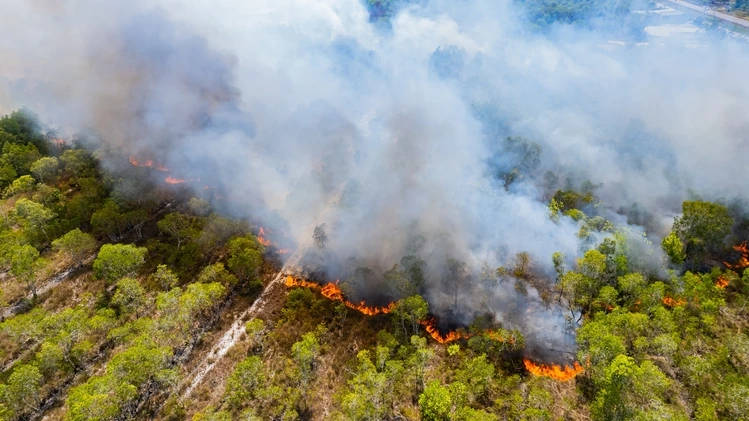
Forest fires
Forest fires are becoming more severe and frequent worldwide. Image: Shutterstock

One reason for the increased severity is climate change. Wildfires occur in regions impacted by a combination of drought, high temperatures and thunderstorms. Climate change is making all of these conditions more common.

2024 was the most extreme year for forest fires on record, with at least 13.5 million hectares of forest burned – an area roughly the size of Greece. Such a figure surpassed the previous record of 11.9 million hectares, set in 2023, by around 13 per cent.

Wildfires not only damage forests, but can also cause real impacts to human health. It is estimated that wildfire smoke causes more than 1.5 million deaths each year.
Themes Briefing Wildfires

Protected by Copyscape

Primary Sidebar

OUR UK DIRECT DEBITS ARE CHANGING
WINTER SALE

Geographical subscriptions

GEOGRAPHICAL WEEKLY LOGOFREE - Sign up to get global stories, told well, straight to your inbox every Friday

Popular Now

The Florida Wildlife Corridor is giving species such as the black bear room to roam

What can be done to protect Florida’s wildlife?

Death ball sponge

Seven fascinating new ocean discoveries made in 2025

Atacama desert

The desert that fed the world

Beneath the Arctic ice sheet, the ocean reaches depths of 3,900 metres

What does it feel like to stand at 90° North?

Humpback whales swimming pod

2025’s success stories in the fight for a better planet

Footer

  • Facebook
  • Instagram
  • LinkedIn
  • Reddit
  • TikTok
  • Twitter
  • YouTube

Published in the UK since 1935, Geographical is the official magazine of the Royal Geographical Society (with IBG).

Informative, authoritative and educational, this site’s content covers a wide range of subject areas, including geography, culture, wildlife and exploration, illustrated with superb photography.

Click Here for SUBSCRIPTION details

Want to access Geographical on your tablet or smartphone? Press the Apple, Android or PC/Mac image below to download the app for your device

Footer Apple Footer Android Footer Mac-PC

More from Geographical

  • Subscriptions
  • Get our Newsletter
  • About Us
  • Contact Us
  • Advertise with us
  • Privacy policy
  • Terms & Conditions

Copyright © 2025 · Site by Syon Media