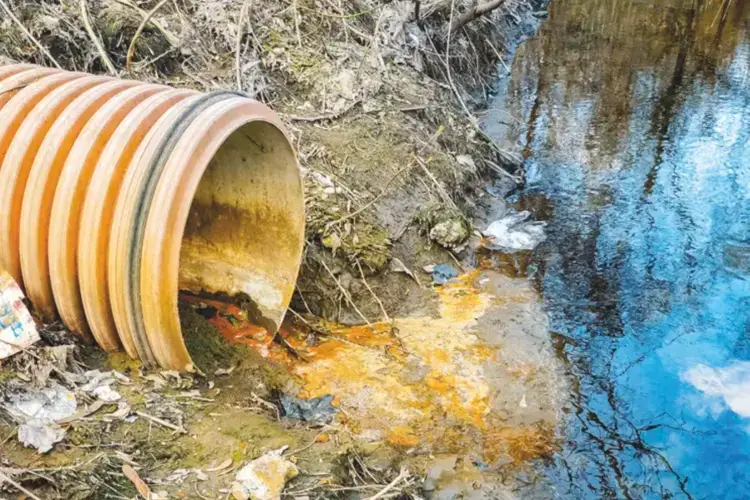
A former Environment Agency insider claims that England’s pollution watchdog has spent years obstructing investigations and burying evidence
By Laura Cole and Bryony Cottam
In July, the former chief executive of Southern Water, Matthew Wright, was accused of conspiring to defraud the Environment Agency (EA) and water regulator Ofwat. Alongside three former colleagues, he faces charges of manipulating water-quality tests over a five-year period from 2012 to 2017.
Enjoying this article? Check out our related reads…
Since 2009, water companies have been required to monitor their own treated wastewater and report the results to the EA. If tests show that the discharged wastewater breaches environmental permits, the company faces heavy fines and potential rebates for its customers. Prosecutors allege that under Wright, Southern Water used tankers to remove wastewater from facilities to force false ‘no-flow’ test results — a scenario in which the discharge flow is too low to sample, meaning that the test isn’t recorded as a failure and no further samples are taken for the remainder of the testing period. By doing so, it’s estimated that the water company could have saved itself about £45million in fines.
In a statement released following the charges, an EA spokesperson said that the agency took its responsibility to protect the environment ‘very seriously’ and would ‘always pursue and prosecute’ those alleged to have committed serious offences. Angela Eagle, the newly appointed secretary of state for the environment, food and rural affairs, added that the alleged cover-up was ‘outrageous’: ‘Anyone found guilty of this crime will face the full force of the law.’ But former EA employee Robert Forrester is having none of it. ‘How can an environment secretary sit there and say that about something that happened over a decade ago, when nothing is happening right now?’

For nearly a decade, Forrester has been a whistleblower at the EA, exposing some of the agency’s worst regulatory failures. In that time, he has challenged the widely repeated myth — perpetuated by the EA itself — that the agency is merely a victim of underfunding. Instead, he’s revealed a much darker reality.
It all started around 2017, while Forrester was leading an investigation into a severe case of groundwater pollution. A company had pumped hazardous liquid waste into a broken sewer pipe in an attempt to avoid disposal costs. The waste seeped into the groundwater, where it melted the drinking-water pipe supplying a nearby property.
For weeks, the people living there drank the contaminated water, unknowingly ingesting carcinogens at thousands of times the legal limit. The toxic waste also found its way into a nearby river. Forrester says that it was a Category 1 incident — ‘as bad as we get… dangerous on every level’.
Forrester recalls a time when the EA’s legal team wouldn’t have hesitated to take action against the company — they’d routinely taken water companies to court, even over minor incidents. On one occasion, while requesting that a water company fix a minor leak, he remembers being told that poor attitude was ultimately what drove the agency to prosecute. ‘They’d wanted the lesson to be learnt.’ But now, all of a sudden, there was resistance to pursuing a case that had become a serious risk to public health. The change coincided with a new EA prosecution process that prevented investigators from dealing directly with solicitors and instead filtered every case through multiple layers of management approval. ‘They dropped the case. They wouldn’t take [it] without giving any real reasons why.’
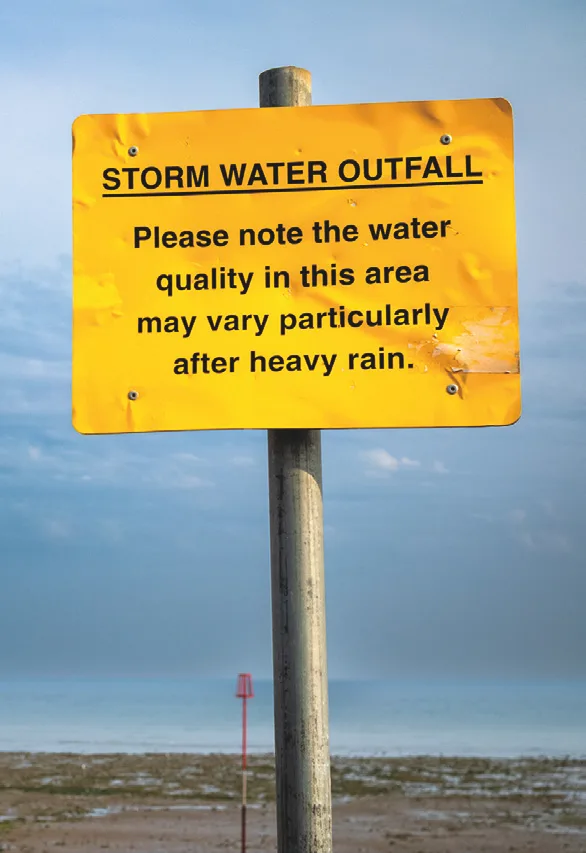
Around the same time, Forrester witnessed the agency’s river-monitoring capabilities being halved nearly overnight, as sampling locations were cut from 10,797 to 5,796 and the number of water samples collected dropped by 45 per cent. Then, he watched as an ‘all-singing, all-dancing’ public report — which revealed that millions of tonnes of sewage sludge containing toxic pollutants were routinely being spread as fertiliser across English farmland — was buried. ‘[It got] wiped from all our internal records. Just, you know, expunged.’
It was at that point that he went to the media.
Forrester finally left his position at the EA in January, during the final production stages of Channel 4’s three-part drama Dirty Business. The series follows two amateur detectives — drawing on the real work of former police detective Ashley Smith and university professor Peter Hammond — as they investigate why fish are dying in their local river. It also revisits the tragic case of eight-year-old Heather Preen, who died in 1999 after contracting a severe E. coli infection during a family trip to the beach at Dawlish Warren, Devon. Her family recall seeing sewage on the beach.

To protect his anonymity, the series created a fictionalised character inspired by Forrester — although, by then, his identity as a whistleblower had already been made known to the EA, leaving him to fight for his career.

In the next episode of our podcast On the Ground, Laura Cole writes and narrates the story as Forrester makes further revelations, argues that new demands for public control aren’t the solution and answers whether — knowing what he knows now — he would do it all over again.
Episode 5 of On the Ground, The Diary of a Whistleblower — listen at geographical.co.uk/podcasts