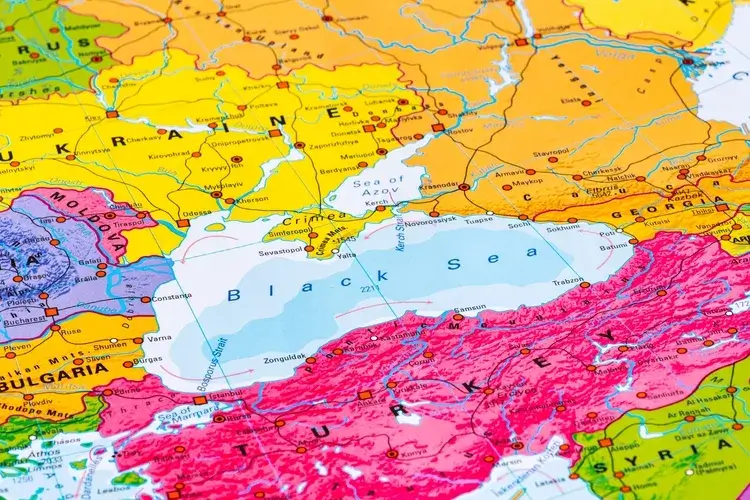
Attacks occurred off the coasts of Romania and Bulgaria – both NATO members – and have left two dead and 25 missing
By
At least seven cargo vessels have been targeted by drone attacks in the Black Sea this month alone off the coasts of Romania and Bulgaria – both of which are NATO members.
The attacks took place in the nations’ exclusive economic zones in the waters of the Black Sea, leaving two people dead and at least 25 missing.
On Tuesday (13 October), two ships were struck by drones off Bulgaria’s coast, with rescuers evacuating 15 crew members from the Ukraine-operated Chelsea 3. On Wednesday, a drone strike and subsequent fire were reported on a chemical and oil tanker travelling to Romania.
Another chemical tanker, the San Marino-flagged Wine Trader, was travelling from Tunisia to Romania when it was hit by a drone on Thursday and caught fire. Seven crew members remain missing.
Enjoying this article? Check out our related reads…
According to the Associated Press, ‘the suspicion falls on Russia‘.
‘There is no logic in Ukraine attacking its own ships and crews, given that the outcome of all these attacks favours Russia — and indeed, the logic points in that direction,’ Bulgarian Prime Minister Rumen Radev told his country’s Parliament.
‘The problem is that we cannot prove it.’
Throughout the Russia-Ukraine war, Russia has attacked Ukraine’s Black Sea and Danube River ports, leaving the nation reliant on other routes to export grain to worldwide markets.
NATO Secretary-General Mark Rutte said the following statement on X: ‘NATO has strengthened our posture along the eastern flank including with increasing counter-drone capabilities. NATO will continue to work closely with our Allies in the Black Sea, adjusting our deterrence and defense posture as needed.’
According to Article 5 of the NATO charter, a mutual defence guarantee is in place – meaning an attack on one or more NATO members in Europe or North America is considered an attack on all. However, some analysts think this may not apply to the recent string of drone attacks as they occurred in exclusive economic zones (areas of the sea generally extending around 370 kilometres beyond a nation’s territorial ocean).
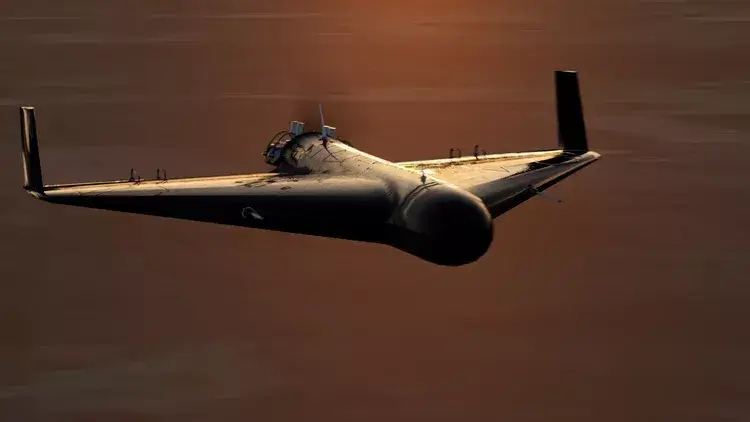
The recent string of drone strikes comes as Russia nears completion of a major new base for launching jet-powered drones. In just six weeks, an empty field in Russia’s southwestern Rostov region has now become a complex facility, commercial imagery provided by Planet Labs and Airbus showed.
Russia has increased its use of jet-powered attack drones against Ukraine, with these weapons able to travel at speeds of up to 600 kilometres per hour.
‘The speed of construction … demonstrates the ease with which Russia can bring now-established offensive capabilities to bear rapidly,’ said founder and CEO of private intelligence company DroneSec Mike Monnik.