Why investing billions in military autonomy may leave diplomacy as Britain’s most neglected security strategy today

By
Keir Starmer chose a drone factory in Berkshire to unveil a Defence Investment Plan worth £298billion, with £15billion of new money to modernise the armed forces.
Of that, more than £5billion will be spent on drones and autonomous systems: cheap one-way attack drones, mine-hunting robots, uncrewed vehicles on land and sea, warships rebuilt as launch pads for this new way of waging war.
Enjoying this article? Check out our related reads…
While much of the coverage focused on whether this would be enough money, how it would be raised, and if the UK would ever reach NATO’s request to spend 3.5 per cent of GDP on arms. There is perhaps a more pertinent question, what is the UK really buying when it invests in drones?
Why drones, why now?
The short answer is Ukraine, where cheap uncrewed systems have hit refineries, airfields and tanks deep inside Russia and now cause roughly 80 per cent of casualties in the conflict. Watching this, the 2025 Strategic Defence Review put autonomy at the centre of everything and promised an army ’10x more lethal’, built on a model it called 20-40-40: a fifth crewed platforms, two fifths reusable drones, two fifths consumables (shells, missiles, the one-way drones you fly once and lose). Following that review autonomy funding rose to £4 billion, and defence secretary Dan Jarvis squeezed another billion from the Treasury to reach the £5billion announced in June. Europe’s biggest drone testing centre has opened in Swindon, and by 2030 the plan is to fly 24 armed drones alongside every Apache gunship.
The cheapness trap
Drones are sold as the frugal option, swap a £100million jet for a swarm of £500 quadcopters. Per unit, that is true, and it is why FPV drones built from racing parts now account for a large share of Russian tanks destroyed. But the headline price hides what kind of purchase this actually is. A drone is a consumable. The MoD’s own ’20-40-40′ model included, is built on machines you expect to lose.
That changes the economics completely. Britain is not making a one-off investment in a fixed capability; it is signing up to a subscription. The airframes are only the first instalment. The software that flies them has a battlefield half-life measured in months, not decades, so it must be patched, retrained and re-bought continuously to stay ahead of enemy jamming. The direct debit renews every year the arms race does, and the vendors know it, which is precisely the leverage a buyer surrenders when it swaps assets it owns outright for a fleet it must keep topping up from a handful of suppliers.
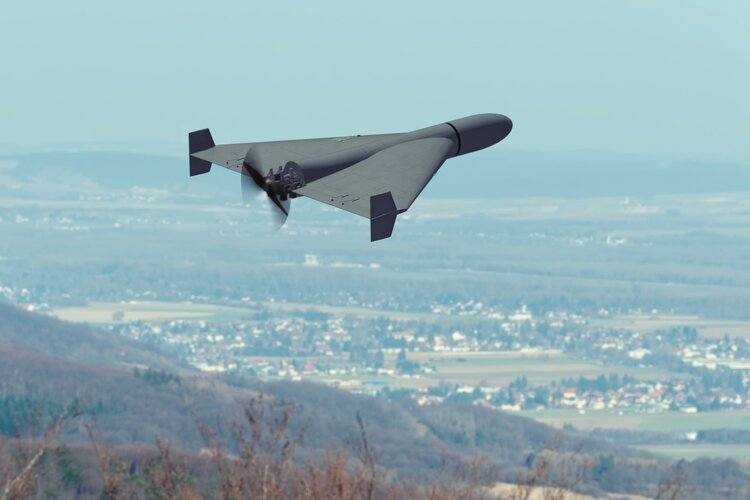
So the £5billion does not buy a thing Britain then owns. It buys a place in a contest whose winning move is always more, cheaper, faster, thousands of expendable machines, forever, plus the factories, ranges and counter-drone weapons to answer the enemy’s copy of the same idea. The frugal option turns out to be the one you never stop paying for.
Who pulls the trigger
The deeper problem is not cost but control. The whole appeal of a drone is that it compresses the distance between seeing a target and hitting it. The MoD is explicit about wanting to shrink that gap, describing an AI-enabled ‘digital targeting web’ built to shorten the time between detection and action. Compress that loop far enough and the human being drops out of it altogether.
In 2024, according to a senior figure in Ukraine’s defence sector, and reported in New Scientist, ten AI-controlled quadcopters were flown to the front with no video feed or operator, the machine choosing and killing on its own. It was the first widely reported case of a weapon selecting and killing people with no human in the chain.
Humanitarian law was written on the assumption that a person with moral agency decides to fire. An autonomous system has no moral agency and when it kills the wrong person, responsibility has no clean home: not the programmer, not the commander, not the state. The UN warns that AI-enabled drones are creating significant risk for civilians, and is pleading for binding rules on human control. Britain has resisted exactly such a treaty, insisting existing law is adequate. A £5billion bet on autonomy is a bet on a particular answer to who pulls the trigger, and Parliament has barely been asked to vote on it.
The eye that outlives the war
In the book Mapping Crisis, Faine Greenwood calls small drones ‘assemblages of the vertical’, machines whose first job is not to strike but to see, turning a confusing patch of the world into something to map, count and target. The aerial view has never been neutral; maps were how empires laid claim to land they had never walked. And the apparatus we build to watch an enemy does not politely dismantle itself when the war ends. The sensors, and the machine-vision models are dual-use by design, and the 2025 Defence Industrial Strategy says so proudly, listing drones as a growth engine for the wider economy. Ministers offer this as reassurance, but what is built to watch Russia will, sooner or later, be pointed at protesters, at borders, at whoever the next emergency decides is worth surveilling.
What the money doesn’t buy
The plan invites us to see drones as widgets: so many quadcopters, so many jobs in Berkshire and Swindon. They are also machines that make war cheaper to start and dearer to stop, and quietly move the trigger finger from a soldier to an algorithm. Before the next billion is spent teaching machines to look, and to kill what they see, it is worth asking whether a country really grows safer by getting better at war.
The honest answer is that it does not, or not for long. Every escalation invites its mirror image: our swarm summons theirs, our targeting web justifies the next, and the drone that made this war cheaper to fight makes the next one easier to start. An arms race has no finish line. The one intervention that actually ends the cycle is the one the Defence Investment Plan cannot cost, because no factory profits from it: the slow, unglamorous work of diplomacy. The treaties, the arms-control talks, the back-channels and confidence-building that stop wars before they need fighting. It is the cheapest defence there is, and the only one that makes the others unnecessary.
A country can spend £5billion becoming more lethal, or it can spend a fraction of that helping build the institutions and understandings that make lethality beside the point. Britain has quietly chosen the first and all but abandoned the second. The truest measure of security is not how efficiently a nation can kill, but how rarely it has to, and, in the end, whether it is willing to imagine a world in which it does not have to at all.