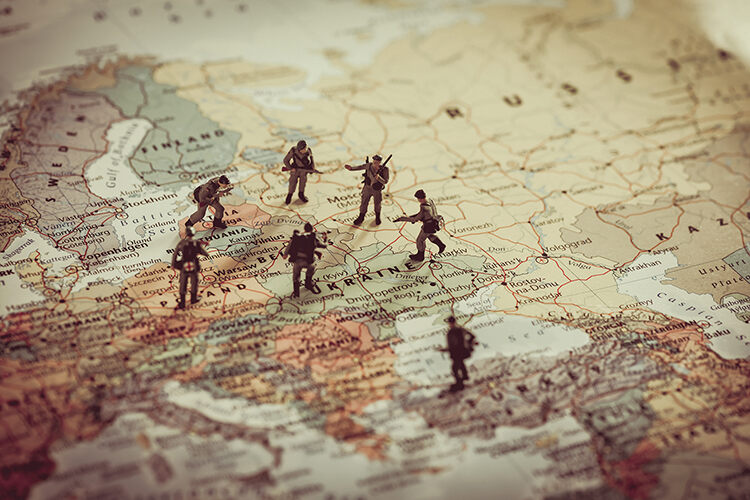
From drone warfare to redrawing the geography of energy, discover how the world has changed four years on from the advent of the Ukraine war
By
On February 24 2022, Russia launched a full-scale invasion of Ukraine, marking the largest conflict in Europe since World War Two. Four years on, amid Ukraine’s announcement that it will do ‘everything to achieve peace and justice’, conflict still continues. More than 15,000 Ukrainian civilians – including 739 children – have been killed since the beginning of the war.
Enjoying this article? Check out our related reads…
From 2022 onwards, Russia launched military operations along multiple axes of Ukraine. At its furthest advance, it occupied roughly 27 per cent of the country’s territory. Drone-led targeting, in recent times, has dominated as the primary form of attack, rising to 29,000 individual strikes in 2025 compared to 6,000 in 2023. These attacks have decimated infrastructure including energy supplies, leaving millions of Ukrainians without electricity, heating and water.
Clearly, the impact felt in Ukraine is cataclysmic. Yet, elsewhere across the globe, ripple effects can be felt from the conflict between Russia and Ukraine. As the war enters its fifth year, we look toward how such conflicts have triggered far-reaching impacts throughout the world.
Redrawing the geography of energy
Prior to 2022, Russia was the EU’s largest energy supplier, providing roughly 40 per cent of EU gas and around 25–30 per cent of crude oil.
Following the invasion of Ukraine, the EU – along with the UK and other partners – agreed to a ban on Russian seaborne crude oil imports effective from 5 December 2022. Hungary and Slovakia are temporarily exempt from such a ban, granted to prevent severe energy shortages.
However, Russia utilises a shadow fleet of ships to circumvent the G7 price cap, which is designed to limit the oil revenues Moscow can allocate to its war efforts in Ukraine. These ships use deceptive practices to transport goods in violation of sanctions and price caps, collectively transporting an estimated 3.7 million barrels of oil per day. This generates up to an estimated £80 billion in annual revenue. To put this figure into perspective, revenue from such illicit trade network has matched – if not exceeded – the total value of economic and military assistance provided to Ukraine since the start of the war.
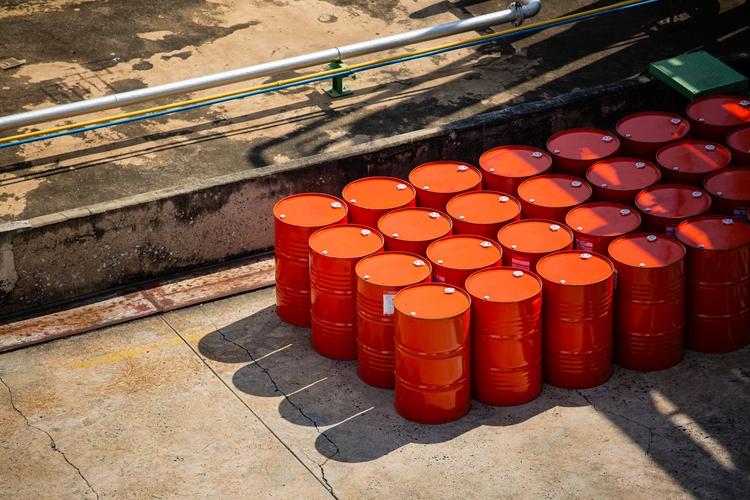
As for gas, there has been no single immediate ‘ban’, but rather the gradual phase-out of pipeline gas imports to the EU, aiming to stop them by autumn 2027. Already, Russia’s share of EU imports of pipeline gas has dropped from around 40 per cent in 2021 to around 6 per cent in 2025. Now, Norway has positioned itself as the primary supplier of gas to the EU, accounting for almost one-third of all gas imports.
Despite these measures, many European leaders have faced pressure to impose heavier sanctions on Russia as the EU seeks to reduce its dependence on Russian energy.
Since the EU has largely turned away from Russian energy, other countries have stepped in to fill the gap left by the EU – namely China, India and Turkiye. In 2025, China was the largest buyer of Russian fossil fuels, accounting for $ 6.7billion in Russian energy export revenues, with 58 per cent of these imports being crude oil. India was the second-largest buyer, with $4.2billion in imports, followed by Turkiye, which imported $3.5billion worth of energy.
The hardening of geopolitics in Europe
Since February 2022, many significant changes have occurred in Europe, helping to reshape geopolitics in the region. Most prominent, perhaps, is Finland and Sweden’s decision to join NATO in 2023 and 2024 respectively. In doing so, NATO’s direct land border with Russia more than doubled, with Finland sharing a 1,340-kilometre border with the nation.
Such a shift, then, in joining NATO is pivotal, considering Nordic neutrality – a fixture of European geopolitics for decades – effectively ended.
After the Second World War, Sweden and Finland deliberately chose military non-alignment. Sweden maintained formal neutrality for more than 200 years, avoiding both world wars and the Cold War alliance system. Similarly, Finland adopted a careful strategy sometimes referred to as ‘Finlandisation’ (maintaining democratic governance and Western economic integration while avoiding policies that would provoke Moscow). However, now, historically cautious states see collective defence as essential.
In addition, European rearmament commenced, with Germany announcing a €100billion ‘Zeitenwende’ defence fund. Many other NATO states, in the wake of the war’s announcement, committed to meeting or exceeding two per cent of GDP on defence. According to the Stockholm International Peace Research Institute (SIPRI), European military spending in 2022 and 2023 recorded some of the steepest annual increases in decades. Some of the sharpest increases were seen in Finland (+36 per cent), Lithuania (+27 per cent), Sweden (+12 per cent) and Poland (+11 per cent).
Worsening food security
Before the war, Ukraine and Russia together accounted for roughly 30 per cent of global wheat exports, aound 20 per cent of maize exports and more than 50 per cent of global sunflower oil exports. Combined, they are often coined the world’s ‘breadbaskets’.
However, when Russian forces blockaded Ukrainian Black Sea ports in 2022, global markets reacted immediately, with wheat prices surging to levels not seen since the 2007–2008 food crisis.
The war has also reduced Ukraine’s agricultural production capacity by causing mass displacement and destroying critical infrastructure and grain storage facilities. Ukraine’s 2025 exports of corn, barley, wheat, and meslin – among its top agricultural exports – were 35 per cent lower than in 2020.
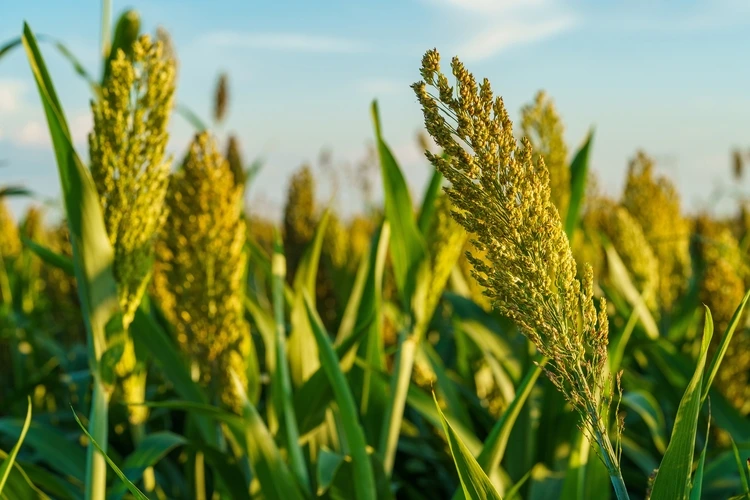
Regions such as the Middle East and North Africa are particularly dependent on food imports from Russia and Ukraine – especially staples like wheat. Back in 2021, Egypt imported more than 70 per cent of its wheat from both countries. Blockades and reduction in production has meant these countries are facing a food crisis, exacerbated by the compound impacts of COVID-19, repeated food shocks and weakened states due to political-economic difficulties.
Ultimately, Russia’s invasion of Ukraine sent shockwaves through global agricultural markets, driving food prices to record highs. Although global prices for cereals, vegetable oils, meat and dairy have since declined from their 2022 peak, food insecurity remains elevated. Around 673 million people are undernourished globally, while an estimated 318 million face acute food insecurity – roughly double the 2019 figure. Persistent inflation, conflict and fragile local economies continue to limit access to food, even as global commodity markets stabilise.
The war’s lasting impact lies in the reduced output of one of the world’s leading agricultural producers. With Ukraine’s production diminished, global markets are less resilient to future shocks, including extreme weather or geopolitical disruptions elsewhere.
The drone revolution
If the tank defined 20th-century warfare, then the drone may define the 21st. Russia’s invasion of Ukraine has transformed drone warfare from a supporting method of attack into a central feature of modern conflict.
Ukraine has dramatically increased its domestic drone production, with government officials stating in late 2023 that the country aimed to produce one million drones annually in 2024. Such production has allowed Ukraine to establish a ‘drone wall’ along the frontlines, with these drones leading to around three-quarters of all Russian casualties.
On the Russian side, long-range drones – capable of attacking at distances of up to 2,000 kilometres away – have been used extensively to target Ukrainian energy infrastructure. The Kremlin has been aided in this by allies including China and Iran, who have provided vital components along with the blueprints for key drone designs.

Fiber-optic drones – those controlled by a wire connected directly to the operator – are used extensively by Russia, and are a type of drone immune to jamming technologies and exceedingly difficult to intercept.
Because of such prolific drone use in Ukraine and Russia, many NATO members are establishing drone innovation hubs and development programmes to standardise swarm tactics, AI coordination and resilient communications. Elsewhere, in China, military planners are developing swarm-capable drones, autonomous targeting systems, and long-range maritime UAVs, indicating China’s inclination to emphasise drone-centric warfare.
Across Ukraine, Russia, NATO, and China, unmanned systems are shaping conflict’s future. However, it is not solely about who possesses these devices, but who can scale them, adapt fastest, and build defences resilient to aerial threats.
Hardening of the multipolar world
The Russia-Ukraine war hasn’t caused multipolarity, but it has accelerated the shift toward a multipolar world. Such a sizeable war has forced a configuration of global power, solidifying a Western bloc led by NATO and the EU while accelerating Russia’s pivot towards a partnership with China, Iran, and North Korea, and driving non-aligned ‘middle powers’ toward strategic autonomy.
One of the clearest indicators of this is voting behaviour at the UN. Indeed, large majorities condemned Russia’s invasion – but many states in Africa, Asia and Latin America declined to enforce sanctions or align fully with Western policy. A poll conducted by the European Council on Foreign Relations (ECFR) suggests Russia’s war on Ukraine has consolidated ‘the West’, with Europeans and Americans agreeing they should help Ukraine to win. In contrast, citizens in China, India and Turkiye prefer a quick end to the war even if Ukraine has to concede territory.
People in non-Western countries, and in Russia, also consider the emergence of a multipolar world order to be more probable than a bipolar arrangement.
The result of a multipolar world is a world less cohesive, more transactional and more openly competitive. The war in Ukraine has hardened that reality: global politics is no longer organised around a single centre of gravity, but around overlapping spheres of influence.
Russia’s dependency on China
Since the invasion of Ukraine, Russia has become significantly more dependent on China, both economically and strategically. However, the relationship can be viewed, to some, as asymmetric, with China holding the stronger position.
One of the key ways this dependency has deepened is through trade. Sanctions on Russia have prompted Moscow to deepen trade with China. The nation has significantly increased purchases of discounted Russian oil, while trade between the two countries reached record highs in 2023.

Clearly, China has taken the place which Europe once occupied: as Moscow’s primary energy market. By contrast, China has diversified suppliers. Russian energy is useful – but not indispensable.
Sanctions imposed on Russia have also reduced the nation’s access to technologies such as semiconductors, industrial machinery, and advanced electronics. By 2024, Chinese firms provided approximately 70 per cent of Russia’s machine tools and 90 per cent of its microelectronics. Some of the electronics supplied have enabled Russia to sustain its military operations in Ukraine, demonstrating the nation’s reliance on Chinese supply chains.
Ultimately, the war has pushed Russia further into China’s orbit, in a way that reinforces hierarchy rather than partnership.