From the churches of Lalibela to the battlefields of Tigray and Amhara, Ethiopia’s ancient myths, faith and political fractures are colliding in a crisis that is testing whether one of Africa’s oldest states can hold together
By
Once upon a time, a newborn child took his first gulps of air, and as he did so, a swarm of bees descended and surrounded him. It was a sign that the boy was destined for greatness. Many years later the boy became king. But life in the courts of medieval Ethiopia could be brutal. Intrigue, plots and backstabbings waited around every turn. And for Gebre Meskel Lalibela, things were no different.
One day, in an attempt to claim the crown for himself, his jealous half-brother poisoned King Lalibela. As the king lay on his deathbed, flitting in and out of consciousness, angels carried his soul to the first, second and third heavens. Here, he was shown a magnificent city of rock-hewn churches cut deep into the ground. God commanded him to return to Earth and – with the help of a team of angels – recreate what he had seen in heaven. It would, God said, be a New Jerusalem.
It sounds like a fairytale. So much about the history of Ethiopia does. But it is based on a truth. The New Jerusalem and its 11 monolithic churches, hewn into the rust-red rock of the northern Ethiopian plateau, exist. Today it’s called Lalibela, and it remains one of the most important pilgrimage sites for Ethiopia’s Orthodox Christian community. A place born in heaven should be a land of peace and plenty. And at times, that is what Lalibela has been. But not any more.
Enjoying this article? Check out our related reads…
‘My brother lived close to the Na’akuto La’ab cave church, a few kilometres outside Lalibela. He was married, with two beautiful daughters aged three and two.’ Born and brought up in Lalibela, Tigest (not her real name) told me that for most of her life the town had indeed been a good place to live. Pilgrims and tourists visiting the churches meant that Lalibela was relatively wealthy, and there was plenty of work. She owned a beauty salon in the town, and when she wasn’t at work, she enjoyed hiking around the mountains and stark plateaus that rise behind Lalibela.
But things changed suddenly for Tigest in 2024, when Lalibela found itself caught up in conflict.
Fact file
Area
1,104,300 sq km – the largest country in the Horn of Africa, and one of the biggest states in Africa.
Population
About 132 million (2024) – making Ethiopia the second most populous country in Africa after Nigeria, and the world’s most populous landlocked state.

Capital
Addis Ababa – the political and economic heart of the country, located near the centre of Ethiopia.
Languages
Amharic remains the main federal working language, but Oromo, Somali, Afar and Tigrinya also have federal working status; scores of other languages are spoken across the country.
Peoples
One of Africa’s most ethnically diverse states. The Oromo are the largest ethnolinguistic group; Amhara, Somali and Tigrayan communities are also politically and culturally significant.
Religion
Christianity and Islam dominate religious life. Ethiopia adopted Christianity in the 4th century, and the Ethiopian Orthodox Tewahedo Church remains one of the oldest organised Christian bodies in the world.
Economy
Despite war and instability, Ethiopia remains one of Africa’s faster-growing big economies. World Bank data put GDP growth at 7.6 per cent in 2024.
Power and conflict
Prime Minister Abiy Ahmed came to power in 2018 and won the 2019 Nobel Peace Prize for his peace initiative with Eritrea. But the Tigray war and subsequent fighting in Amhara and Oromia have left hundreds of thousands dead and millions displaced. Estimates for the Tigray death toll vary sharply, though figures as high as 600,000 have been cited by the African Union mediator and by independent researchers.
‘It was 24 October, and my big brother was at home talking on the phone to our mother. He had his back to the door, so he didn’t see the soldiers approaching. But they saw him talking on the phone. They thought he was telling Fano [an Amhara militia fighting the federal government] that the military were in the area. The soldiers came into the house and told him to follow them.’
Situated in northeast Africa, in what is also known as the Horn of Africa, Ethiopia’s story is longer than that of most countries and more fantastical than that of most fairytales. It was here, some 3.5 million years ago, that our earliest ancestors came down out of the trees and learnt to walk upright. Much later, it became one of the first parts of the world in which organised agriculture was practised. And it was in Ethiopia that the Aksumite civilisation, one of the ancient world’s most important, flourished.
Timeline
c. 3.2 million years ago: ‘Lucy’, one of the world’s most famous early hominin fossils, lives in what is now Ethiopia. Her remains are later discovered at Hadar in the Afar region.
1st–7th centuries CE: The kingdom of Aksum rises as a major trading and imperial power in northeast Africa, linking Africa, Arabia and the wider ancient world.
4th century CE: Christianity is introduced to Aksum, making Ethiopia one of the earliest Christian states in the world.
12th–13th centuries: King Gebre Meskel Lalibela commissions the rock-hewn churches of Lalibela – Ethiopia’s ‘New Jerusalem’.
1974: Emperor Haile Selassie is overthrown by the Derg, ending the 800-year-old monarchy and ushering in military rule.
1977–78: The Red Terror reaches its peak as the Derg wages a brutal campaign of repression, killing opponents and jailing thousands.
1983–85: Famine devastates Ethiopia, killing hundreds of thousands and becoming one of the defining humanitarian disasters of the late 20th century.
1991: Mengistu Haile Mariam falls from power and flees the country as rebel forces overthrow the Derg. 1995: Ethiopia adopts a new federal constitution, creating the Federal Democratic Republic of Ethiopia and formalising ethnic federalism.
2018: Abiy Ahmed becomes prime minister, launches reforms and seeks peace with Eritrea. 2019: Abiy Ahmed is awarded the Nobel Peace Prize for his efforts to resolve the border conflict with Eritrea.
2020: War breaks out in Tigray after federal and Tigrayan forces clash, triggering one of the deadliest conflicts of the 21st century.
2022: A peace agreement is signed to end the Tigray war, but violence continues elsewhere, especially in Amhara and Oromia.
Not content with all that, Ethiopia has also been a key seeding ground for some of the world’s great religions. It was one of the world’s first Christian countries and gave refuge to some of the first Muslims when followers of the new religion were still being persecuted in Arabia.
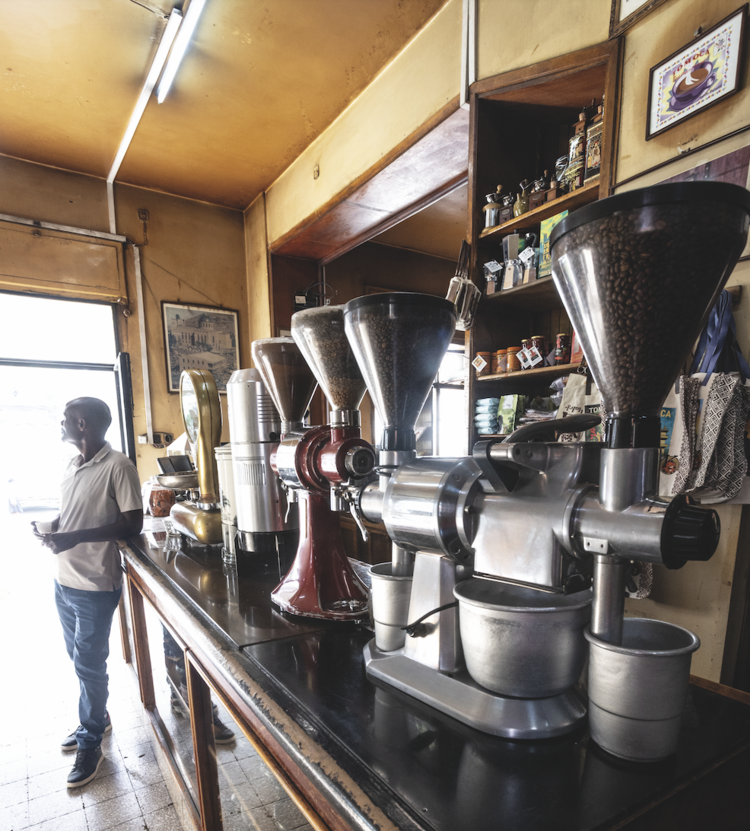
Ethiopia has contributed to our lives in other, less godly, ways as well. Every morning, many of us enjoy a cup of coffee, and for that we should be grateful to Ethiopia, which is the original home of coffee. Legend has it that we have a herd of goats and a curious Ethiopian shepherd to thank for our morning brew.
Throughout this long history, Ethiopia has had more than its fair share of ups and downs. At times it has been among the most powerful nations on Earth. At others, it has been a symbol of desperation and poverty.
The last 50 years have been especially turbulent. In 1974, Emperor Haile Selassie was overthrown by a military group known as the Derg. It was an act that brought to a close a royal line that had lasted for 800 years. Under the leadership of Mengistu Haile Mariam, the Derg, which followed a Marxist-Leninist ideology, turned Ethiopia into a vision of hell. Anyone suspected of opposing the regime was jailed, tortured and killed. During one particularly bloody two-year period known as the Red Terror, Amnesty International estimated that half a million people suspected of opposing the regime were detained and many killed at the hands of the Derg.
It was during the time of the Derg – and largely because of its policies – that famine on a biblical scale struck Ethiopia. The famine of 1983–85 left anywhere from half a million to a million people dead. In the end, armed opposition to the Derg, along with the disintegration of its Soviet backers, led to its collapse, and in 1991 Mengistu fled the country.
Ethiopia then entered a three-decade period of rapid development. The economy grew – and continues to grow – at one of the highest rates in the world. But after 30 years of relative plenty, things are turning for the worse again. For some people, they got much, much worse.
Damned if you do, damned if you don’t
After 14 years of work, and at a cost of about US$5billion, Ethiopia’s controversial Grand Ethiopian Renaissance Dam (GERD) on the Blue Nile has become the largest hydroelectric project in Africa. The dam is expected to generate more than 5,000MW of electricity, and the reservoir behind it will eventually cover about 1,874 sq km. For Addis Ababa, GERD is far more than an engineering project. It is a symbol of national pride, a promise of wider electrification and industrial growth, and a route towards selling power to neighbouring states.
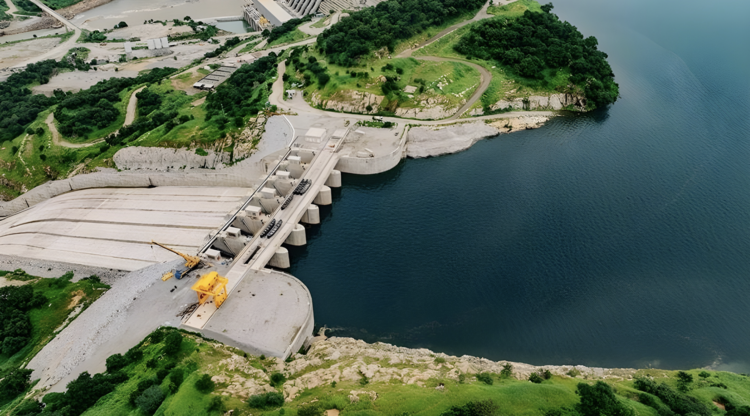
But for Egypt, and to a lesser extent Sudan, the dam remains a geopolitical flashpoint. Egypt depends overwhelmingly on the Nile for fresh water, and Cairo has long treated any threat to its flow as a matter of national security. In 2015, Ethiopia, Egypt and Sudan signed a Declaration of Principles, agreeing to cooperate on the filling and operation of the dam.
Yet the core dispute has never really gone away. Sudan’s position has often been more mixed: it fears disruption, but it could also benefit from cheaper electricity, reduced flooding and more regulated downstream river flows.
The central question is what happens in dry years. Egypt wants a binding agreement that would guarantee minimum downstream flows and oblige Ethiopia to share data before retaining or releasing water. Ethiopia insists that it is a sovereign development project and rejects any deal that would limit its control over the dam. That impasse has fed years of diplomatic sparring, mutual suspicion and periodic fears that a water dispute could become a regional crisis.
Tigest continued to recall the horror of that October day when her brother was led away by the Ethiopian military. ‘His oldest daughter, who was only three years old at the time, was in the room when the soldiers came. She ran after them, but they told her to leave. She ran home to her mother and said that soldiers had taken her daddy. We looked for him for two days. We went to the churches in Lalibela and prayed for him. After two days, someone told us that he was in the military camp.’
She pauses to fight back the tears.
‘But it was too late. They’d already shot him. They didn’t ask questions. They didn’t care. They think that everyone from Lalibela supports Fano, but he hadn’t done anything. His only crime was to be talking on the phone to our mother!’ Breathing deeply, Tigest continues: ‘It took us another couple of days to get his body back. The soldiers wouldn’t give it to us because we were crying. They said we must be silent if we wanted his body. When they did let us into the camp, we found he had been half-buried in a mass grave. His legs were still sticking out of the ground!’
When I ask Tigest how she feels about her government, I can almost taste the venom and despair in her reply. ‘As well as my big brother, they have killed three or four other people I know. It makes me feel like the military shot me. I’m full of anger for the military and the government. I support Fano now.’
With more than 80 ethnic groups, Ethiopia is a highly diverse country and, in many ways, it is this diversity – as well as the federal system of government established in 1995 – that has led to today’s violence. In the years between the fall of the Derg and 2018, power rested primarily in the hands of the Tigrayans, an ethnic group from the north of Ethiopia who account for around six per cent of the population. Not surprisingly, this eventually led to discontent among other ethnic groups who felt they were being sidelined.
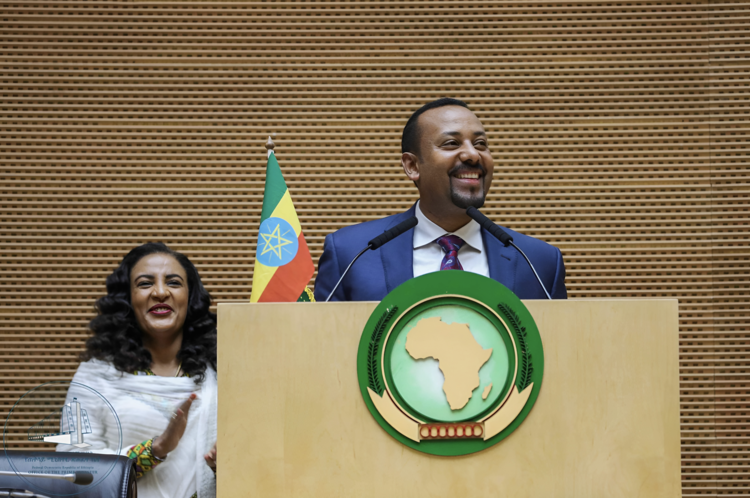
In 2018, a government reshuffle saw Abiy Ahmed become prime minister. From the Oromo ethnic group, the largest in the country, his first months in power were generally an astounding success. He liberalised politics, brought peace with Ethiopia’s northern neighbour and long-time arch-enemy Eritrea – an act for which he won the Nobel Peace Prize – and removed key Tigrayan government leaders accused of corruption and repression. It was that last point that provided the spark that is now leading to Ethiopia unravelling at the seams and, indirectly, to the death of Tigest’s brother.
The Khat habit
Khat – a leafy stimulant chewed for its mild amphetamine-like effect – is woven deep into daily life in parts of Ethiopia, but its scale now worries health officials and economists alike. National survey data show that 28 per cent of Ethiopian men and 11 per cent of women regularly chewed khat.
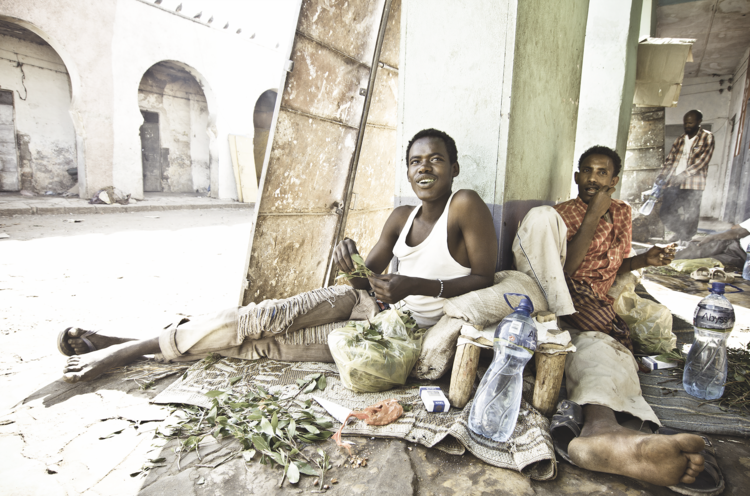
In eastern Ethiopia, cultivation has expanded rapidly: a 2025 study in Hararghe found that 64 per cent of sampled farm households had replaced coffee with khat, even though those shifting to it were more likely to be food insecure. What brings quick cash can also fuel dependency, lost productivity and social strain.
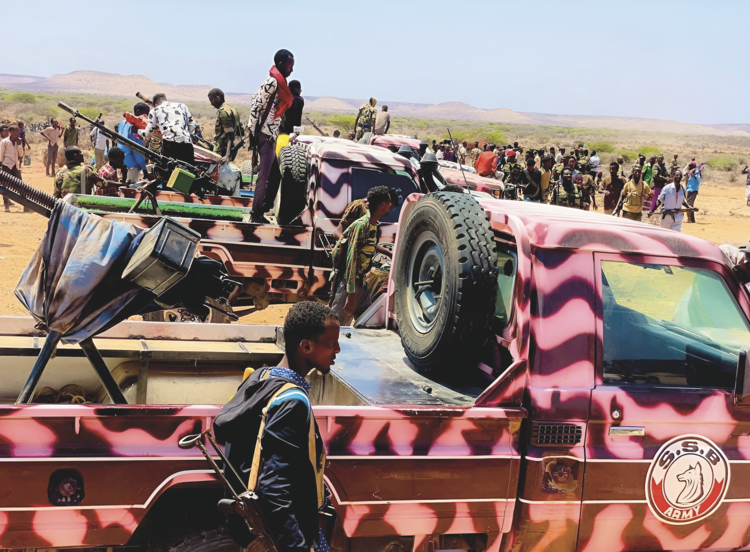
In November 2020, Abiy accused Tigrayan forces of attacking a military base and stealing weapons. This quickly led to a vicious civil war erupting across the Tigray region. Dreadful atrocities, including mass extra-judicial killings of civilians and sexual violence, were committed by all sides. Eventually, the war drew in Eritrea, on the side of the central government, and spread beyond the boundaries of Tigray. It even reached Lalibela in neighbouring Amhara province.
Fortunately, in 2022, a peace deal was signed and Tigest thought that Ethiopia would rise again. But the optimism didn’t last. No sooner was the ink on the peace deal dry than fighting broke out in Lalibela.
This time it wasn’t the Tigrayans rising up against the central government but the Amhara people. The reasons are complex, but broadly speaking they stem from a sense of betrayal by the government after the Tigray war, discrimination, and government attempts to bring various ethnic militias – including those in Amhara – under central control. Just as in Tigray, atrocities and alleged war crimes have been committed by both sides.

But Ethiopia’s problems do not stop there. Tensions remain high in Tigray, with occasional skirmishes threatening to explode into something bigger.
Indeed, on the very day these words are being written, new reports speak of fighting erupting again in western Tigray. Meanwhile, a decades-long, on-again, off-again conflict in the Oromia region, which covers a huge area of southern, western and central Ethiopia, continues to simmer. And then there’s the threat of Eritrea. Between 1998 and 2000, Ethiopia and Eritrea fought a bloody war that left at least 100,000 dead, and now, with landlocked Ethiopia desperate to gain access to Eritrea’s Red Sea ports, and Eritrea unhappy with the peace deal Ethiopia and the Tigrayans signed, tensions are rising again, with commentators warning that war is just a misstep away. All these ongoing conflicts, which have been described as among the most violent wars of the 21st century, have left at least 600,000 dead, millions more injured or displaced, and the country on the brink of disintegration.
So what’s the next chapter for Ethiopia? Will it be a happy fairytale or a hellish horror story?
Sheba, Solomon and the Ark of the Covenant
Some say she was the most beautiful woman in the world. Others say that she had the cloven foot of the devil. Both sides agree that she was the lover of Solomon and the mother of the throne of Ethiopia. Yet we do not know her name, or even whether she actually existed. She is the Queen of Sheba, and her story is a foundation stone of Ethiopian tradition.
According to the 14th-century Ethiopian epic the Kebra Negast, around 3,000 years ago the Queen of Sheba travelled to Jerusalem to pay her respects to King Solomon. The king fell for Sheba’s beauty and, as sometimes happens after a holiday romance, when Sheba returned home to Ethiopia she was pregnant with Solomon’s son. That son became Menelik, the first Emperor of Ethiopia, from whom the entire Ethiopian royal line, right up to Haile Selassie, the last of the emperors, claimed direct descent.
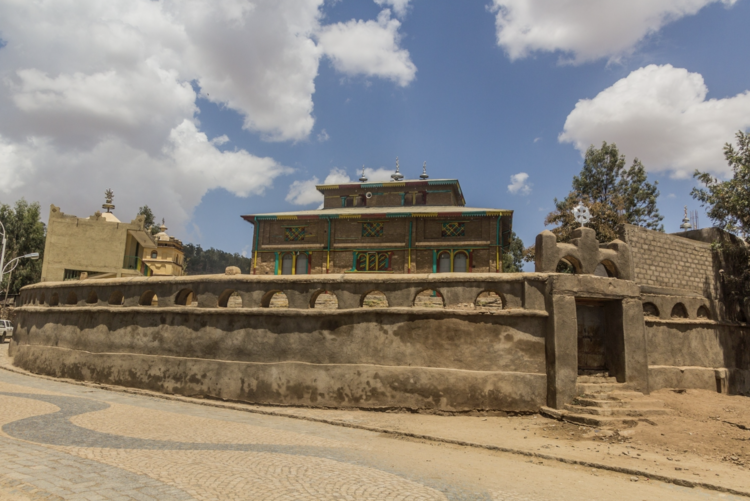
The story doesn’t end there, though. Some years later, Menelik also ventured north to meet his father. And when he returned to Ethiopia, he too was secretly carrying something: the biblical Ark of the Covenant, which is said to contain the Ten Commandments given to Moses by God on Mount Sinai. The Ark formed the centrepiece of Solomon’s temple in Jerusalem until Menelik stole it and brought it to Ethiopia.
Today, the Ark is still said to exist. It is kept in a small, heavily guarded chapel in the town of Axum. Not surprisingly, it is kept firmly locked away, out of sight, and nobody is allowed to investigate what it really contains.
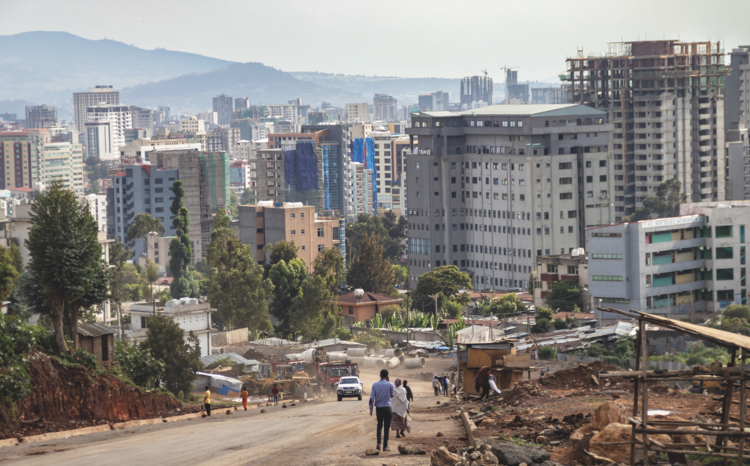
Returning to Addis Ababa, I met up with Afework (not his real name), an old friend of mine, in one of the city’s many glossy coffee shops. As we sipped our macchiatos, I commented on how much the city had changed since my first visit in 1993, shortly after the Derg fell. Back then, Addis had been little more than an exaggerated village, with few of the facilities of a real city. Shaking our heads at the memory, we looked out of the café window at gridlocked roads, wall-to-wall glass tower blocks, giant shopping centres and a plethora of places to eat and drink. Things had come a long way in 30 years. But when I asked him his thoughts for the months ahead, the mood turned darker.
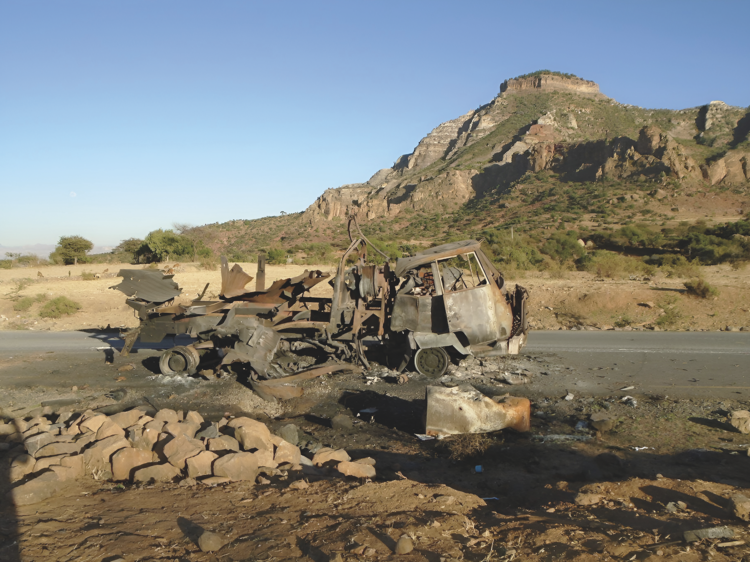
‘Back in 2018, when the first demonstrations and strikes started, I remember saying to a friend that we might lose our country.’ Afework lets out an exaggerated sigh and adds: ‘Before that, all the people were together as Ethiopians, but now it’s all about ethnicity. Right now, the government is fighting in the Amhara and Oromo regions. In Tigray there’s no real central government control. And now, right down in the south, there’s fighting going on between some of the tribes. There’s already a lot of displacement. People are pouring into Addis from across the country because, for the moment, it’s safe here. But the fighting is only about 80km away from the city. I’m certain that the war will reach Addis soon. Maybe the upcoming elections [1 June] will be the trigger that brings the fighting into Addis. I’m one hundred per cent sure that the federal government will collapse and then we will all be fighting each other. Already, in some parts of the country, people are selling their houses and cars so that they can buy weapons.’
Fortunately, not everyone shares Afework’s pessimistic view. Back in Lalibela, Tigest is more hopeful.
‘Yes, I support Fano, but I don’t think the country will collapse.’ With a tired smile, she sums up what we all really want: ‘All I really want is a good person in power who works for all of us. For humanity.’
And with that, she wraps her traditional white shawl around her shoulders, excuses herself and makes her way down the hill to pray for peace in a church built by a king and his angels.