
• Skip to main content
  • Skip to secondary menu
  • Skip to primary sidebar
  • Skip to footer
Geographical

Geographical

Official magazine of the Royal Geographical Society (with IBG)

  • Geographical Home
  • News
  • Features
  • Opinion
    • Climatewatch
    • Front Lines
  • Podcast
  • Travel
    • Discovering Britain
    • Passport
  • Culture
    • Book reviews
  • Quizzes
    • Crosswords
  • Choose Geography
    • University directory
    • Masters courses
    • Course guides
      • Climate change
      • Environmental science
      • Human geography
      • Physical geography
    • University pages
      • Aberystwyth University
      • Brunel University
      • Cardiff University
      • University of Chester
      • Edge Hill University
      • The University of Edinburgh
      • Newcastle University
      • Nottingham Trent University
      • Oxford Brookes University
      • The University of Plymouth
      • Queen Mary University of London
    • Geography careers
      • Charity/non-profit
      • Education & research
      • Environment
      • Finance & consulting
      • Government and Local Government
    • Applications and advice
  • Magazine
    • Issue previews
    • Subscribe
    • Manage My Subscription
    • Special Editions
    • Geographical Archive
    • Advertise with us
  • Subscribe
    • Direct Debit Changes

Brighton scientists to pioneer ‘forensic’ tool to trace water pollution sources

8 December 2025
2 minutes

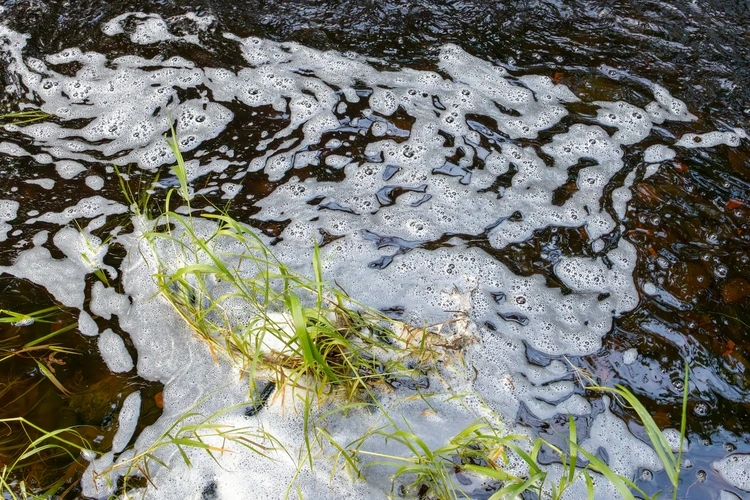
Polluted river water
Polluted river water can pose serious health risks to humans and aquatic life alike. Image: Shutterstock

New diagnostic tool is part of national project to locate human sources of pollution in UK rivers, ensuring cleaner and safer water


By Victoria Heath

A new diagnostic tool is being used by University of Brighton scientists to trace sources of pollution in UK water bodies – including rivers, lakes and streams – used for drinking water supplies and for recreational activities.

By using advanced DNA sequencing technology, scientists can search the samples for bacteriophages, which are viruses that infect bacteria and are naturally found in the human gut.


Enjoying this article? Check out our related reads…

  • The online climate tool that Trump removed, but data scientists have now rebuilt
  • How a new tool will aid coastal erosion and flooding management across the world
  • Yemen’s ticking time bomb: the oil storage ship FSO Safer
  • We are pushing the planet into the danger zone – scientists fear
  • New online tool can identify climate misinformation

The new diagnostic technology will enable scientists to both collect and analyse water samples in the field and laboratory, a major improvement on traditional water testing technology that relies on culturing bacteria in labs. Typically, this is a slow process which fails to reveal the presence of human contamination.

Led by researchers at the University of Brighton Centre for Environment and Society, the £950,000-project will allow scientists to rapidly and accurately trace human contamination to its source, helping to reduce risks to public health.

Once fully developed, the technology will be tested by experts at the Environment Agency and the University of Sheffield on the River Wharfe in Yorkshire, home to England’s first inland designated bathing site at Ilkley, which has faced water quality challenges linked to sewage and runoff.
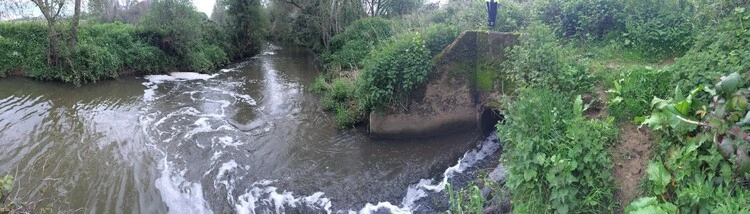
Sewage outflow
A sewage outflow. Image: University of Brighton

‘This project is particularly exciting as it gives us an opportunity to use the latest biomolecular tools to advance an area of water quality management known as Microbial Source Tracking (MST) that our researchers have been trying to resolve for the past 25 years,’ said co-investigator at the University of Brighton Professor James Ebdon.

Currently, no river in England meets the ‘good chemical status’ set by the Water Framework Directive, the internationally recognised standard which regulates the quality of water bodies across Europe. Pollutants found in sewage and industrial discharges or produced by agricultural and wild animals continue to impact water quality. In total, just 16 per cent of English rivers are classified as being of ‘good ecological status.’
Themes News Pollution Rivers

Protected by Copyscape

Primary Sidebar

SUMMER SALE

GEOGRAPHICAL WEEKLY LOGO FREE - Sign up to get context, clarity and perspective in a noisy world, every Friday

Popular Now

Solar eclipse in the sky

How do solar eclipses affect the weather?

Country outline quiz

QUIZ: Country Shapes – Easy

Orange oil barrels

Oil firms reap billions in profit amid Iran war and climate crisis,…

Andrea Wulf

Writer’s Reads: Andrea Wulf

Gunung Mulu National Park

Back to base in Borneo

Footer

  • Facebook
  • Instagram
  • LinkedIn
  • Reddit
  • TikTok
  • Twitter
  • YouTube

Geographical print magazine cover

Published in the UK since 1935, Geographical is the official magazine of the Royal Geographical Society (with IBG).

Informative, authoritative and educational, this site’s content covers a wide range of subject areas, including geography, culture, wildlife and exploration, illustrated with superb photography.

Click Here for SUBSCRIPTION details

Want to access Geographical on your tablet or smartphone? Press the Apple, Android or PC/Mac image below to download the app for your device

Footer Apple Footer Android Footer Mac-PC

More from Geographical

  • Subscriptions
  • Get our Newsletter
  • About Us
  • Contact Us
  • Advertise with us
  • Privacy policy
  • Terms & Conditions

Copyright © 2026 · Site by Syon Media