
New analysis shows record damages from wildfires in 2025, despite global area burned among the lowest
By
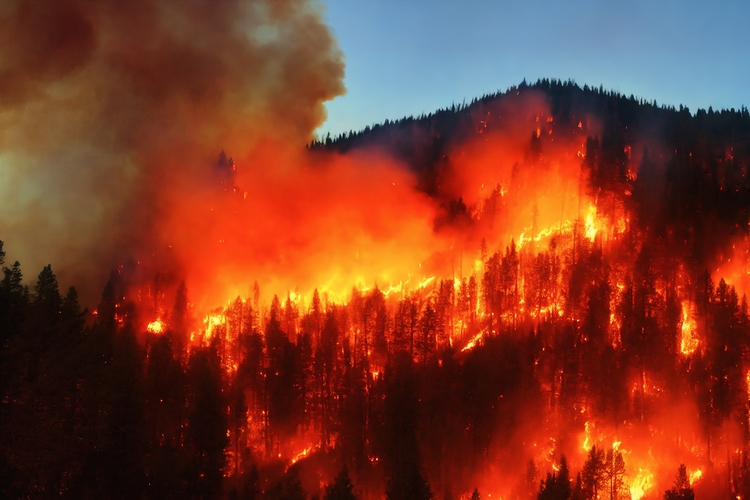
Analysis of global wildfire activity in 2025 has revealed that the world experienced some of the deadliest and most destructive fires in recent history, despite having the second-lowest area burned since 2002.
Led by the University of East Anglia (UEA), the new analysis – published in Nature Reviews Earth & Environment – found 335 million hectares burned globally during 2025. This marks a 16 per cent decrease below the long-term average, while total fire-related carbon emissions fell to 11 billion tonnes of CO2, the third lowest year since 2002.
Enjoying this article? Check out our related reads…
Globally, wildfires accounted for 38 per cent of all insured natural hazard losses. Alone, the LA fires were the fifth most costly natural disaster in history in terms of insured losses ($40billion) and $140billion in total losses. They also led to the destruction of 12,000 homes and caused more than 150,000 people to evacuate.
In total, a series of ‘catastrophic’ wildfires across Canada, the US, Europe and South Korea resulted in more than 300,000 evacuations and at least 90 fatalities.
In particular, Canada faced increasing impacts from wildfires. Its boreal forests continued to break records, entering a third consecutive year of extreme fire activity.
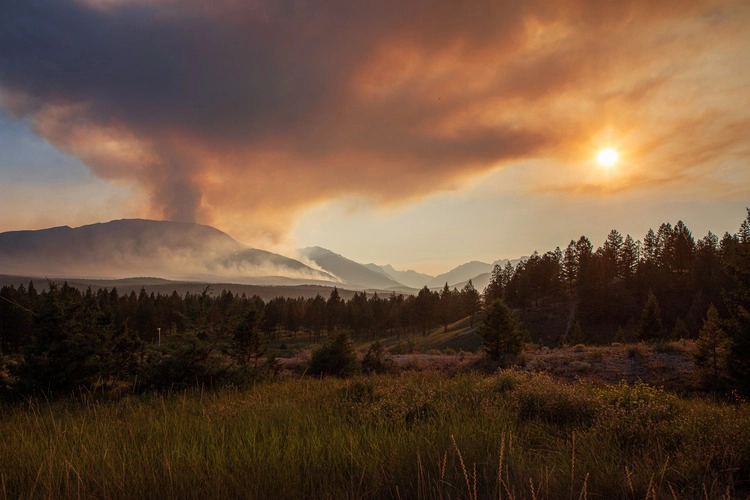
Between 2023 and 2025, Canadian wildfires released more CO2 than during the entire preceding 15-year period, driven by long-term burning in carbon-rich forest ecosystems. These ecosystems, historically adapted to infrequent fires, are now experiencing unprecedented fires.
Elsewhere, wildfires caused widespread evacuations. Across Greece, Türkiye, and Cyprus, prolonged heatwaves enabled destructive fires that displaced tens of thousands, while France endured its largest fire since 1949.
The UK experienced its highest burned area on record, including the first documentation of a ‘megafire’ in Scotland – an occurrence when more than 10,000 hectares of land are burned.
Spain had its largest burned area since 2002, with more than 350,000 hectares affected by August 2025. In Portugal, thousands of firefighters battled large, fast-moving fires – including the largest wildfire in its history.
Researchers say their findings reinforce the need for urgent, rapid reductions in fossil fuel emissions to limit climate warming, as well as far stronger adaptation such as vegetation management. Resilient infrastructure and evacuation planning could also help mitigate the impacts of such fires.


