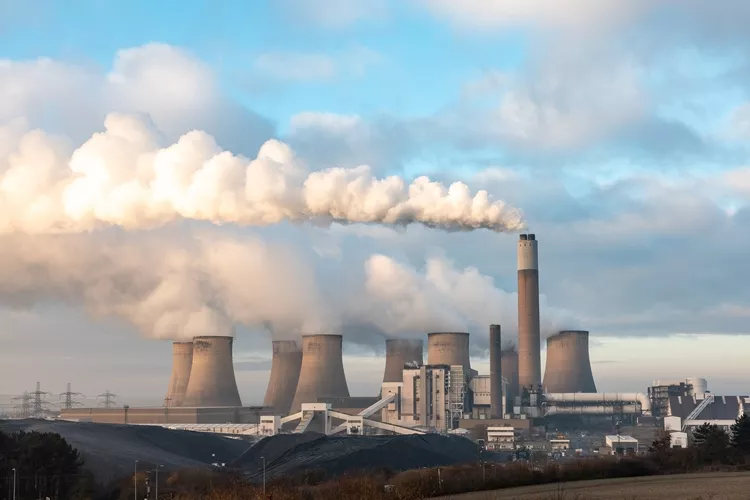
The vast majority (96 per cent) of England is above the World Health Organisation’s recommended limit of PM2.5
By
Research by the Institute for Fiscal Studies has revealed the inequalities of air pollution across England – unequal impacts that scientists, MPs and activists are urging the government to hold an inquiry about.
A letter coordinated by the charity Enact Equality has been signed by 150 scientists, MPs and activists, calling for a national inquiry into how air pollution impacts ethnic minorities and lower-income groups, both of which are unequally affected by the most harmful type of particulate matter, PM2.5.
Enjoying this article? Check out our related reads…
Among the 2024 report’s key findings, it found that lower-income areas have persistently higher levels of air pollution than richer areas. In 2023, individuals in the top 20 per cent most deprived areas experienced eight per cent higher than average PM2.5 concentrations than those in the bottom 20 per cent. There is no clear trend in this gap across the last two decades.
In addition, ethnic minorities were exposed to levels of air pollution six per cent higher than average levels for white populations in 2023, down from 13 per cent in 2003. This fall was explained by ethnic minorities moving to less polluted parts of the country. However, since 2019, areas with large ethnic minority populations (like London and the Midlands) have experienced substantial decreases in air pollution, further shrinking the gap.

The report did find that average exposure to PM2.5 – largely arising from transport, domestic woodburning and industrial emissions – fell by 54 per cent between 2003 and 2023. Almost everywhere in England is now below England’s 2040 target for PM2.5, but still falling short of the World Health Organisation’s recommended limit.
The call for the inquiry comes after figures obtained by campaign group Mums for Lungs found more than 213,000 children attended A&E or were admitted to hospital with breathing difficulties in 11 major English cities in 2025, prompting calls for stronger action to tackle air pollution.
Children aged three and under accounted for more than half of the reported cases, with 120,000 babies and toddlers affected. Greater Manchester accounted for 20,863 cases across the trusts included in the dataset, while Birmingham recorded 19,627, Liverpool 12,066 and Sheffield 10,724.
In 2025 alone, air pollution was linked to 30,000 premature deaths in the UK. Research shows that up to 17,000 lives could be saved each year if the UK’s air quality met World Health Organisation guidelines.
In recent years, eight ‘Clean Air Zones’ have been created or expanded across the UK, including in Bath, Brighton, Portsmouth and London’s Ultra Low Emission Zone (ULEZ).