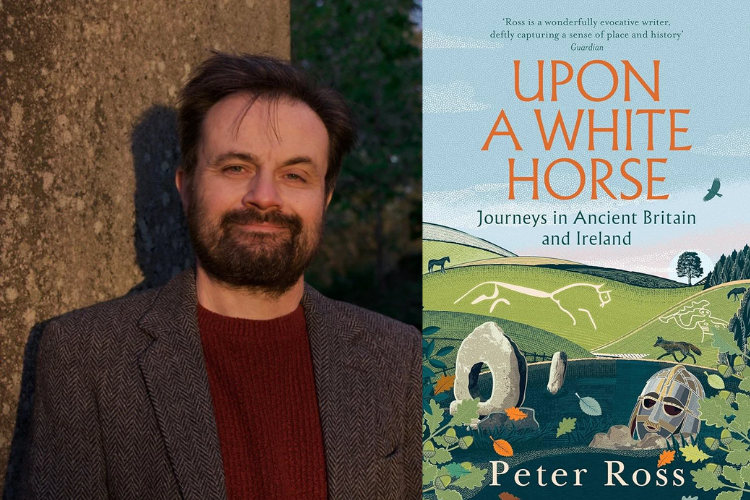
Peter Ross is an award-winning author and journalist. His new book, Upon a White Horse, explores Britain’s and Ireland’s ancient sites, and is out now
Are you in a reading slump? Or perhaps you’re not sure which book to pick up next? In our latest instalment of Writers’ Reads, we’re here to help. Peter Ross, an award-winning author and journalist, shares his top literary picks that will be sure to pique your interest…
A Land by Jacquetta Hawkes (1951)
An archaeologist with the soul of an artist, Hawkes’s book is, on the surface, about the geology of Britain. But, as she put it, ‘I see a land as much affected by the creations of its poets and painters as by changes of climate and vegetation.’
Selections from Essays and Journalism: 1931-1949 by George Orwell (1981)
A collection to nourish and inspire. Some Thoughts On The Common Toad is a perfect example of the essay form.
Enjoying this article? Check out our related reads:
Giving Up The Ghost by Hilary Mantel (2003)
Given her reputation as a novelist, it’s saying a lot to claim that Hilary Mantel’s best book is her memoir. And yet here I am saying it.
Pilgrim At Tinker Creek by Annie Dillard (1974)
A masterpiece of noticing and thinking, Pilgrim deserves its reputation as a foundational text of the nature writing genre. Its opening paragraph is, I think, one of the greatest ever written.
Findings by Kathleen Jamie (2005)
Annie Dillard has influenced Kathleen Jamie, but the Scottish essayist has a distinctive voice of her own, full of curiosity, delight and melancholy wisdom.
Up In The Old Hotel by Joseph Mitchell (1993)
A collection of pieces published in The New Yorker from the 1930s to the 1960s, Mitchell is one of the great stylists of American journalism: garrulous, deep-diving, a pleasure to read.
An Orkney Tapestry by George MacKay Brown (1969)
Weaving together history and folklore in this celebration of his island home, Brown’s book is full of beautiful sentences and observations.
Death of a Naturalist by Seamus Heaney (1966)
A poet with an archaeologist’s eye, Heaney’s debut collection opens with a statement of intent – the classic Digging. Also includes Mid- Term Break, a tender yet hard-hitting reflection on the death of his little brother.