In this extract from her new book Sink or Swim, Susannah Fisher unpacks ten reasons why efforts to adapt are proving so difficult to deliver
Miami has no choice but to adapt. Its mayor, Francis Suarez, considers the city to be ground zero for climate change and a model for adaptation.
The city’s sea-level rise strategy, led by Miami-Dade County, focuses on living with an extra 60cm of water. Plans include raising land, elevating buildings, and creating flood-absorbing parks.
Yet critics argue the strategy’s primary function is to reassure investors, not secure long-term safety. Even if it buys time, adaptation on this scale carries massive financial costs – and those with the most to lose are keen to keep the money flowing.
Enjoying this article? Check out our related reads:
A US$400 million resilience bond is funding infrastructure designed to protect the city and its assets. Whether or not this is a permanent solution, Miami must act as though it is. Without that illusion, investment dries up and development stalls.
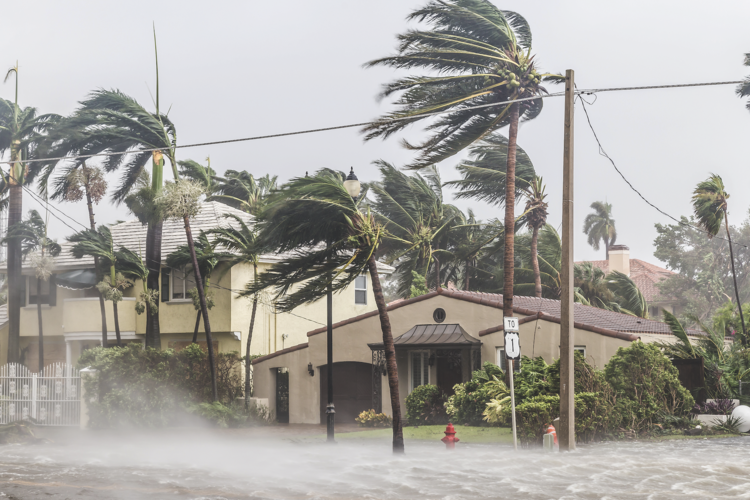
Sea-level rise isn’t Miami’s only problem. The city also faces increasingly severe hurricanes and extreme heat. It was the first in the world to appoint a Chief Heat Officer. In August 2023, researchers from Climate Refugees visited marginalised Miami communities in Liberty City and Little Haiti to assess climate impacts.
These historically underfunded areas – legacies of 1930s segregation – now have fewer trees and higher temperatures than wealthier neighbourhoods. Residents working outdoors face extreme heat, while language barriers and poor access to services compound the risk.
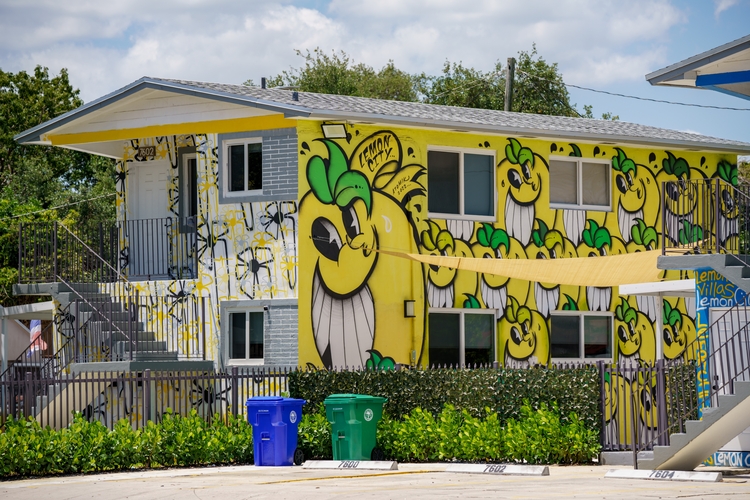
These neighbourhoods, once overlooked, are now hot property – literally. Elevated and away from the coast, they’re attracting developers. Residents are being pressured to sell or leave, a trend known as climate gentrification. With home ownership already low in these areas, many are at risk of displacement. One couple reported receiving repeated offers over US$500,000 for their home – but they had nowhere else to go.
Miami is a case study in the messy business of adaptation. For every step forward, there are knock-on effects elsewhere. And beneath it all lies a critical question: how do we know if adaptation is working?
Back in 2013–14, I attended meetings with government officials and NGOs grappling with that very issue. We built frameworks to evaluate progress, presenting them to the OECD and the UN. At the time, adaptation funding was flowing – but no one knew if it was making a difference.
If we applied the tools we developed to Miami today, the city would score well on planning and resilience measures, such as cooling centres. But our indicators wouldn’t tell us whether adaptation was financially or politically viable under 3°C of warming – or when retreat might become the only option.
Ten years on, the work we did provides us with limited information about how well people and governments are actually prepared for what is to come. In fact, we still have very few ways to check if adaptation is going far enough, and often evidence is starting to suggest it is not. There are ten reasons why this is the case.
1) There isn’t enough money
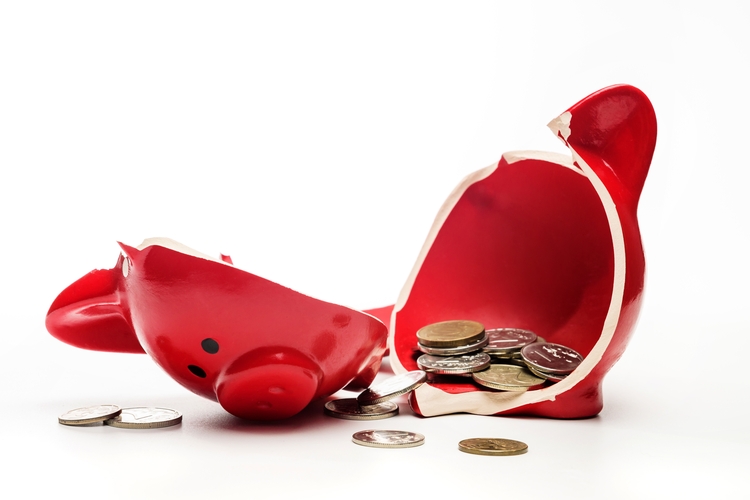
What is clear: the world is under-investing, and the costs rise with every degree of warming. The US White House estimated that climate change could cost the federal government up to US$128 billion annually by 2100 – around two per cent of the budget – due to disasters, insurance, and wildfires. Hurricane damage alone may cost US$94 billion a year by 2075.
Australia already spends AU$39 billion annually responding to climate disasters, potentially rising to AU$94 billion by 2060 under business-as-usual scenarios. Labour productivity losses from extreme heat could cost the country AU$135–423 billion by 2063. In China, where a fifth of the population lives in low-lying coastal cities, flooding could cost US$70 billion annually at just 1.5°C of warming – doubling if global temperatures reach 2°C.
The UNEP’s 2024 Adaptation Gap report estimates a shortfall of US$187–359 billion annually in public international finance for countries in the Global South. The IMF suggests these nations may need to spend at least one per cent of GDP on adaptation over the next decade, rising to 20 per cent for small island states.
Despite lofty commitments, funding remains inadequate. The Paris Agreement promised to align global finance with low-emissions, climate-resilient goals, but current flows contradict this. In 2022 alone, governments handed out US$1 trillion in fossil fuel subsidies. Other subsidies continue to support sectors such as beef and dairy, which weaken ecosystems.
High-risk investments in floodplains, coastal zones and fire-prone areas receive far more funding than ‘adaptation’ projects. Private businesses are starting to climate-proof their own operations, but this often prioritises profit over broader economic resilience. Only four per cent of private finance in development aid has gone primarily to adaptation.
Can public money fill the gap? Under climate agreements, wealthy nations pledged to support adaptation in the Global South. A US$100 billion-a-year target, set in 2009 and reaffirmed in Glasgow in 2021, aimed to provide US$40 billion for adaptation by 2020. But by 2022, only US$28 billion had been delivered – and much of it in loans.
The new ‘Baku Finance Goal’, agreed in 2024, commits to raising US$300 billion a year by 2035, scaling to US$1.3 trillion from all sources. Yet the deal was marred by walkouts and harsh criticism from countries including Bolivia, India and Nigeria over its vague terms and weak ambition.
Mistrust persists, fuelled by broken promises and the burden of debt. In 2019, nations in the Global South owed US$8 trillion and many were spending more than 10 per cent of their national budgets on repayments – 20 per cent in the poorest countries.
Some proposals aim to tackle this head-on: debt-for-climate swaps, global levies on fossil fuels, air travel and shipping, or taxes on financial transactions. Scholar Olúfémi Táíwò calls for climate reparations to reflect the racial and historical injustices underpinning vulnerability. His proposals range from unconditional cash transfers to reforming finance systems and breaking tax havens.
Still, more money alone won’t be enough. Not everywhere can be protected. And no amount of finance can manage every risk.
2) Lots of plans — limited action
Writing adaptation plans is the easy bit. The hard part is mustering the political will – especially from the most powerful parts of government – to actually implement them. And that’s where most efforts stall.
The UK’s national adaptation plan is extensive. But in 2023, the Climate Change Committee found little evidence of action on the scale needed. Their progress visuals – sector by sector – amounted to a screen full of red circles: insufficient progress.
Similarly, the 2023 US National Climate Risk Assessment showed adaptation across the country remains small-scale and incremental. Many nations in the Global South have also drawn up national adaptation plans but struggle with implementation and rarely track outcomes.
Adaptation is seen as a long-term issue, always outranked by immediate priorities. Political pressure is limited – and the short-term costs of action can be high.
Money is part of the problem, but not the whole story. Climate models can’t fully predict the shape of a future world, and this uncertainty weakens political resolve. Few leaders want to act now on risks that are vague or far off. Yet some future tipping points – such as the collapse of the Atlantic Meridional Overturning Circulation (AMOC) – would fundamentally alter our adaptation timelines and needs.
We also suffer from poor prioritisation. Many governments continue to invest in policies that increase climate risk – even while publishing adaptation plans that argue for the opposite.
Adaptation is typically housed in departments such as environment or planning – far from where economic decisions are made. But imagine if treasuries routinely assessed the cost of inaction. If welfare departments integrated climate risk into employment schemes. If heads of state gave monthly updates on flood, storm and heatwave deaths – and what they were doing to reduce them. That’s what real political commitment to adaptation would look like.
3) People are often left out
Adaptation is ultimately about people – where they live, how they eat, how safe they feel from wildfires or rising seas, how they get around, and how much risk they’re willing to take. Yet decisions about adaptation are often made without them.
Planning, particularly for long-term risks, is typically done at a distance – both geographically and politically – from the communities most affected. It often involves technical trade-offs and significant public or private investment.
These decisions aren’t just about individual choice – and local people may not even be aware they’re happening. Attending a shoreline strategy meeting or wildfire mapping session competes with childcare, shift work or simply fatigue.
Those facing the highest risks are often structurally marginalised – less likely to be informed, heard or able to participate.
Yet engaging communities matters. People know how they live, what they value, and what success looks like to them. Without their input, strategies may miss the mark.
While some decisions will always require technical expertise and top-down coordination, collaboration on the implications can build trust – and better results.
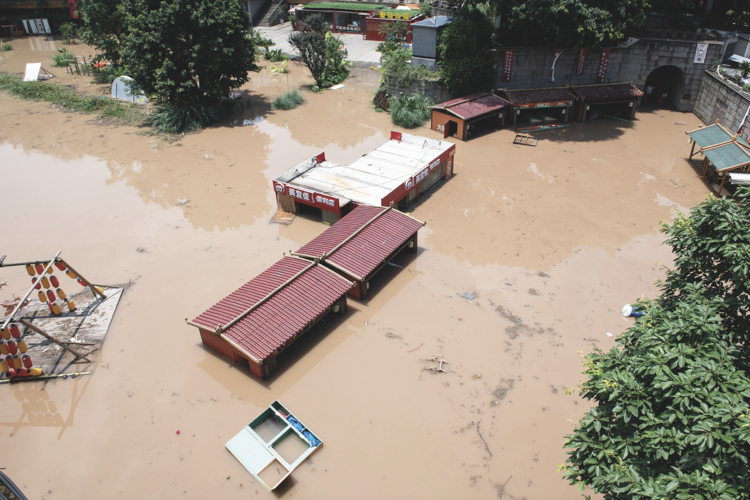
The phrase ‘locally led adaptation’ has become a mantra in international development circles – putting people in control of how they adapt. In principle, it’s essential. In practice, it’s tricky.
Participation often happens late in the process – once parameters are fixed and the project is already under way. Asking residents whether to build a seawall is very different from asking what kind of future they want.
True engagement is time-consuming, messy and expensive – and therefore reserved for decisions deemed controversial or high stakes. It also places a burden on communities, who are often asked to give their time for free, repeatedly, across multiple initiatives.
And even if local people lead, they may not always choose to confront climate risks. Denial is understandable – it’s hard to plan for events we’ve never experienced. Many will choose to stay put, keep going – and hope. That may feel like the best option – until it no longer is.
4) Limited incentives to reduce risk
Many strategies designed to minimise the impacts of climate change fail to create the right incentives. In some cases, they even encourage risky behaviour – from politicians and investors to farmers and homeowners.
Political and financial systems are often wired to favour short-term gains over long-term security. Risk isn’t well priced into markets, and leaders shy away from unpopular decisions that benefit future generations more than current voters.
Take crop insurance. It’s widely used to help farmers manage climate threats – drought, floods, pests, wind – but recent research shows it can backfire. Rather than adopting drought-resistant techniques or growing staple crops, some farmers opt for higher-value cash crops that can be insured – increasing their vulnerability.
Insurance is still a useful tool, but only if it supports long-term adaptation. Otherwise, it becomes unsustainable.
Home insurance schemes face similar pitfalls. When governments or insurers fail to properly price in risk, people are incentivised to live in dangerous places.
In the UK, the Flood Re scheme – a government partnership launched in 2016 – provides subsidised insurance to households at high flood risk. It’s due to end in 2039, by which time risk reduction measures are expected to be in place. But one study found that the scheme has removed many incentives for homeowners to take their own preventive action.
Flood Re is aware of this gap, and has plans to address it. As outgoing chair Mark Hoban warned, if too many homes remain unprotected in 2039, both the insurance sector and the £1.3 trillion mortgage market could face instability.
In contrast, the US has housing buyout schemes that help people relocate from climate-threatened areas. Local officials can request funding after disasters to buy damaged homes and help residents move – ideally breaking the cycle of rebuild and retreat.
But uptake is low, and the process is far from simple. Many don’t want to leave – even after major flooding. A recent study found people who accepted buyouts tended to move to safer nearby areas – but ethnicity also played a role. In majority-white neighbourhoods, residents were more likely to stay put, tolerating higher risk. Race and ethnicity influenced who retreated, where they went, and when.
And when people do leave, local authorities still need to maintain roads and services for those remaining – and manage vacant lots.
Buyouts also don’t always promote prevention. If governments or insurers cover rebuilding or relocation costs, there’s little reason for homeowners or councils to invest in reducing risk themselves.
Scale is another issue. In North Carolina, between 1996 and 2017, for every house removed via a buyout, ten new ones were built on the floodplain. The incentives – and the planning systems behind them – are still pulling in the wrong direction.
5) Adaptation often misses why people are vulnerable
Adaptation efforts can miss the mark if they ignore why people are vulnerable in the first place. In Miami, residents of Little Haiti and Liberty City are at greater risk from climate impacts not simply because of geography — but because of language barriers, lack of institutional access, and the pressure of gentrification as developers eye their higher-ground homes. Elsewhere, it’s a lack of income, education, or land rights that leaves people exposed.
While addressing these root causes may seem obvious, many adaptation projects are restricted in what they can do. International funding for adaptation comes with conditions: it must cover additional costs from climate change — not day-to-day government spending or socio-economic development. On the surface, this makes sense. Rich nations are meant to pay for damage caused by their emissions — not fund basic services. But the line between climate-specific costs and everyday vulnerability is blurry at best.
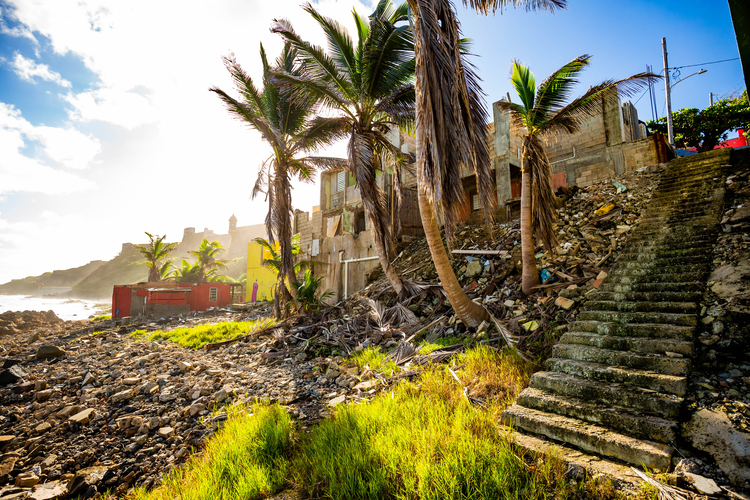
Think of examples of adaptation: paying people a small wage to survive another drought; building roads so produce reaches market; strengthening homes against hurricanes; issuing wildfire warnings.
These are all responses to climate impacts — but they also tackle underlying struggles. A farmer reliant on rain-fed crops, a family living on the edge of a floodplain, or someone with no money left to evacuate — these are the people most at risk. And they’re vulnerable not just because of climate change, but because of how their lives are already structured.
Drawing a neat line between regular development and adaptation is not only difficult – it may also be counter-productive. But for many countries in the Global South, accessing international funds means following the rules. That limits how flexibly they can respond – and prevents adaptation from being as effective as it needs to be.
6) It’s hard to tell if we’re on track
Defining what successful adaptation looks like – and knowing whether we’re getting there – is incredibly difficult. Short-term indicators, like whether farmers are planting drought-resistant crops or if flood warnings are reaching communities, can show progress. But long-term success? That’s murkier. It varies by place, by person, and over time – and the climate is shifting underneath it all.
The Paris Agreement included a ‘global goal on adaptation’ – a first – but no one is quite sure what it means in practice, and negotiators will be working on this in the annual climate talks in Brazil this year. Unlike emissions reduction, which has clear targets such as keeping warming below 1.5°C, adaptation is diverse. What works in a Sahelian village won’t match a Pacific island or a northern city.
A set of universal metrics sounds appealing – especially to donors – but risks oversimplifying a complex landscape.
In some cases, measuring adaptation can give false confidence. Before Covid-19, a World Health Organization scorecard assessed pandemic preparedness worldwide. It ranked wealthier countries such as the US, UK, Mexico and Sweden highly – yet many of these nations suffered some of the highest death tolls. The lesson: frameworks and indicators can be useful, but they can’t replace flexible, context-aware thinking. Adaptation is a process – not a finish line.
7) Sometimes it makes things worse
Not all adaptation is helpful. Sometimes it increases vulnerability – a phenomenon known as maladaptation. It might be the unintended result of households doing their best to cope, or poorly designed interventions backed by governments or donors.
Take rural migrants who move to cities to find better livelihoods and escape climate stresses. If the city is prone to flooding, they may end up in informal housing on exposed land – swapping one risk for another. Or Miami – a city banking on raising land and buildings to keep its coastline liveable. If costs spiral or engineering fails, new developments could end up abandoned and underwater.
Maladaptation can also stem from actions that benefit one group but harm another. River irrigation schemes might help upstream farmers while leaving downstream communities with too little water.
In Bangladesh, flood protection schemes made it harder for landless women to find resources – increasing their vulnerability. And while not originally about climate, Turkey’s long-standing dam projects on the Tigris and Euphrates have reduced water flow to Iraq – accelerating desertification and salinisation. Climate change could make this even worse.
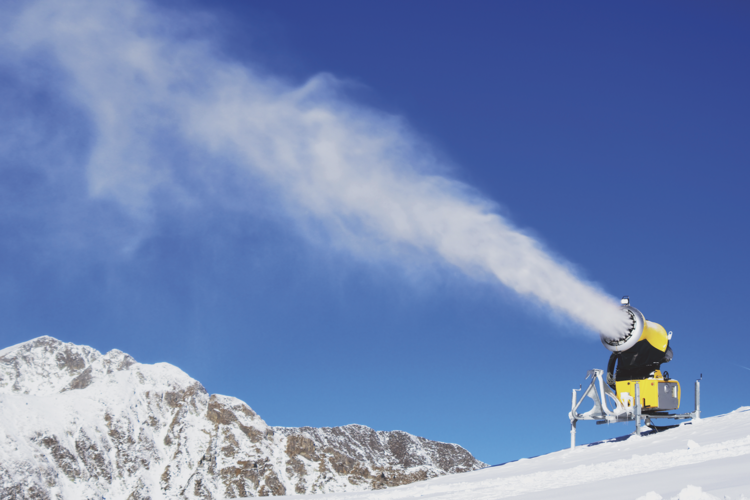
In some ski resorts, adaptation means installing snow machines or blankets to preserve slopes – encouraging further investment in a shrinking industry. It’s well-meaning – but risks prolonging the inevitable, while drawing in more people and capital that will eventually be lost.
Sometimes, adaptation strategies simply shift the risk somewhere else. And if we’re not careful, they can leave people worse off than before.
8) International money is hard to access
Even when adaptation finance is available, countries in the Global South often struggle to access it. The Green Climate Fund – the largest such fund – can take years to process applications, which require exhaustive documentation and a watertight business case.
‘It is almost by design that we cannot access the money,’ Fiji’s UN ambassador once remarked. The Maldives’ environment minister, Aminath Shauna, once recounted to the IMF trying to protect a harbour from erosion – only to be asked by an international organisation to prove that the damage was caused by climate change, something she felt would just take too long given the risks the islands are facing.
Aid politics also shape what kind of adaptation gets funded. More than a decade ago, I worked with the Nepali government to assess their progress on adaptation. After extensive community consultations, they had completed their national programme for adaptation. But when a major climate fund launched, its international team wanted to start from scratch – sidelining the existing plan. The government was exasperated – and years later when I worked in Nepal again, this issue still rankled.
9) International money is often short-term
Adaptation finance also tends to arrive in short bursts – typically five-year projects run by outside agencies with their own metrics, managers, and timelines. These projects often sit apart from mainstream government work. They get delivered on time and on budget – but what happens when they end?
Systemic change takes time, yet project structures and consultants come and go. The UNEP Adaptation Gap Report found that only those projects which aligned with national priorities, built institutions, engaged communities, and unlocked further funding delivered lasting results.
In West Africa, I worked on a climate project that funnelled funds to local governments. Communities led decision-making on how to spend the money – a structure designed to outlast donor involvement. Committees were formed, investments made – it was working. But then, a funding gap hit before the new system was self-sufficient. Without sustained finance, even good ideas struggle to survive.
Funders are exploring ways to support longer-term, locally embedded efforts – but the model still leans heavily on short cycles.
10) There are limits – and hard choices ahead
Much of today’s adaptation helps people maintain the status quo – and understandably so. It’s difficult, even traumatic, to contemplate big life changes. But as the climate changes, limits are becoming unavoidable.
In 2023, State Farm stopped insuring new homes in California, citing ‘rapidly growing catastrophe exposure’. The Climate Council in Australia warns that one in every 25 homes will be uninsurable by 2030. Some areas are becoming not just riskier, but unliveable or unaffordable.
There are hard physical limits, such as when land disappears beneath the sea, and soft limits, where risk, cost or inconvenience become too great. People might stay in extreme-heat zones if they have air-conditioning and rarely go outside, or in low-lying areas if land is artificially raised. But for many, these solutions are neither affordable nor desirable.
The hardest adaptation actions require people to change where and how they live. And those choices often come with loss – of homes, livelihoods, culture and community. Even with unlimited funds, adaptation faces limits – especially when it runs up against political and economic systems that sustain risk.
This isn’t a call to abandon incremental adaptation or delay action until transformation arrives. Nor is it an argument against basic development goals – health, education, income. But we do need to adapt smarter, face difficult truths, and confront the systems that shape vulnerability in the first place.
These systems shape how people can respond to climate change through setting the rules on migration, trade, food and the relationships between countries.
Not all choices are equal. The ones that matter most take time, require investment, and ask societies to shape new futures – not just patch up the old ones. We need to prioritise adaptation alongside reducing emissions, and face up to the hard choices ahead.
This will give people in different places around the world time to work together, to imagine new futures and to fight for a new path to living well under climate change.
Reader Offer
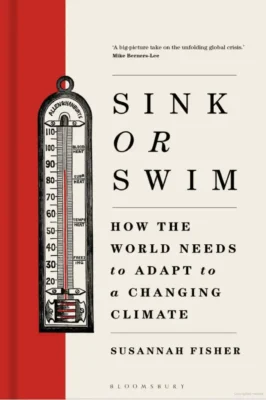
Sink or Swim – How the World Needs to Adapt to a Changing Climate by Susannah Fisher, Bloomsbury Sigma. Geographical readers can get a 25 per cent discount on both the hardback and ebook by using the code SWIM25 from Bloomsbury.co.uk