
• Skip to main content
  • Skip to secondary menu
  • Skip to primary sidebar
  • Skip to footer
Geographical

Geographical

Official magazine of the Royal Geographical Society (with IBG)

  • Geographical Home
  • News
  • Features
  • Opinion
    • Climatewatch
    • Front Lines
  • Podcast
  • Travel
    • Discovering Britain
    • Passport
  • Culture
    • Book reviews
  • Quizzes
    • Crosswords
  • Choose Geography
    • University directory
    • Masters courses
    • Course guides
      • Climate change
      • Environmental science
      • Human geography
      • Physical geography
    • University pages
      • Aberystwyth University
      • Brunel University
      • Cardiff University
      • University of Chester
      • Edge Hill University
      • The University of Edinburgh
      • Newcastle University
      • Nottingham Trent University
      • Oxford Brookes University
      • The University of Plymouth
      • Queen Mary University of London
    • Geography careers
      • Charity/non-profit
      • Education & research
      • Environment
      • Finance & consulting
      • Government and Local Government
    • Applications and advice
  • Magazine
    • Issue previews
    • Subscribe
    • Manage My Subscription
    • Special Editions
    • Geographical Archive
    • Advertise with us
  • Subscribe
    • Direct Debit Changes

More than 300,000 people internally displaced in Lebanon since early March

3 November 2026
3 minutes

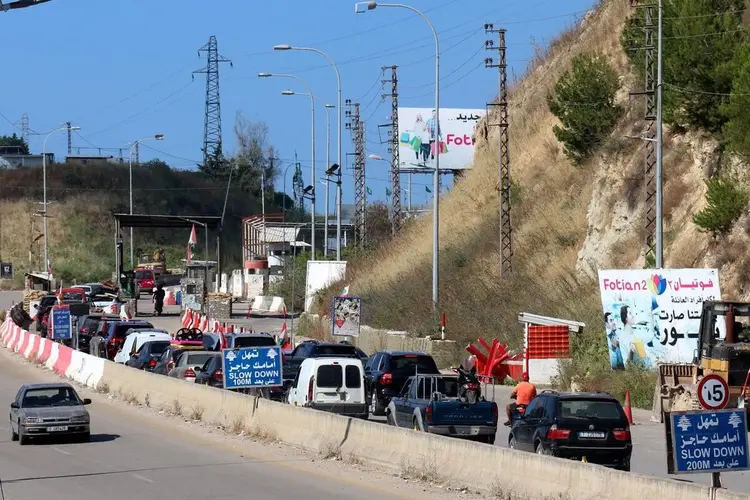
Vehicles wait to cross a security checkpoint in southern Lebanon as displaced families return homeward in June 2026.
Displaced families return homeward in June 2026, southern Lebanon. Image: UNHCR/Dar Al-Mousawir

Continued Israeli military activity and presence in south of the country are making it difficult for civilians to return home


By Victoria Heath

More than 300,000 people have been internally displaced in Lebanon since March this year, a humanitarian crisis that is ‘far from over’, according to the UN’s aid coordination office (OCHA).

At its peak, the UN Office for the Coordination of Humanitarian Affairs, citing Lebanese government data, registered around 1.2 million people in Lebanon as internally displaced (approximately 18 per cent of the nation’s population).

Israeli military activity has continued in the south of the nation, further fuelling displacement.

Almost 970,000 people have returned to their communities in southern Lebanon, but normality has been far from the reality on the ground. Homes have been damaged, and essential services have been disrupted.

For example, in the governorate of Nabatieh, insecurity and restrictions on access to agricultural land have disrupted the olive harvest. Some farmers have only been able to harvest for two days before being forced to stop by the Israeli army.

In a World Health Organisation survey, only four per cent of households in southern Lebanon and Beirut’s southern suburbs reported full access to healthcare after dozens of primary healthcare centres and hospitals closed as the conflict escalated.


Related reads…

  • Thousands of people forced to flee Yemen to Djibouti as conflict escalates
  • Naqoura: a town the world keeps erasing
  • The rising levels of internally displaced people
  • Conflict and violence become the leading driver of internal displacements
  • More than 800,000 people at risk of displacement in Somalia due to floods

OCHA Lebanon Humanitarian Fund has allocated $91million to support displaced people, returnees, refugees and other communities affected by conflict in Lebanon.

Lebanon’s population has continued to experience the devastation from hostilities between Hezbollah and Israel, as well as the compounded effects from the nation’s 2019 economic collapse.

In the last ten years, poverty rates in Lebanon have tripled. According to the World Bank, 44 per cent of the nation’s population lived in monetary poverty and 80 per cent in multidimensional poverty in 2024.
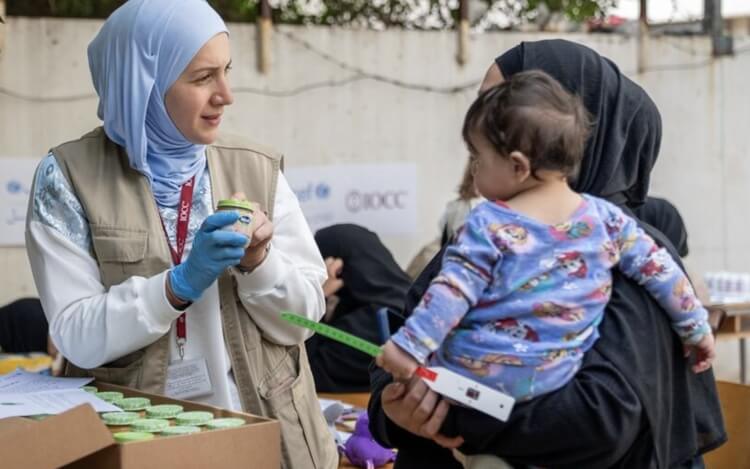
 More than 300,000 people displaced since early March remain internally displaced in Lebanon. UN agencies offer services to displaced children and their families.
UN agencies offer services to displaced children and their families. Image: UNICEF/Fouad Choufany 

Between 2 March 2026 and 17 August 2026, at least 4,346 people in Lebanon had been killed.

Lebanon has also faced uncertainty in recent weeks after the mandate of the UN Interim Force (UNIFIL) nears its end. Lebanese Prime Minister Nawaf Salam has urged action to ‘avert the vacuum that UNIFIL’s withdrawal could create, were it to take place without agreement on a new international force to replace it.’

According to DW, the 7,565 peacekeepers will most likely begin withdrawing from the UN-patrolled Blue Line zone at the end of this year. Even if a new peacekeeping force is created, it will likely have fewer troops. Back in June, UN Secretary-General António Guterres suggested three options to the Security Council for peacekeeping forces with troop numbers ranging between 900 and 3,000.

“The situation in southern Lebanon remains tense,’ said UNIFIL’s spokesperson Kandice Ardiel. ‘We are seeing continued Israeli military operations, including overflights of Lebanese airspace by jets, helicopters and drones, airstrikes, artillery strikes and mortar fire.’

‘Until our mandate ends on December 31, we continue to monitor and report what is happening, and we are liaising between the parties on a daily basis to ensure safe movements of civilians, humanitarian aid, and peacekeeping patrols,’ Ardiel continued.

The UNIFIL mandate first began back in 1978 during the Lebanese Civil War.

Themes News

Protected by Copyscape

Primary Sidebar

SUBSCRIBE

GEOGRAPHICAL WEEKLY LOGO FREE - Sign up to get context, clarity and perspective in a noisy world, every Friday
GIVE A GIFT

Give a year of Geographical - order a gift subscription

Popular Now

December 2026 Geographical crossword

December 2026 Geographical crossword

Migration patterns across Latin America and the Caribbean are changing, with people taking new routes, moving in different directions and deciding where to settle.

Darién crossings drop 90 per cent as new migration routes appear

beautiful iridescent clouds in the afternoon

Phenomena: Cloud iridescence – why some clouds appear rainbow-coloured

Jakarta - June 19,2026: The 2026 United Nations Climate Change Conference or Conference of the Parties of the UNFCCC, more commonly known as COP31 TURKIYE, ANTALYA logo

COP31 draft agreement drops all explicit mentions of fossil fuels

Refugees fled to Kule refugee camp in Ethiopia due to the clashes between South Sudanese government forces and South Sudan's former President Riek Machar's in Gambela, Ethiopia on July 15, 2014.

UN body launches new refugee data portal to drive solutions for millions…

Footer

  • Facebook
  • Instagram
  • LinkedIn
  • Reddit
  • TikTok
  • Twitter
  • YouTube

Geographical print magazine cover

Published in the UK since 1935, Geographical is the official magazine of the Royal Geographical Society (with IBG).

Informative, authoritative and educational, this site’s content covers a wide range of subject areas, including geography, culture, wildlife and exploration, illustrated with superb photography.

Click Here for SUBSCRIPTION details

Want to access Geographical on your tablet or smartphone? Press the Apple, Android or PC/Mac image below to download the app for your device

Footer Apple Footer Android Footer Mac-PC

More from Geographical

  • Subscriptions
  • Get our Newsletter
  • About Us
  • Contact Us
  • Advertise with us
  • Privacy policy
  • Terms & Conditions

Copyright © 2026 · Site by Syon Media