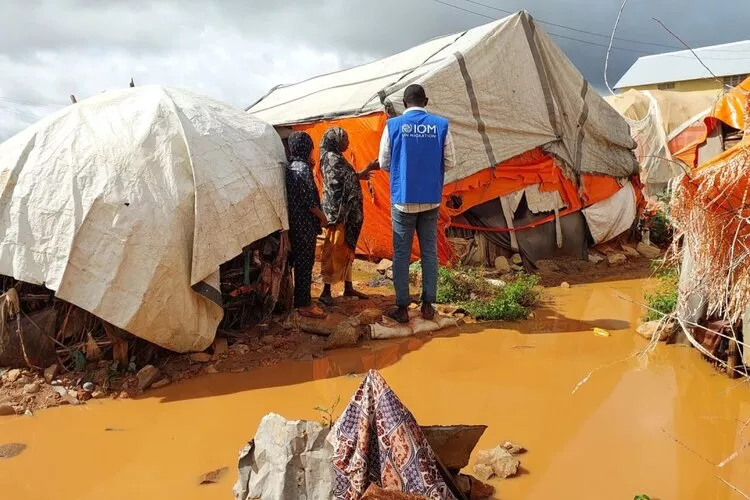
Somalia enters a rainy season forecast to bring above-average precipitation, with threats to crops, livelihoods, water sources and access to essential services
By
New projections by the IOM and the Danish Refugee Council (DRC) estimate that more than 870,000 people could be displaced in Somalia across the next three months due to flooding.
Between October and December, floods could cause families who have already been displaced to lose their homes in a matter of weeks.
Already, signs of flooding are apparent in the nation. The Jubba River is approaching flood levels, while the Shabelle River is rising towards the top of its banks in Jowhar. Heavy precipitation in Baidoa has damaged homes, leaving families with no choice but to flee.
Related reads…
Rising floodwaters can destroy crops, disrupt livelihoods, contaminate water sources, and limit access to healthcare and other essential services.
‘There is still time to reduce the impact, but that window is closing. We urgently need funding to help people protect their homes and livelihoods, reach safer ground where necessary, and avoid another cycle of displacement,’ said IOM Somalia chief of mission Manuel Marques Pereira.
IOM has secured just under 15 per cent of the $ 16.62 million needed to prepare for and respond to El Niño-related flooding, aid that would support more than 517,000 people in flood-prone communities across the nation.

With such funding shortages, efforts are limited to establishing safe relocation areas for families to provide essential shelter, sanitation, healthcare and clean water.
Across the last three decades in Somalia, recurrent droughts and floods have become more intense. Back in 2023, the Somalian government declared an emergency in certain areas of the nation after heavy rains – brought about by an El Niño – triggered floods. At the time, more than 706,000 people were temporarily affected and more than 113,000 people temporarily displaced from their homes.
Last month, the UK Government announced £5million in new humanitarian funding, helping vulnerable Somalian communities prepare for the flooding. This funding will be allocated to strengthen early warning systems, help families move to safety and ensure essential services can remain available to communities impacted by flooding.
Up to 600,000 people are expected to benefit from these services, including support to keep up to 71 health facilities operational.