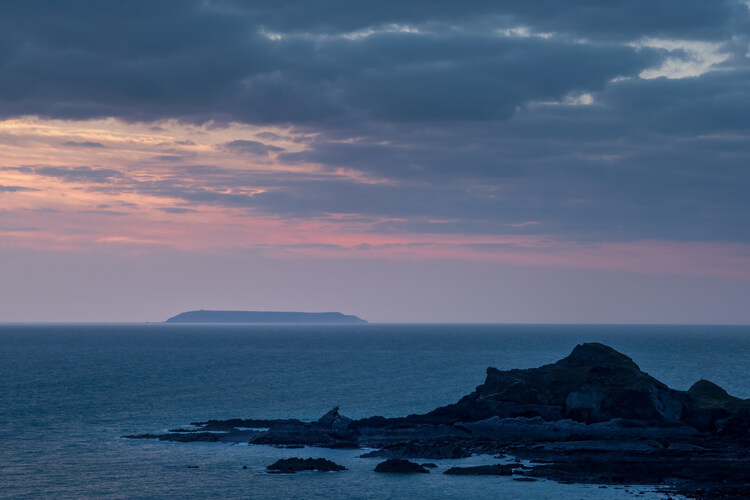
Lundy, located in the Bristol Channel, faces severe strain on its water supplies with reservoir levels falling to just 13 per cent
By
Twenty-eight residents on a tiny British island in the Bristol Channel could face evacuation after severe water supply strain forced emergency shipments of water from the mainland.
Lundy – which is just shy of five kilometres long (3.1 miles) and located off the coast of North Devon – has experienced no significant rainfall since April, and reservoir levels dropped to 13 per cent at their lowest. It has seen hardly any of its typical 1.5 metres (4.92 feet) of rainfall expected by this time of year.
The island has been receiving deliveries of water to supplement its supplies. The first delivery of 67,000 litres of water to Lundy was the biggest, costing around £7,000. Since that point, shipments of 4,000 litres of water have arrived three times per week. Residents use between 9,000 and 11,000 litres of water daily. As well as this, the island has been pumping pond water to treatment plants.
Enjoying this article? Check out our related reads…
Even getting water from the port to residents has been challenging, with the island having only a granite track and a small number of vehicles. To supplement deliveries of water, the island is also pumping water from ponds used by wildlife to a treatment centre.
Other measures have been put in place to conserve water, such as closing toilets in the island’s pub and residents showering with buckets to catch water which can then be used to flush toilets.
Rain is forecast for Lundy Island, but according to BBC metereologist David Braine, it would take weeks to top up the groundwater and reservoirs that the island relies on.
Despite having just 28 residents, Lundy has around 18,000 visitors each year. It is entirely self-sufficient and relies on both rainwater and boreholes drilled into the granite for supplies.
Owned by the National Trust and managed by the Landmark Trust since 1969, the island has the largest seabird colony in the south-west, including species such as puffins, razorbills, Manx shearwaters and guillemots.
Previously, the island considered shutting back in September 2025 when reservoir levels hit 33 per cent.