
• Skip to main content
  • Skip to secondary menu
  • Skip to primary sidebar
  • Skip to footer
Geographical

Geographical

Official magazine of the Royal Geographical Society (with IBG)

  • Geographical Home
  • News
  • Features
  • Opinion
    • Climatewatch
    • Front Lines
  • Podcast
  • Travel
    • Discovering Britain
    • Passport
  • Culture
    • Book reviews
  • Quizzes
    • Crosswords
  • Choose Geography
    • University directory
    • Masters courses
    • Course guides
      • Climate change
      • Environmental science
      • Human geography
      • Physical geography
    • University pages
      • Aberystwyth University
      • Brunel University
      • Cardiff University
      • University of Chester
      • Edge Hill University
      • The University of Edinburgh
      • Newcastle University
      • Nottingham Trent University
      • Oxford Brookes University
      • The University of Plymouth
      • Queen Mary University of London
    • Geography careers
      • Charity/non-profit
      • Education & research
      • Environment
      • Finance & consulting
      • Government and Local Government
    • Applications and advice
  • Magazine
    • Issue previews
    • Subscribe
    • Manage My Subscription
    • Special Editions
    • Geographical Archive
    • Advertise with us
  • Subscribe
    • Direct Debit Changes

Why are forests dying along North Carolina’s coast?

6 October 2026
2 minutes

north carolina USA nature
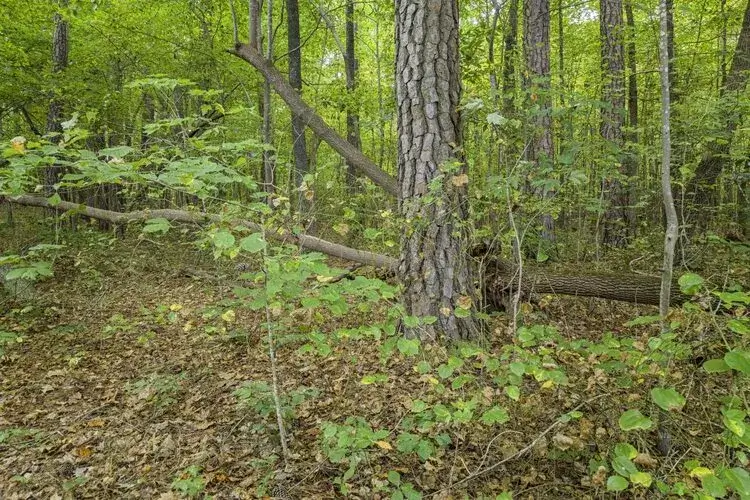
A forest in North Carolina. Image: Shutterstock

Coastal forest loss in North Carolina has been speeding up after 2010, driven mainly by sea level rise


By Victoria Heath

A study found that forest loss along North Carolina’s coast began to accelerate after 2010 and may still be speeding up. Using satellite imagery, researchers tracked how coastal forests in North Carolina’s Albemarle-Pamlico Peninsula dwindled from 1985 to 2021.

They found the state lost 21 per cent of its coastal forests, or around 64,220 hectares. In total, North Carolina lost more than 20 per cent of its coastal forest between 1985 and 2021.


Enjoying this article? Check out our related reads…

  • Housing solutions: green communal living in Madrid
  • US national parks: where are the oldest, largest and most visited?
  • How shifting wind speeds could affect renewable energy and the oceans
  • Autocracies on the rise, democracies in decline
  • Why are some forests recovering as others vanish fast?

Around 40,000 hectares of that land were lost to marsh, ghost forest (a coastal area filled with standing, dead or dying trees), and shrub.

Sea level rise was the main culprit behind forest loss. As sea levels rise, saltwater spreads across forests, killing trees and turning them into ghost forests.

Dwindling forests worldwide

Over the last 10,000 years, the world has lost one-third of its forests, an area twice the size of the United States. Half of this loss occurred in the last century alone.

They are vital for regulating the climate, cleaning the air we breathe and filtering water. Forests also provide a habitat for more than two-thirds of terrestrial wildlife and plants, and are home to 300 million people worldwide.
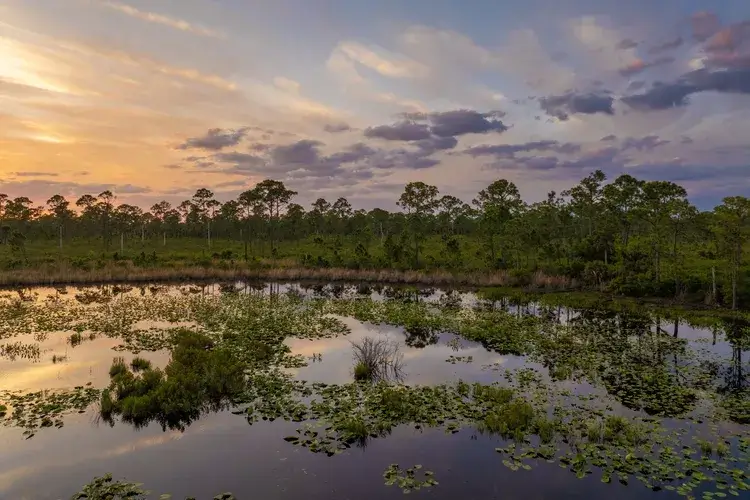
Tropical forest lake vegetation in southern swamp at sunset. Evening landscape of Florida wetland flora
Across the last 10,000 years, the world has lost one-third of its forests. Image: Shutterstock

Agriculture is the leading cause of deforestation, with beef production the largest driver. More than half of this occurred in Brazil, meaning Brazilian beef has contributed to around one-quarter of global deforestation.

Oilseeds are also a major contributor to deforestation, followed by forest plantations – used for wood and paper products – along with cereal production.

Most deforestation today takes place in the tropics, including South America and Africa, while most of Europe and many parts of Asia are seeing total forest cover gains. Conservation efforts to protect forests are expanding, with around 813 million hectares (20 per cent) of forests now legally protected, and 2.13 billion hectares (more than 55 per cent) under long-term management plans.

Still, despite afforestation and protection rising, the world is still losing forests at a rapid rate: each year, an area of forest is lost equivalent to the size of Costa Rica.
Themes News Deforestation Forests

Protected by Copyscape

Primary Sidebar

SUBSCRIBE

GEOGRAPHICAL WEEKLY LOGO FREE - Sign up to get context, clarity and perspective in a noisy world, every Friday

Popular Now

Hand in ballot box

Brazil’s presidential election heads to runoff in late October

California coast

Kelvin waves: the ocean phenomenon raising sea levels on the US West…

Chinook salmon in water

Why Alaska’s Chinook salmon collapse threatens Yukon River communities

Barcelona, Spain - October 31st 2022 -

Barcelona’s new ‘Netflix-style’ algorithm hoped to combat overtourism

Wind turbines in field

Ministry of Defence objects to at least four wind farms

Footer

  • Facebook
  • Instagram
  • LinkedIn
  • Reddit
  • TikTok
  • Twitter
  • YouTube

Geographical print magazine cover

Published in the UK since 1935, Geographical is the official magazine of the Royal Geographical Society (with IBG).

Informative, authoritative and educational, this site’s content covers a wide range of subject areas, including geography, culture, wildlife and exploration, illustrated with superb photography.

Click Here for SUBSCRIPTION details

Want to access Geographical on your tablet or smartphone? Press the Apple, Android or PC/Mac image below to download the app for your device

Footer Apple Footer Android Footer Mac-PC

More from Geographical

  • Subscriptions
  • Get our Newsletter
  • About Us
  • Contact Us
  • Advertise with us
  • Privacy policy
  • Terms & Conditions

Copyright © 2026 · Site by Syon Media